
It’s finally here! For our first podcast episode, we returned to our very first subject on the blog: Charles VI of France. We cover how a sudden psychiatric break left France bitterly divided and almost put a British king on the French throne. Plus, could this all have been cause by a neurodevelopment process gone awry? And of course, we dabble in pop culture along the way. Thanks for joining us and remember to subscribe and leave a review on your podcast platform of choice!
Hear Ye, Hear Ye

While it’s technically our summer break, we’ve been doing anything but taking it easy. Big and exciting things have been going on behind the scenes at ULTC, and we are so excited to share one of them with you today: we’re starting a podcast!
Our readers have been asking us for a long time now to convert our content into an audio format. So starting next week, on the last Friday of every month, we will be breaking down one of series on the pod. Our episodes will have all of the history, science, and pop culture references that you love but with the fun of a conversation between two sisters. And don’t worry: the podcast won’t be replacing our blog posts. In fact, we are in the books right now researching a brand new series for you.

We released our trailer this morning, along with our brand new artwork by Jackson Roy and amazing theme song by Jared Cunningham. Check it out and make sure to subscribe before the first episode debuts next week!
Brain Man
Who Lives, Who Dies, Who Tells Your Story
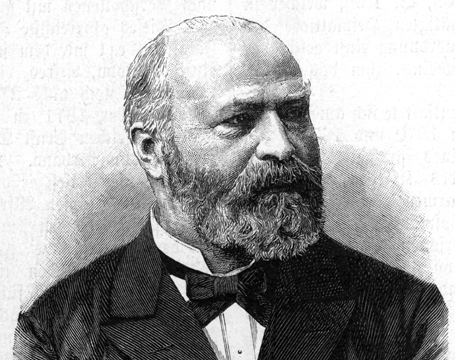
I realized that I spent so much time last week detailing everything that made Dr. Bernhard von Gudden shady that I forgot to mention the enduring impact he had on the field of neuroscience. I have my doubts about his diagnosis of Ludwig and their subsequent deaths, but you don’t become the psychiatrist to the royal family by being a mediocre doctor. If you were to ask a neuroscientist about von Gudden, they would likely have no knowledge of his ties to the tragic Swan King. What they would tell you about, however, is his storied career that changed the way the brain was studied and treated. Since you have a neuroscientist right here, I want to tell you about his five greatest contributions to the field.

Humane treatment of psychiatric patients: As the director of a Bavarian asylum, von Gudden stressed the importance of treating patients with dignity. He took his training at a facility that promoted patients to have freedom to be outdoors to the next level by banning the use of physical restraints. In addition, any bodily injuries sustained by patients were thought to be physical manifestations of their mental illness. Von Gudden rocked the psychiatry world by daring to suggest that maybe the broken ribs doctors observed were coming from staff abuse, not schizophrenia. Under his leadership, asylum “wardens” became “nurses”.

The von Gudden method: One of his most famous experimental techniques is still used today. Known as the von Gudden method, it involves causing a lesion in animals while their brains are still developing. He used this method to look at how the overall anatomy of the brain changed, assuming correctly that if the lesion severed a connection between two brain regions, the loss of information flow would cause structural changes. This gave von Gudden insights into how the brain is wired as well as how important sensory input is for neural development.
Weigert and Nissl stains: There is not a medical student in the world who is unacquainted with Weigert and Nissl stains. These stains are used to label the axons and cell bodies of neurons, respectively. Interestingly, von Gudden had a role in the development of both stains. Carl Weigert recalled almost giving up on his namesake method before receiving von Gudden’s encouragement. As for Franz Nissl, von Gudden allowed him to work in his own lab space and use his own supplies as he developed the stain. So not only do we have to consider von Gudden’s own work, but also that of those he mentored.

The Gudden microtome: Of course, stains are useless unless you have some good tissue to work with. Von Gudden addressed this problem by engineering the first microtome, a device used to cut the brain into thin sections. His microtome could cut a section of tissue just 55 microns thick (a sheet of paper is about 230 microns thick!). 150 years later, the microtome remains a critical tool for neuroscience research.

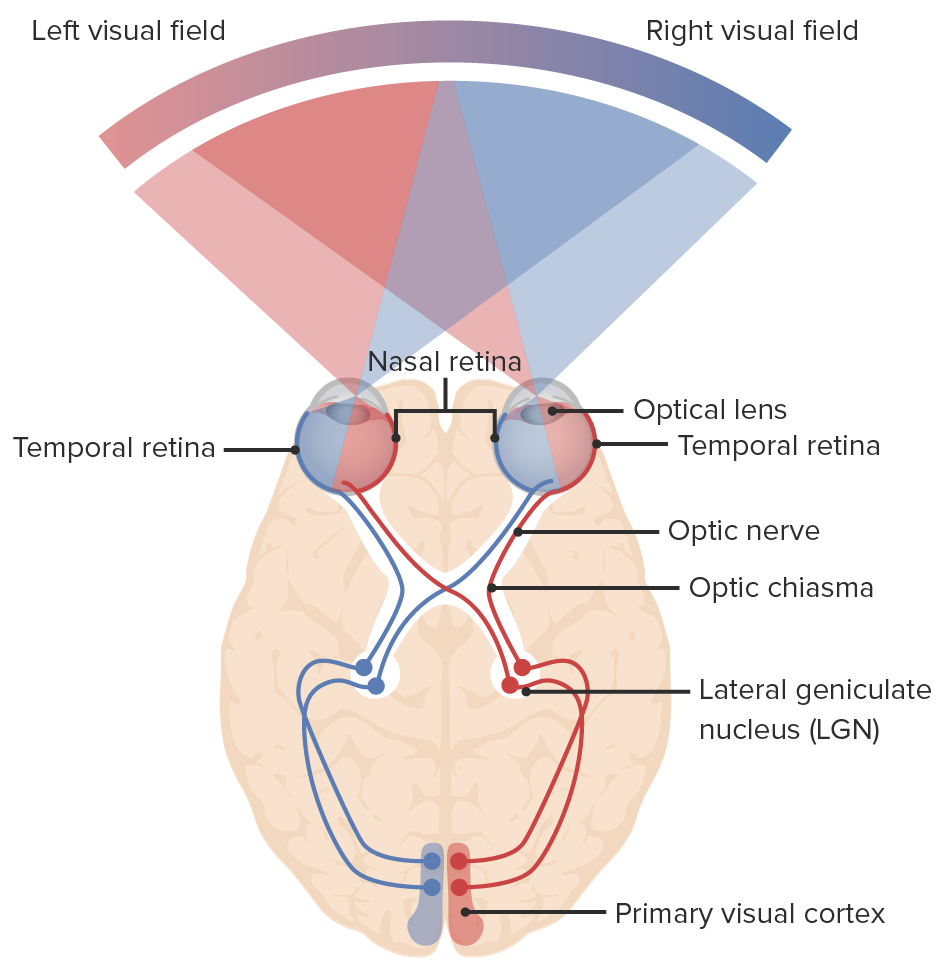
Neuroanatomy: Von Gudden’s love for the brain led him to identify many structures that had been previously overlooked. In total, seven brain structures are named after him. In addition, he was able to characterize the neuronal connections that give rise to the sense of smell. Von Gudden also showed that some of the nerves that transport information from the eyes to the part of the brain responsible for vision cross over to the opposite side of the body, explaining why damage to the left side of the brain affects vision from the right visual field.
Feel the Bern(hard)
The legacy of von Gudden is a perfect example of why we love doing what we do at ULTC: his story cannot be completely told through the lens of science or history alone. His impressive resume gives him credibility as a psychiatrist, but there are so many unanswered questions about Ludwig that still leave me in doubt about his diagnosis. In any case, he was a brilliant mind and undoubtedly would have accomplished more had it not been for his untimely death in Lake Sternberg.
I should also mention that we will be taking the month of May off here on the blog. I have my doctoral qualifying exam and if I want to be the next von Gudden, I need to study up! Explore our archives in the meantime and keep an eye out for us in your inbox later this summer.
References
Bernhard von Gudden, Doctor and Founder of Modern Neuromorphology. (n.d.). The University Department of Psychiatry in Munich,21-38. doi:10.1007/978-3-540-74017-9_4
Danek, A., MD, Gudden, W., MD, & Distel, H., PhD. (1989). The Dream Kings Psychiatrist Bernhard von Gudden (1824-1886). Archives of Neurology,46(12), 1349. doi:10.1001/archneur.1989.00520480093026
Sarikcioglu, L. (2007). Johann Bernhard Aloys von Gudden: An outstanding scientist. Journal of Neurology, Neurosurgery & Psychiatry,78(2), 195-195. doi:10.1136/jnnp.2006.106633
Body of Lies

Hard to Get
Ludwig II of Bavaria famously loved to paraphrase a line from the play “The Bride of Messina”, saying, “I wish to remain an eternal enigma to myself and others”. I can think of very few people who have achieved their life goal to such a high degree. For all of the information available about the Swan King, the truth of his interior life and of his tragic fate remain impenetrable to everyone who tries to learn about him.
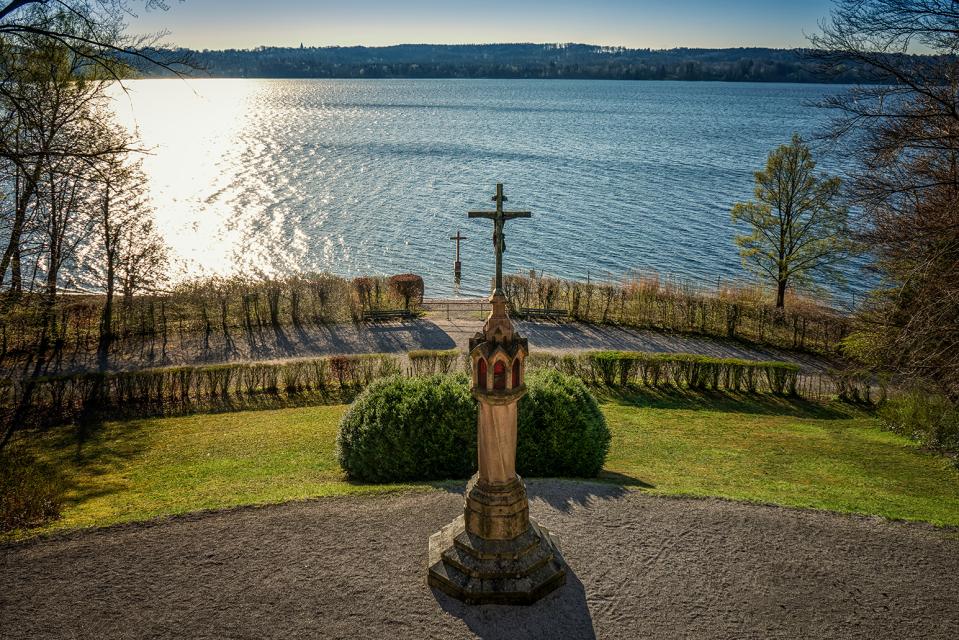
The mysterious circumstances of Ludwig’s death read like the best of true crime, but the analyses of his mental state by medical historians read like the worst kind of academic controversy. When you manage to find an article about Ludwig’s sanity or lack thereof that has been translated to English (sorry Frau Duffy, but my high school German has all but deteriorated), you will read one of three arguments; Dr. Gudden’s diagnosis of schizophrenia in Ludwig was accurate; Ludwig’s eccentricities have been exaggerated to support a false diagnosis of schizophrenia; or Ludwig was not schizophrenic but indeed was suffering from a neurological disease. The real answer? Well, it depends on who you think you can trust.
Gudden for Punishment
Our very first subject at ULTC was Charles VI of France, and we detailed his struggles with schizophrenia. Charles had many of the hallmark symptoms of the disease, including positive symptoms such as delusions, hallucinations, and disorganized thoughts and speech, as well as negative symptoms like reduced emotional response, decreased speech, and depression-like symptoms. Ludwig’s brother, Otto, similarly suffered from schizophrenia, or “paranoia” as it was often called at the time. As we talked about during the Charles VI series, schizophrenia shows a complex inheritance pattern, but does have a genetic component, giving some support for the claim that Ludwig was also schizophrenic.
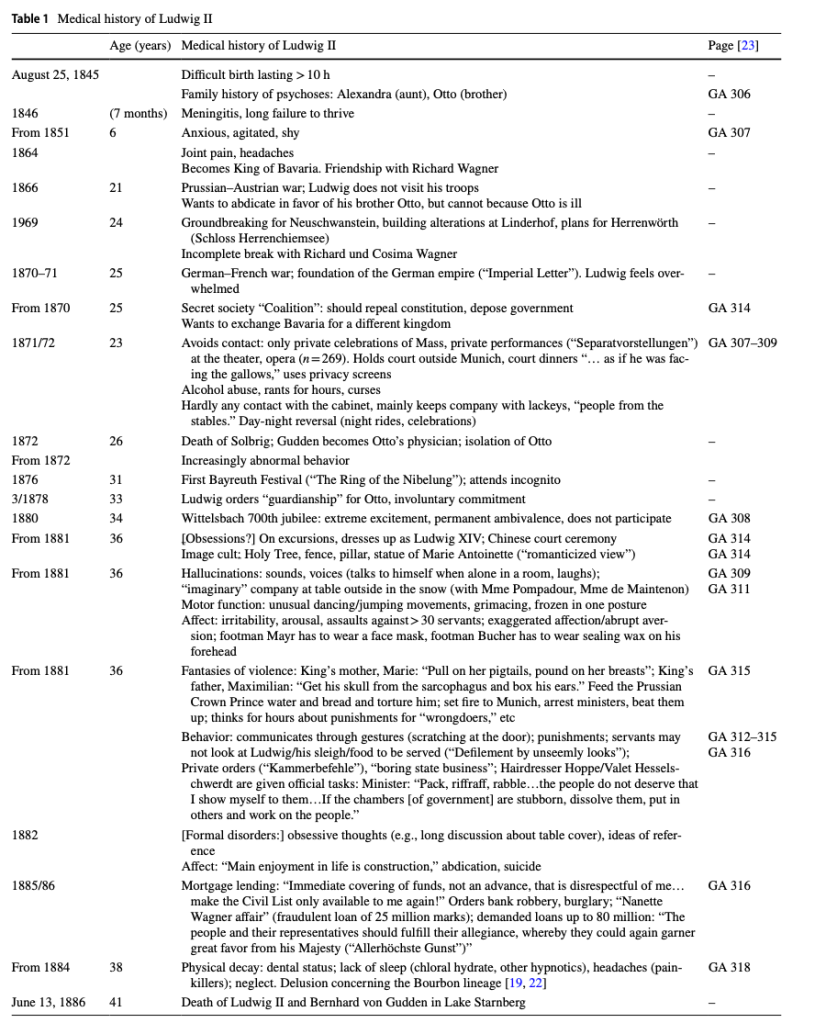
And some people do believe all these years later that Ludwig was diagnosed accurately and the doubters are just weaving fantastical conspiracy theories for the drama. Because I cannot get my hands on the original documents in German, I am relying primarily on secondary sources that synthesize witness accounts and historical records. The most compelling argument I found in support of the schizophrenia theory was published last year by German researchers Reinhard Steinberg and Peter Falkai. They cite sources like Cosima, the second wife of Ludwig’s friend/obsession, Richard Wagner. She remembers Ludwig having dinner with imaginary guests, something Dr. Gudden himself reported. Gudden also claimed that Ludwig refused to use doors to go in and out of his estates, instead climbing through the windows. In addition, Steinberg and Falkai cite a report from a Dr. Franz Carl Gerster who saw Ludwig for some dental problems in 1884, two years before his death. Gerster was“determined that Ludwig had an accelerated flow of ideas, flight of thoughts, alogical stringing together of thoughts, delusions, and illusory and hallucinatory phenomena. He informed the responsible authorities, who told him clearly that his strong suspicion of mental illness ‘was interpreted and branded by all as high treason.’”
These anecdotes push past the borders of eccentricity and have all the hallmarks of schizophrenia. But I could not get past what Stefanie told us last week: that Gudden’s diagnosis of paranoia, the one that stripped Ludwig of his ruling rights and left him imprisoned, was made without evaluating him in person. However, Steinberg and Falkai claim that that isn’t completely accurate. Gudden wrote the official testimony based on witness accounts, but he did do an evaluation of Ludwig the night before the pair died. Apparently, Gudden conveniently found Ludwig exactly as he had described him in the original report that cost him the throne, and found him suicidal to boot.
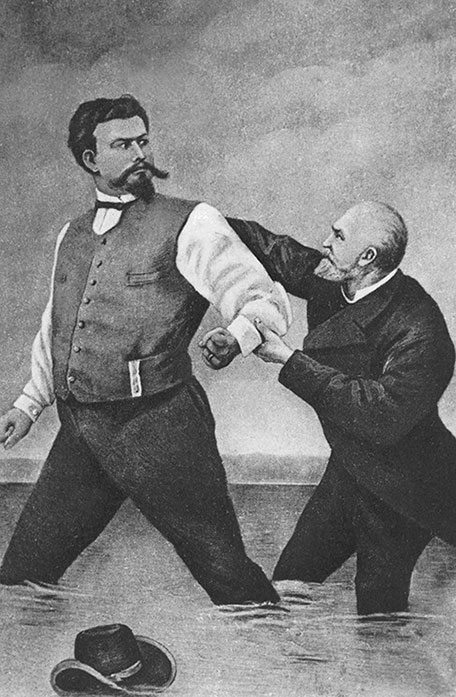
It all seems rather cut and dry. Ludwig was schizophrenic and took his own life, along with his doctor’s, the next day in the midst of psychosis. But questions remain about the lucid, well-written letter Ludwig wrote the very night Gudden diagnosed him as a paranoid maniac. Plus, the autopsy showed Ludwig had no water in his lungs, casting more than reasonable doubt on the theory that he drowned himself in a murder-suicide. And then there’s the fact that Gudden had political ties with people that would have been very happy to see him put the two heirs to the Bavarian throne in straightjackets so an ally could come to power. If we can trust the doctors, we have an open and shut case. But if you haven’t learned by now, it’s never that easy.
Ich Bin Ein Believer
Whether it was the product of a political conspiracy or not, the possibility remains that Ludwig’s free spirit was misinterpreted as a mental illness. I like Stefanie’s description of Ludwig as the eccentric theater kid you went to high school with. He was moody and mysterious and a little campy. In short, he was not what many expected their ruler to be, with his heart more on the stage than on the battlefield. Like some of our previous subjects who have been criticized for being seclusive, Ludwig preferred to be by himself (which some think may have exacerbated any underlying mental health issues), and that did not jive with his public position. It could simply be that his personality was incompatible with his position in life.
Critics of the schizophrenia theory also point out how much emphasis was placed on Ludwig’s sexuality. In 1886, homosexuality was considered a mental illness (and remained so until 1973!) and a massive social taboo. It’s very possible that Ludwig’s intimate relationships with other men made him a target. A gay king would have been a huge scandal for the royal family, so it is unsurprising that Ludwig’s sexuality was not mentioned in Gudden’s report. I still have to wonder how much it played into Ludwig’s diagnosis and the decision to replace him with a regent.
Defenders of the idiosyncratic king believe that Ludwig simply didn’t fit in. But instead of high school mean girls excluding him from the lunch table, he was deposed and killed, and posthumously framed for the murder of Gudden.
Leave Me a Lobe
At this point, both theories left me unconvinced. Gudden seemed fishy, but I was unsure that Ludwig was free from any psychiatric illness. Luckily, while we can’t look into Ludwig’s mind, there is someone who was able to look at his brain: Dr. Rudolph Magg, the physician who conducted the autopsy back in 1886.
The official autopsy found signs that Ludwig suffered from neurological disease. Like the subject of last month’s series, Ludwig became sick with meningitis as a baby (and interestingly, like Taisho, this was after a particularly traumatic birth). Although Ludwig recovered, the bout of illness had scarred his frontal lobes, the region of the brain responsible for executive functions like planning, self-control, and organization. This might have something to do with his fantastical architectural schemes that left him strapped for cash.
Even more alarming was the discovery that his brain had atrophied, or shrunken, in the temporal lobes, a region important for memory, as well as the frontal lobes. My first guess was that perhaps this was also an effect of his meningitis, but this seems unlikely. According to Schmidt et al, “Although MRI alterations after [bacterial meningitis] such as global atrophy (Davidson and Steiner, 1985) or focal hippocampal atrophy (Free et al., 1996) have been reported, they have not been related to cognitive disturbances.”
Much to my surprise, this frontotemporal atrophy is actually consistent with a diagnosis of schizophrenia. In the Charles VI series we talked about the synaptic pruning theory of schizophrenia, in which the normal developmental process of removing excessive connections between neurons becomes overactive. This results in altered brain connectivity, but also can lead to reduced brain volume. Want to take a guess at which regions of the brain are most affected? That’s right, the frontal and temporal lobes. In fact, in a study looking at patients at risk of developing schizophrenia, certain regions of the frontal cortex were shown to shrink faster in people who went on to be diagnosed with the disease than those who did not. Atrophy in the temporal lobe has been well-reported in schizophrenic patients, and is associated with language disturbances and hallucinations, as it contains important auditory and language areas.
This is crucial evidence supporting Gudden’s diagnosis, but there’s one piece that doesn’t fit for me. Ludwig was diagnosed with schizophrenia at 40, while disease onset in males is usually in the late teens and early 20s. Interestingly, there is one other disease characterized by frontotemporal atrophy that is often confused clinically for schizophrenia: frontotemporal dementia (FTD). FTD refers to a group of disorders that result in the neurodegeneration of the frontal and temporal lobes. The average age range of symptom onset begins at 45, much closer to Ludwig’s age than schizophrenia onset. There are two clinical subtypes of FTD depending on the primary symptom, and the behavioral variant (bvFTD) can be easily confused with schizophrenia. Patients with bvFTD have a dramatic shift in personality, with reduced inhibition, impaired social skills, increased preference for sugar and carbs, and a depressed-like mood. While FTD is more likely to be misdiagnosed as schizophrenia in younger patients today, Dr. Gudden would not have been able to make a distinction — FTD was not described until nearly a decade after his death. To me, it seems likely that Ludwig was suffering from early onset dementia. And if it’s true that Ludwig was perfectly normal at the time of his death, and the mental illness was a ploy to get him out of power, the clues his brain left behind make it clear that it was only a matter of time before he started to change.

No Body, No Crime
Of course, the reliability of my diagnosis depends upon the accuracy of the autopsy. Given that Dr. Magg noted that no water was found in Ludwig’s lungs, I am inclined to believe we can trust it; otherwise he easily could have lied and we wouldn’t be debating the murder-suicide theory all these years later. But I did stumble across some WILD articles calling the credibility of Magg’s report into question.
I have not been able to find English sources other than splashy news outlets to verify this information, but apparently, a 2018 German documentary featured a man named Willy Behl. Behl’s dad worked as a handyman on one of Ludwig’s family’s properties. In 1961, 75 years after Ludwig’s body was found in the lake, Behl’s father was allegedly asked to burn several items that belonged to Ludwig. One of those items was a coat with two big bullet holes in it.
This story seems off to me. Why would Ludwig’s murderers have kept such a damning piece of evidence for over three-quarters of a century and then suddenly ask the handyman to burn it? However, Behl’s memory ties in with infamous claims from Magg’s own daughter that when he was dying in 1921, Magg admitted that there were “terrible bullet wounds” in Ludwig’s body. The autopsy mentions no evidence of gunshot wounds. So was he telling the truth about the frontotemporal atrophy? Or is he just another shady character in the tangled web surrounding Ludwig’s final days?
Black Swan (King)
As I have been researching for this post, I keep thinking back to my visit to Neuschwanstein with Stefanie all those years ago. We walked through partially finished elegant rooms that would belong in any fairytale, and abruptly transitioned from a handsome sitting room right into a cave. The theatrical king had hired an artist to build an artificial cave, stalactites and all, right in the middle of this castle. I gnawed on this for a while at the time, oscillating between admiring his quirkiness and originality and wondering what sane person would build a grotto in the middle of their palace when they live on top of a mountain that presumably had many caves to offer. After a month spent with Ludwig, I am as torn as ever. Was he a misunderstood free spirit who was ill-suited to public life, or was he mentally ill and a danger to his country? The truth died with Ludwig in Lake Starnberg, leaving him the enigma that he always hoped to be.

References
Chung, Y., & Cannon, T. D. (2015). Brain Imaging During the Transition from Psychosis Prodrome to Schizophrenia. Journal of Nervous & Mental Disease,203(5), 336-341. doi:10.1097/nmd.0000000000000286
Crossland, D. (2018, July 13). Murder most foul: Doubts grow over ‘suicide’ of Bavaria’s fairytale king. Retrieved from https://www.handelsblatt.com/english/politics/murder-most-foul-doubts-grow-over-suicide-of-bavarias-fairytale-king/23582710.html?ticket=ST-379954-lHYT32GcMQmZKOPnu0cM-ap1
Frontotemporal dementia. (2021, January 08). Retrieved from https://www.mayoclinic.org/diseases-conditions/frontotemporal-dementia/symptoms-causes/syc-20354737
Gourzis, P., Skokou, M., Polychronopoulos, P., Soubasi, E., Triantaphyllidou, I., Aravidis, C., . . . Kosmaidou, Z. (2012). Frontotemporal Dementia, Manifested as Schizophrenia, with Decreased Heterochromatin on Chromosome 1. Case Reports in Psychiatry,2012, 1-5. doi:10.1155/2012/937518
Schmidt, H., Heimann, B., Djukic, M., Mazurek, C., Fels, C., Wallesch, C., & Nau, R. (2005). Neuropsychological sequelae of bacterial and viral meningitis. Brain,129(2), 333-345. doi:10.1093/brain/awh711Steinberg, R., & Falkai, P. (2020). Was King Ludwig II of Bavaria misdiagnosed by Gudden and his colleagues? European Archives of Psychiatry and Clinical Neuroscience. doi:10.1007/s00406-020-01161-8
Sweet Dream or a Beautiful Nightmare


Ludwig II, King of Bavaria from 1864 to 1886 
Otto von Bismarck, Prime Minister of Prussia, First Chancellor of Germany 
Bernhard von Gudden, “Psychiatrist”, Ludwig II’s Doctor 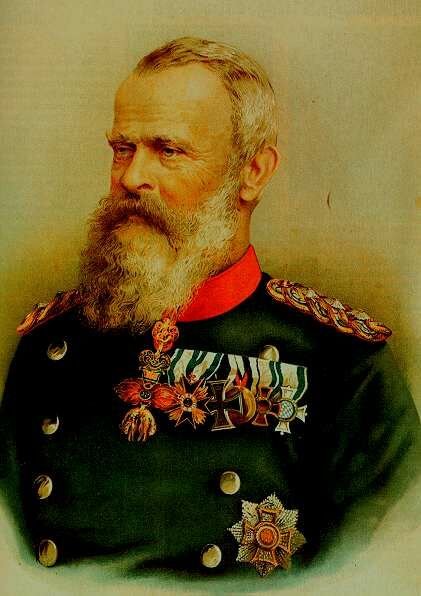
Luitpold, Prince Regent of Bavaria, Uncle of Ludwig II 
Otto of Bavaria, Broher of Ludwig II 
King of Prussia, First German Emperor
Surprise! This month we are changing things up a bit and hitting you with a double dose of history before diving into the mind and “madness” of Ludwig with Riley. Couldn’t leave you on the edge of your seat for too long after last week’s cliffhanger!
Clash of the Titans
To understand why Ludwig II was removed from his throne and found dead within a week, we must first understand how he managed to royally piss off his government ministers and fellow noblemen. Ludwig was handed the crown during a difficult and contentious period of history in Europe. Clear leaders in terms of size and strength had emerged out of the German states by the second half of the 19th century. When Ludwig became king, Prussia and Austria were ranked one and two respectively. Ludwig’s Bavaria was in third, and inevitably this meant that if (and when) the big guns butted heads, they would be expecting Bavaria to choose a side. In 1866, this is exactly what happened. Otto von Bismarck was the prime minister of Prussia, and he had his sights set on a unified Germany with Prussia at the helm. Austria was not here for it. The fighters were entering their corners.
While Prussia was puffing its chest, ready to blow all the little pigs’ houses down, Bismarck was busy sweet-talking Ludwig into joining his team. Ludwig responded in the only reasonable manner as the sovereign of a country at the brink of being sucked into war – he ran and hid. The Bavarian king absolutely hated the idea of going to war against fellow Germans and so he did the most un-Swan Knight thing possible by avoiding his duty and leaving his government ministers to try to track him down at one of his many castles. Throughout his life Ludwig made a habit of distancing himself from Munich, the Bavarian capital, any time there was a conflict he wanted to avoid. But Ludwig’s advisors needed an answer ASAP, because Bismarck was pressing Bavaria hard to join him in the impending war against Austria. Ludwig’s disappearing act during this critical moment did not instill any confidence in him as a leader.

Eventually the decision was made for Ludwig when Prussia declared war on Bavaria. The sides were set – Prussia, Italy (don’t ask) and some smaller German states on one side and Austria, Bavaria and additional smaller German states on the other. Although the sides may seem about even on paper, the reality is that Prussia was a military powerhouse with state-of-the-art weapons. Because of Prussia’s decisive military advantage, the war was over in seven swift weeks, hence why it is also known as the Seven Weeks War. Prussia was the winner, and as a result they stood as the undisputed German heavyweight. The war ended with the Treaty of Prague on August 23, 1866, which kicked Austria out of what had been known as the German Federation. From this moment on Austria was its own entity, which is how we have the separate country of Austria today (New World Encyclopedia). Prussia was one step closer to unifying the rest of the German states. They were lenient with Bavaria considering that Ludwig’s country had taken up arms against them, but the Bavarian king’s mishandling of the situation did not win him any admirers.
It’s My Army I Can Cry If I Want To
Of course, once Prussia had a little taste of power, it was only a matter of time until it wanted more. Prime Minister Bismarck was highly ambitious, as was the Prussian King Wilhelm I. Although this is a story about Ludwig, in many ways, our Bavarian king was at the mercy of the history-altering decisions that Bismarck and Wilhelm made. Bavaria was not strong enough to challenge Prussia alone, and after the Seven Weeks’ War, they had signed a treaty with their German nemesis to team up for future conflicts. The future ended up not being that far off and within four years, Prussia was stepping into the ring with France. Once again, Ludwig fled. Although he eventually honored their agreement to fight alongside Prussia, he absolutely refused to participate as the head of the Bavarian army. This was an important duty of any king, if for nothing else than bolstering the troops’ morale. Again, this move did not win him any fans among his family and government ministers.
Prussia and its German allies were victorious, handing France a crushing defeat. The outcome of the Franco-Prussian War changed the landscape of Europe forever. Prussia’s King Wilhem was declared emperor (or kaiser) of Germany, and Bismarck became the “First Chancellor”. Ludwig’s power and influence as king of Bavaria was greatly diminished, and he refused to attend the celebration of Germany’s victory at Versailles in France. All around, it was not a good look.
Coup, There It Is
As Ludwig was losing prestige and the trust of his ministers as a result of his poor showing on the international stage, he was gaining one thing – massive amounts of debt as a result of his elaborate building projects. It’s true that what Ludwig did with his own money was his business, but the problem was that he didn’t keep it his business. Ludwig’s creditors began to pursue him, which threw the debacle into the public light and “the spectacle of a reigning monarch being sued in open court by his creditors exposed the royal family to scorn” (Greg King). Even worse for the Bavarian king were his rather unethical attempts to procure more money by pressuring his government ministers to magically come up with large sums, which “imperiled the continued operation of the state” (Greg King). Ludwig had managed to make enemies of his government through his lackluster performance of his royal duties, and now his embarrassing financial situation had turned his royal family members against him. The time had come to do something about their Neuschwanstein-sized problem.

In 1885, the 21st year of Ludwig II’s reign, his own uncle Prince Luitpold began to conspire with the Bavarian prime minister Johann von Lutz to remove the king from his throne. As Greg King explains, to remove Ludwig, Luitpold and von Lutz had to come up with an airtight explanation for their coup, or risk the king’s supporters rioting in the streets. As has often been the case in our stories, even though Ludwig had made enemies of his family and fellow nobles, he was still very popular with the common people. Peasants along the countryside were particularly fond of him, as he often visited his subjects during his midnight carriage rides through the woods. And so the men who gathered to betray Ludwig built their case around three elements: Ludwig’s risky financial habits, his horrendous record of performing his royal duties, and, critical to our story, his mental health. Yes Ludwig was strange and most definitely lived with his head in the clouds as he attempted to escape the dismal reality of the role he was born into. But mentally unstable to the point that he was unable to responsibly and coherently make decisions on behalf of his country? That was a stretch.
But this route was the one best suited to removing Ludwig permanently while avoiding pushback from his supporters. To accomplish this, Luitpold and von Lutz needed a doctor to make a diagnosis. That man was Dr. Bernhard von Gudden, a “psychiatrist” (I shudder to even attribute that word with this man) who was also the doctor of Ludwig’s troubled brother, Otto. There seems to be evidence that Otto did actually suffer from severe mental illness, which perhaps made it easier for Ludwig’s haters to attribute some of the same symptoms to the king. In today’s society of standards and protocols when diagnosing and treating mental illness (although far from perfect), it is astounding to learn how Ludwig went from king of Bavaria to prisoner in his own castle. Without EVER personally examining Ludwig, von Gudden delivered a diagnosis to Luitpold and von Lutz that “confirmed” the king was unfit to continue this royal duties. Under Bavarian law, the diagnosis made it legal to assign a regent (someone who ruled in the name of the king or queen in the event they were unable to). And who was the choice of the commission of traitors? Uncle Luitpold! What?? You mean he went through all that trouble just to put himself on the throne? Color me shocked.
Shudder Island
But Ludwig was not going down without a fight. In his later years, the king had lost the angelic good looks that had entranced both men and women when he was a young prince. He was now overweight and far from graceful, but he was still the king and he was competent enough to realize he was being set up. When the traitors cornered him at Neuschwanstein, Ludwig’s response to the charges showed that he was a reasonable and coherent man who was as confused by von Gudden’s diagnosis as I am 130 years later. According to records of the conversation between Ludwig and the doctor on the night of the king’s arrest, Ludwig dropped the following heat:
- “How can you certify me insane without seeing me and examining me beforehand?” FACTS (Greg King)
- “Listen, as an experienced neurologist, how can you be so devoid of scruple as to make out a certificate that is decisive for a human life? You have not seen me for the last twelve years!” MORE FACTS!! (Greg King)
The evidence of mental illness that the conspirators had collected included accusations that Ludwig often hallucinated or spoke to himself, was violent with his servants and often beat them, was eccentric, and had no control over his spending. Other than the money thing, it is hard to know if the other accusations were true, as there is evidence that many of the people who made the statements were paid to do so. But unfortunately for Ludwig, none of this mattered, as he was overpowered and physically removed from his beloved Neuschwanstein and imprisoned in another one of his residences, Castle Berg. Luitpold became regent with little pushback because of the nation-wide declaration of Ludwig’s incurable illness, and Ludwig was left to live his days under the watchful eyes of von Gudden and a team of orderlies. But for Ludwig and his doctor, there weren’t many more days left…

One of the concessions that von Gudden allowed Ludwig was to have escorted walks around the Castle Berg grounds twice a day. On the evening of June 13, 1886, von Gudden and Ludwig set out on one of these walks in the midst of a storm, and never returned. Both men were found dead that night, with Ludwig floating facedown in Lake Starnberg. What happened on that deadly walk will forever remain a mystery, as the only two people who were there to witness it died at the scene. Officially, Ludwig’s death was ruled a suicide by drowing, which doesn’t make sense to anyone with a basic IQ. Reportedly, the water where Ludwig was found was only a few feet deep and his lungs did not have any water in them, making it hard to believe that drowning was the cause of death. It is true that Ludwig had expressed suicidal thoughts from the moment he learned of his betrayal, but there were no signs of self-harm during the autopsy and I find it hard to believe that Ludwig killed von Gudden (the Bavarian government actually declared it a murder-suicide) and then somehow drowned himself in shallow water. Without swallowing any water…Much like the declaration of insanity that was placed on Ludwig without any examination, so too were rumors spread by unreliable sources concerning the condition of the bodies. The sad truth is that in addition to there being no reliable witnesses, any pertinent documentation that could shed some light on this mystery has long been lost.
One popular theory is that Ludwig’s beloved cousin and best friend Elizabeth (the sister of his former fiancée Sophie) had managed to plan for his escape and that was the reason the king insisted on taking a walk in the middle of the pouring rain. According to author Greg King, it is possible that he attempted to flee from his doctor, fighting him in the process (von Gudden has several cuts and bruises on his face), and drowned as a result of the weather, his excessive weight, and too many alcoholic beverages (Ludwig did drink an increasing amount of alcohol towards the end of his life). Other theories are that von Gudden tried to subdue Ludwig with chloroform, accidentally killed him and then had a heart attack as a result of the shock. Not buying it. Riley proposed the theory that Ludwig’s death was a hit to cover up the coup. It’s possible, but if that was the plan then it was a poor one. Ludwig’s removal from the throne and almost immediate untimely death made him a martyr in the eyes of many Bavarians, and it only increased his popularity.
Boulevard of Broken Dreams
With Ludwig II’s death, his brother Otto technically became the king. Of course, there was no way he was going to rule since he had been deemed insane long before Ludwig had. And so, Uncle Luitpold remained regent until his death in 1912 at the age of 92. When he died, his son took over the regency as Ludwig III and became king when Otto died four years later in 1916. But Ludwig III was only king for a brief moment – following the German Empire’s defeat in World War I, the monarchy was abolished and the royal Wittelsbach family was royal no more. As we know, the next few decades in German history were fueled by a hunger for power and a darkness that Ludwig II would have abhorred. It was perhaps for the best that he didn’t live to see what came next.

Ludwig II’s cousin Elizabeth perhaps said it best when she said, “The King was no madman, only an eccentric living in a world of dreams!” (Greg King). I think we can be pretty confident that Ludwig was not mentally ill to the point that he was unable to perform as king. Sure, he neglected his duties and definitely wasn’t the ideal guy for the job, but let’s face it, very few monarch were. Was he perfect? No. He made the decision to turn his back on his royal duties at the most critical times, preferring to live in a version of reality that brought him peace and comfort. How many of us can say we did not do something similar throughout the difficulties of this past year?
References
“Austro-Prussian War.” Austro-Prussian War – New World Encyclopedia, http://www.newworldencyclopedia.org/entry/Austro-Prussian_War.
Katz, Jamie. “The Brilliant, Troubled Legacy of Richard Wagner.” Smithsonian.com, Smithsonian Institution, 23 July 2013, http://www.smithsonianmag.com/arts-culture/the-brilliant-troubled-legacy-of-richard-wagner-16686821/.
King, Greg. The Mad King: the Life and Times of Ludwig II of Bavaria. Aurum Press, 1997.
“The Revolutions of 1848–49.” Encyclopædia Britannica, Encyclopædia Britannica, Inc., http://www.britannica.com/place/Germany/The-revolutions-of-1848-49.
Taylor, Alan. “The 125th Anniversary of the Death of King Ludwig II.” The Atlantic, Atlantic Media Company, 13 June 2011, http://www.theatlantic.com/photo/2011/06/the-125th-anniversary-of-the-death-of-king-ludwig-ii/100085/.
“Treaty of Frankfurt Am Main Ends Franco-Prussian War.” History.com, A&E Television Networks, 5 Nov. 2009, http://www.history.com/this-day-in-history/treaty-of-frankfurt-am-main-ends-franco-prussian-war.
Drama King

Ludwig II, King of Bavaria from 1864-1886 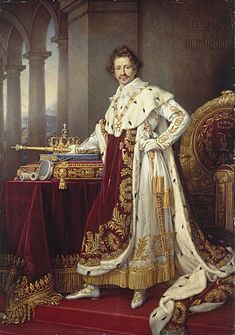
Ludwig I, King of Bavaria from 1825 to 1848, Grandfather of Ludwig II 
Maximilian II, King of Bavaria from 1848-1864, Father of Ludwig II 
Richard Wagner, Composer 
Duchess Sophie, One Time Fiancé of Ludwig II 
Otto von Bismarck, Prime Minister of Prussia 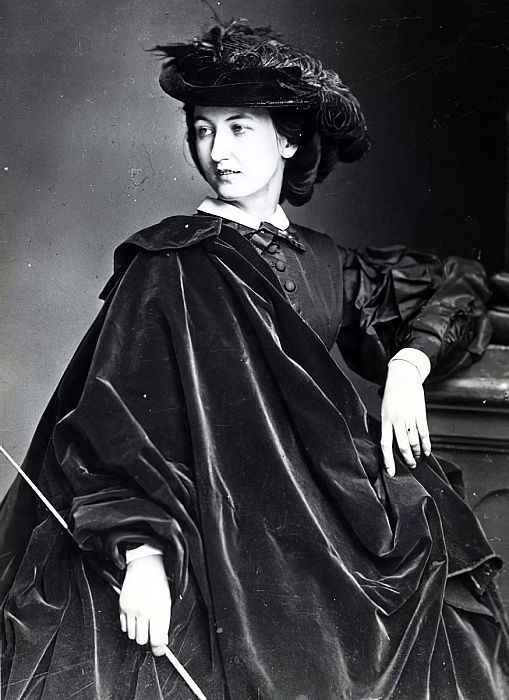
Lola Montez, Mistress of Ludwig I
Get your lederhosen and your pilsners ready, because this month we are headed to my birthplace – Germany! More specifically, we are headed to Bavaria, home of the famous Oktoberfest where I was supposed to celebrate my 30th birthday until this thing called COVID-19 ruined it. Don’t worry, I’m not bitter – I still got my traditional German chocolate cake and the promise of a Bavarian pretzel someday in my future. But enough about me (for now) and more about the man of the hour – King Ludwig II. He is also known by other names: the Mad King of Bavaria, the Swan King or der Märchenkönig (the Fairy Tale King). Sadly, Ludwig’s life was anything BUT a fairy tale, and the ending to this story does not conclude with happily ever after.
Lola Is the Wurst
Believe it or not, the fun fact of my German birth three decades ago is actually relevant to this story, because the Germany we know today is only as old as I am (and that is quite youthful, thank you very much). When Ludwig was born in 1845, what we recognize today as Germany was made up of dozens of sovereign states, the largest of which were Prussia, Austria and Bavaria. On the Bavarian throne, centered in Munich, sat Ludwig’s grandfather King Ludwig I. He was a lover of the arts, a passion he passed to his grandson and namesake Ludwig II. He was also a great lover of women, in particular a woman by the name of Lola Montez, who, classically, was not his wife. Lola was a dancer and as far as royal mistresses go, Ludwig the elder could not have chosen a worse woman to shower with gifts and affection. She was universally disliked by the Bavarian people, so much so that her association with the king almost cost him the throne on several occasions. It was a pattern that his grandson would repeat several decades later. Unfortunately for Ludwig I, having an unpopular mistress and being at odds with his subjects in 1848 was not a recipe for a successful and long-lasting reign. That year a “series of republican revolts against European monarchies [broke out], beginning in Sicily and spreading to France, Germany, Italy, and the Austrian Empire” (Britannica). In March of 1848 the movement had found its way to Bavaria, but Ludwig I was not willing to capitulate to the will of the people. He abdicated the throne, making his eldest son Maximilian, and Ludwig II’s father, the new king of Bavaria.

You Can Run, You Can Hide, But You Can’t Escape His Love
Ludwig II was 3 years old at the time of his grandfather’s abdication, which made him the crown prince. Little Ludwig’s childhood consisted of many of the same elements of the heirs we have covered here at ULTC – rigorous studies and strict schedules, absent parents, and isolation from children his own age. But it seems that in this case, everything was turned up a notch. Ludwig’s days were so packed with studies and homework that he was often pushed to episodes of “nervous exhaustion” as a child, and he found no consolation from his parents who apparently found it impossible to show any semblance of love and empathy towards their children. He had no socialization with peers and as a result, formed close attachments to his governess and the tutors who raised him. And as the next in line to the Bavarian throne, Ludwig was constantly reminded throughout his youth of his exalted position and his divine right to rule. It was something that he would never forget and it would shape every facet of his life.
Something else that held great influence in Ludwig’s life was his love of literature and the arts, in particular the theatre and stories of legendary heroes. And maybe “love” is the wrong word – obsession is probably more like it. When the young prince was not being forced to study history, languages and military strategy, he was buried in fairy tales or the operas of his favorite composer Richard Wagner. It is why Ludwig was given the nickname the “Fairy Tale King”, because more often than not he preferred to live in a world of pretend than the reality around him. His strenuous academic curriculum, coupled with his virtual isolation and inflated sense of self, seems to have succeeded in forming a young man who could be emotional and intelligent but also “high strung and over-sensitive, frequently causing him to take offense at an innocent gesture or look, condemning the often unaware culprit for years” (King). One thing that everyone could agree on was that he looked every part the prince – tall and slender with beautiful facial features, he turned heads wherever he went.
Now, obviously I am not a psychologist, but Ludwig’s absent parents and lack of confidants growing up, seems to have also shaped him into a man who was quick to form unhealthy attachments. He demanded absolute loyalty from anyone he deemed to be a friend, both male and female, and was often disappointed when his affections were not reciprocated whole-heartedly (honestly, same). And there was constant gossip surrounding the people he kept close. He was particularly fond of one of his female cousins, with whom he would share a special bond throughout his life. Inevitably, there were whispers that their friendship was more than that, but the relationship was never anything more than the close bond of family members who understood one another on a deep and personal level. The rumors that were more concerning for Ludwig were those surrounding the male companions he spent intimate and extended time with. Many of these friendships reached a level of obsession on Ludwig’s part that sadly always led to the demise of the relationship. As a young man, these emotions must have been overwhelmingly confusing for Ludwig, as he had not yet begun to disentangle the true source of his feelings for the men who were prominent in his life. For now his friendships remained intimate but never physical.

Unlucky In Love
In late 1863, when Ludwig was only 18 years old, his father, King Maximilian, fell seriously ill with a mystery ailment. After months of uncertainty, Maximilian passed away in March of 1864. As we have seen countless times before in our stories, the throne was immediately passed to Ludwig, and the Bavarian people, though sad over the loss of their king, were hopeful for the future. Those closer to Ludwig had mixed reactions to the new young owner of the Bavarian crown. One court secretary said “we now have an angel on the throne”, but Ludwig’s former tutor remarked that “Maximilian II’s death was the worst possible tragedy which could have befallen Bavaria” (King). Quite the spectrum of opinions we have here. So, who was right?
Most of Ludwig’s subjects saw a tall and handsome king, who looked the part and seemed to have a great interest in the running of the government and strengthening Bavaria’s standing among the German states. And that is certainly how it seems to have started out. Ludwig was not handed the best of circumstances when he inherited the throne, as alliances were beginning to form among the German states as powers like Prussia and Austria were battling for land and dominance. A certain well known man named Otto von Bismarck had burst onto the scene in Prussia and would bring Ludwig more than a little trouble over the coming years (we will get to that later).
In the meantime, as rumors began to swirl about the company Ludwig kept, from his female cousin to his close male companions, the people wondered when their king would marry and ensure the continuation of the Wittelsbach line. Although Ludwig was entranced by the love stories of his beloved fairy tales, he did not have any interest in marrying. And so it came as a shock to many when he proposed to his cousin Sophie in 1867. Grand preparations for the wedding were made and commemorative souvenirs were adorned with the couple’s faces. But while Sophie was busy planning for the day that she had undoubtedly dreamt of her whole life, Ludwig was regretting his choices. He was looking forward to his wedding day with about as much enthusiasm as I go into my yearly gynecology appointment. Eventually, the thought of marrying Sophie became too much for the king and he first delayed the wedding, then cancelled it altogether. Needless to say Sophie was crushed (don’t worry she was married for real by the same time next year), but Ludwig never regretted his choice not to go through with the marriage. In fact he wrote in his diary that he “longed to awake from [that] terrible nightmare” (King).
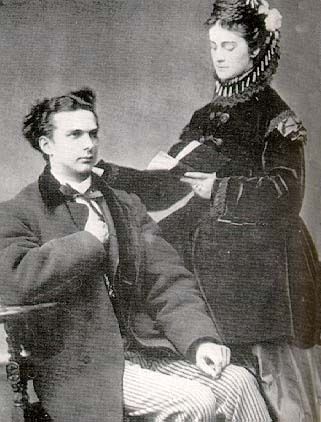
It was perhaps around this time that he was really beginning to understand the nature of his sexuality and that his feelings for Sophie were always purely that of friendship. Lord knows thousands of unhappy royal marriages were made out of convenience as opposed to love, usually ending in a partnership where each merely tolerated the other for as long as they had to be in the same room. This no doubt would have been the case for Ludwig and Sophie. So although it had been a mistake to propose in the first place, props to him for setting her free to live a potentially happy life with someone else.
Ludwig In Wonderland
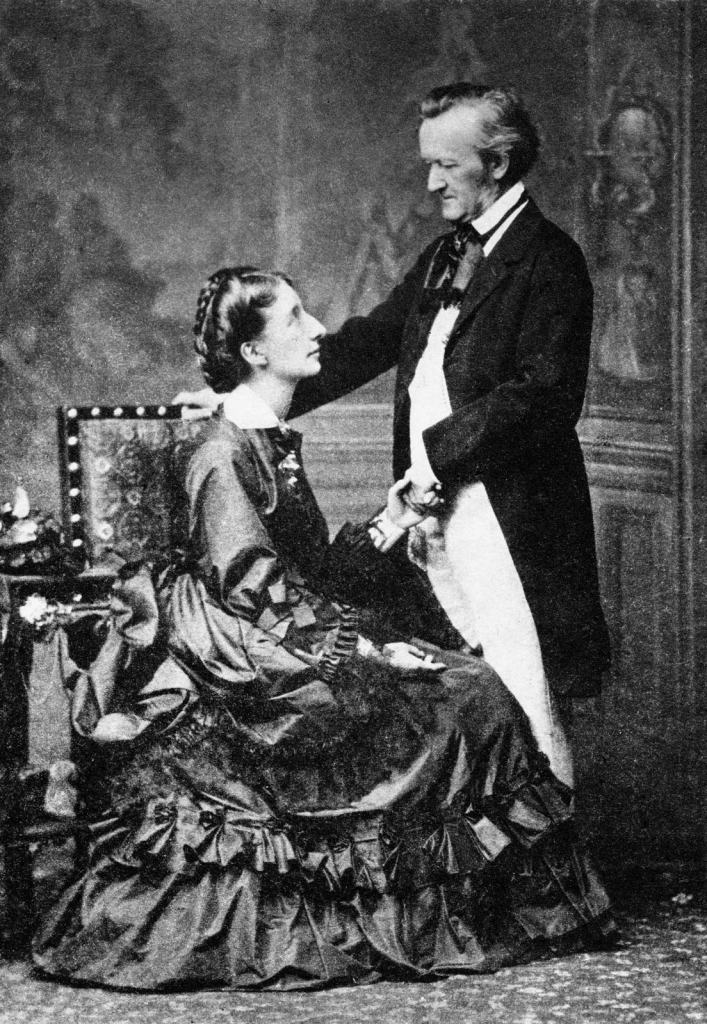
Although Ludwig did not find happiness with his cousin Sophie, there was one person in his life who was his greatest source of joy (and at times his greatest source of misery). That person was the composer Richard Wagner. Today he is famous for operas like Tannhäuser, Lohengrin and Tristan und Isolde, and is still much celebrated in Europe. If you are uncultured like me, all this does is bring back traumatizing memories of the 2006 James Franco movie Tristan and Isolde (couldn’t tell you what it’s about, I just know it was enough to keep 16 year old me up at night). Ludwig had been enraptured by Wagner’s work since he was a boy, and when he became king he used his resources and influence to bring Wagner to Bavaria and began a decades-long partnership where Ludwig supplied the cash for Wagner to produce and stage his performances. Seems innocent enough, except for the fact that this “partnership” was more like obsessive admiration and devotion on Ludwig’s part. In addition to the endless amount of money the king dished out to make Wagner’s operas a reality, Ludwig also rented him a home and paid off an astounding amount of the composer’s debt. For the sensitive king, this was the world in which he felt he belonged: a world of costume and music and heroic love stories – not the sad world of King of Bavaria where he was forced to go to war with his German neighbors and attend to hours of legal documents and correspondence.

Ludwig did not make much of an effort to hide his disinterest in his position as king, and he definitely did not make any attempt to downplay his passion for the arts, often choosing meetings with Wagner and private concerts over his royal duties. And it didn’t help that Wagner was widely viewed as a money grabber who was having an affair with the wife of his fellow composer, which resulted in two illegitimate children. It was not long before Ludwig’s government ministers were calling for Ludwig to kick Wagner out of Bavaria and wipe his hands clean of his beloved friend. Just as Ludwig’s grandfather almost lost his throne over his association with Lola Montez, Ludwig’s relationship with Richard Wagner was so unpopular that it became a national issue. Eventually Ludwig did cave and sent Wagner to live in Switzerland, but he set him up in a nice house and continued to stay in touch. When word reached him of the composer’s death in 1883, Ludwig was distraught. It is widely accepted that without Ludwig’s patronage, many of Wagner’s works would never have graced the stage.
If You Build It, They Will Come
In addition to the government minister’s unhappiness with Ludwig’s funding of his art projects (even though the money came out of his own allowance), they were equally unhappy with the vast amount of money he spent on building and updating his homes at the expense of the country. And by homes, I mean spectacular castles. The most famous of Ludwig’s architectural projects is Neuschwanstein Castle, a project that took so long that it was sadly not completed during Ludwig’s lifetime. But luckily for us, it was eventually finished and today is a popular tourist destination. It was also Walt Disney’s inspiration for Cinderella’s castle that appears before every beloved Disney movie. Riley and I had the fortune to visit it (since our mom accidentally recorded the floor instead of the interior when she visited back in the 1980s) and walk the several miles from the village below to the castle above and let me just tell you – it was a feat of architectural brilliance that human beings were able to build something that size on top of a mountain.

While we may love and appreciate this enchanted castle, when Ludwig was alive it was just another example to his subjects of his propensity for spending large quantities of money and just how odd he was. Many of the rooms reflected the king’s eccentricities and his quirkiness was often mistaken for signs of mental imbalance. He would often dress up and reenact his favorite Wagner works, his favorite character being the Swan Knight from Lohengrin (hence his nickname, the Swan King). At one point Ludwig also became totally nocturnal, waking up in the early evening to start his day and staying up through the entire night, often taking sleigh rides around his estates while his poor staff who were forced to keep his unusual schedule. Ludwig was definitely a strange dude. If he went to high school with you, he would probably be the theatre geek who wore a paper crown to class and didn’t have many social skills. But eccentricity does not equal insanity, so how was it that at the age of 40, King Ludwig II was deemed mentally insane and forcibly removed from the throne. And how did it come to pass that Ludwig’s lifeless body was found floating in the lake of one of his beloved estates? That’s a secret I’ll never tell. XOXO Stefanie…….

Just kidding, check back NEXT week for the answer!
References
Katz, Jamie. “The Brilliant, Troubled Legacy of Richard Wagner.” Smithsonian.com, Smithsonian Institution, 23 July 2013, http://www.smithsonianmag.com/arts-culture/the-brilliant-troubled-legacy-of-richard-wagner-16686821/.
King, Greg. The Mad King: the Life and Times of Ludwig II of Bavaria. Aurum Press, 1997.
“The Revolutions of 1848–49.” Encyclopædia Britannica, Encyclopædia Britannica, Inc., http://www.britannica.com/place/Germany/The-revolutions-of-1848-49.
Let Us Eat Cake
A year ago tomorrow, ULTC dropped its first post announcing the start of our blog. Stefanie and I were unsure if anyone would read it, but we were excited to finally make our longtime dream of a collaborative project centered on royals a reality. We could never have imagined the response that we’ve had in our first year.
In the past 12 months, we have covered the lives and minds of nine royals whose reigns spanned nearly 2,000 years. Together, we explored about the biology underlying roughly two dozen psychiatric and neurological diseases and the roots of about as many wars. We learned about neurotransmitters, hormones, electrophysiology, and genetics as well as religion, geography, legislation, and military strategy. We also managed to restore some reputations along the way, and, what I think is most important, help break some of the stigma surrounding mental illness.
ULTC was joined in its first year by over 2,500 readers and 63 subscribers from 34 countries. Our most popular series was on Alexandra Feodorovna, a complex woman and tragic historical figure who we argue may have struggled with hypochondria. Our readers are just as big of fans of complicated women as we are because our second most popular series was on Princess Diana. Her story has been told countless times before, but never through the lens of her neurobiology. Thank you, thank you, thank you, for joining us on our adventures across time and space and disciplines and diseases.

Stefanie and I set out on this blogging adventure with the hope of considering how the world has been shaped by the mental illnesses of some its most well-known rulers. I think we have accomplished that. And we are just getting started. We have big things in store for the next 365, but we would love to hear from you! What do you want to see next from ULTC? We look forward to hearing from you and seeing you next Friday for a new series you won’t want to miss.
Put Some Respeck On His Name
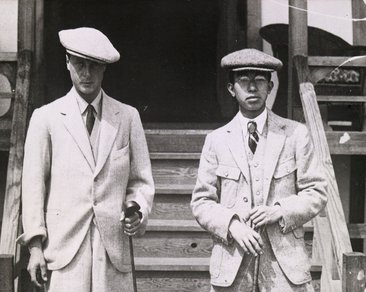
The Players


*Note to reader: Some of the following should include accents, which are included in the photos above but not in the main text (due to the limitations of this website)
Diet Culture
Before we can understand the repercussions of Taisho’s health on the Japanese monarchy, we first must step back and understand the country’s transformation under his father’s rule. Emperor Meiji took the throne in 1867 and within a year found himself the leader of a country embroiled in revolution. As we discussed a couple of weeks ago, for two centuries Japan had been under the control of a military style government, and the emperor was not the ultimate source of power. Under this style of leadership, Japan was a feudal country, made up of set social classes where the majority of the population rented land from the wealthy and worked it to earn a living. A system like this made it effectively impossible to break out of your respective class, particularly for peasants.

The revolution of 1868 turned Japan’s political and social system upside down and, most importantly for our story, restored power and authority to the emperor. The revolution also opened a door that had previously been shut tight – the door to the West. With this door now open, Western ideas began to find their way into the minds of the revolutionaries and so Meiji was compelled to order the creation of a constitution (someone should have told them that the political system of the West isn’t all it’s cracked up to be…) This constitution was completed in 1889 and “established a bicameral parliament, called the Diet, to be elected through a limited voting franchise” (Britannica). It also adopted the Western practice of electing a prime minister. Emperor Meiji was now the center of authority in Japan, but he could potentially be influenced by this new Western-style government.
These Hoes Ain’t Loyal
This was the new world that Taisho inherited when he took the throne in 1912 at the age of 33. Right smack dab between the Russo-Japanese War that ended in 1905 (with our good friend Tsar Nicholas!) and the impending Great War (what we know today as WWI). Japan could no longer ignore the world around it and would require a strong leader to navigate it through the 20th century. Pretty much immediately upon taking the throne, and perhaps even before, Japan’s political leaders had decided Taisho was probably not going to be the guy they needed. In fact, Bix suggests that there was a belief among government elites that Taisho was so incompetent and his health so poor that it was best that they begin to take matters into their own hands. Admiral Yamamoto Gonbei, a future Prime Minister, went so far as to say that it was “loyal not to obey the emperor’s word if we deem it to be disadvantageous to the state” (Bix, 40). Barely a few days on the job and Taisho already had a loyalty problem.

So was it true that Taisho was too sickly and incapable of performing his duties as emperor? Much about Taisho and his life has been lost to history or purposefully buried, but a few stories managed to survive over the years that give us a little insight into just how his peers saw him. One such popular story describes Taisho reading a speech at a meeting of the Diet, rolling up his paper and looking through it as if he were a child with a telescope. It sounds quirky at best, but these were the kinds of stories that circulated during and after Taisho’s rule, perhaps in an effort to undermine the emperor and make him seem foolish. Hara Takeshi, a history professor at Meiji Gakuin University in Tokyo who remembers hearing this story as a child, argues that there is no real evidence that this incident actually ever happened. The reality is, according to Takeshi, “for the 12 years from the time of his marriage while crown prince until his succession to the throne, [Taisho] was in relatively good mental and physical health”. He even spent much of his time traveling throughout the country and interacting with the Japanese people. There is nothing that I read that indicates Taisho was a man suffering from poor mental health and, more importantly, the kind of poor mental health that would prevent him from carrying out his duties as emperor. So why the hate?
Stick to the Status Quo
It might surprise you to know that people in power tend to want to hold on to that power for as long as possible. This was the predicament for Japan’s political leaders in the early 1900s – after the Russo-Japanese War they were feeling the heat “from a series of public campaigns, waged mainly by [other] politicians, journalists, and intellectuals, to demand universal male suffrage” (Bix). The country had made strides under Meiji, but the people weren’t satisfied. In addition to demands for expanded voting rights, there was also a desire for legitimate and established political parties, as opposed to de-facto ruling groups that had existed under the old feudal system. This movement eventually came to be known as “Taisho democracy” because it picked up speed in the beginning years of Taisho’s rule. For those interested in maintaining the status-quo, none of this was good news, and the contrast between the leadership styles of Emperor Meiji and his heir was startling to some.

Meiji had been a grand figure who conducted his business and personal life like most of the monarchs we have followed here at ULTC – with pomp, circumstance and tradition. But from the little we know about Taisho, it appears that he was not an exact mold of his illustrious father. In fact, he reminds me a lot of the Romanovs who were criticized for their desire to live a simple life out of the spotlight. Tsar Nicholas and Taisho sat on their thrones at exactly the same time, and as we learned, this was a period of great change in Russia as well. Nicholas was condemned for not being a strong leader when his empire needed him the most. The same appears to be true of Taisho. He was a simple man who had no interest in the flashiness of being the emperor – his exact words were, “Emperor Meiji did things in his own way during his era, but I would like to keep them as simple as possible” (Takeshi). The nerve!!
Unfortunately, we know that things didn’t turn out well for Tsar Nicholas II and his family, and sadly the same is true for Taisho (although thankfully nothing nearly as tragic). Much of the literature I have read suggests that only after Taisho became emperor did he show signs of increasingly poor health, though the specifics of his illness are unclear. It became more and more obvious to those outside of the royal family that Taisho was a leader more in theory than in actual practice – he sat on the throne but the strings were being pulled from those in power behind the scenes. According to Takeshi, Taisho’s physical and mental decline were mostly likely due not to lingering effects of the illness he had experienced as a newborn, but actually due to the strain and demands of life as the emperor. Where he had once been lively and enthusiastic, Taisho seemed to shrivel under the constraints of his leadership role. Even one of his sons claimed that his father was a completely different person once he became emperor. In 1920, leading government officials decided that it was time to start planning for a different future, one that would star the son instead of the father.
Hiding in Plain Sight
Taisho’s oldest son Hirohito was 19 years old when he was sent abroad on what was essentially a smoke and mirrors tour meant to highlight Japan’s bright future and distract from the man that many considered to be a national embarrassment. It was time to show that the Japanese monarchy was strong. It was a successful trip, but the celebrations after Hirohito’s return did not last long. On November 4, 1921, Japan’s Prime Minister was assassinated by a political dissenter, convincing government leaders that change was needed now more than ever if they were to get a handle on the volatile situation. It was time for an emperor who could take charge. Three weeks later, Hirohito was announced as the new regent, who would rule in his father’s stead because Taisho was too “unwell” to fulfill his duties. The public was told, that “his majesty’s decline of mental faculties seems to be aftereffects of the brain illness he suffered in childhood” (Takeshi). We know that Taisho was actually sick at this point, but we don’t know what was ailing him or how serious it was. Based on the fact that Taisho had been functioning normally for so many years, able to finish school, get married, father children and travel Japan, it is hard to believe that the effects of neonatal meningitis had suddenly rendered him unable to function forty years later. Takeshi claims that Taisho actually refused to retire, further giving credence to the theory that he was forced off the throne prematurely. But the Japanese people knew that Taisho had been sick as a child, and he had been increasingly withdrawn from society as of late, so it was not far-fetched for them to imagine that the years had finally taken a toll on their emperor.
For the next five years Hirohito continued to act as emperor in place of his father and Taisho’s “retirement” marks a distinct end to the limited information I was able to find on the former emperor. He seems to have disappeared from public life and, as a result, from the records of history. What we do know is that in 1926 the palace announced that Taisho was seriously ill and he subsequently passed away on Christmas Day that year. I have access to information and answers to questions about monarchs that lived 500+ years ago but I can’t tell you how or why Taisho died at the young age of 46. But with his death, his son Hirohito officially became emperor of Japan and beckoned a new chapter in the country’s history. Gone were the days when Japan worked overtime to convince the rest of the world that it was run by a strong leader – Hirohito left no doubt that he was the one calling the shots. And those shots included one of the most poignant moments in American history – the December 7, 1941 attack on Pearl Harbor. As we know, this attack brought the United States into the fold of World War II and it was also Hirohito who would make the decision to surrender to the Allies in 1945 following the atomic bombings of two major Japanese cities. There is much debate as to how much of a role Hirohito played in Japan’s decisions leading up to and during World War II, but what is clear is that Hirohito was a military man with great influence and it seems unlikely that as the center of power and authority, he did not play some kind of significant role.

Taisho In the Middle
Following Japan’s surrender, the monarchy once again transformed, this time coming to resemble what we now see with the British monarchy – it is more symbolic than it is actually authoritative. Despite the crimes committed by Japan during the war, Hirohito remained on his throne until 1989, even becoming the first reigning Japanese monarch to take a foreign trip (remember, he was still just a prince when he went abroad as a 19 year old). And so, both Taisho’s father and his son are two of the most notable Japanese monarchs in history – yet the man in the middle will forever be remembered as a weak and incompetent ruler who was counted out essentially at birth. Much like we saw with Diana and have heard recently from our Queen Meghan Markle, it seems like the constraints of the throne stole his spirit and did not endear him to his peers. But Taisho’s ascension to the throne marked a critical point in Japanese politics and culture as the country turned its eyes to the West and the possibilities that lay beyond its borders. So put some respeck on his name.
References
Bix, Herbert P. Hirohito and the Making of Modern Japan. HarperCollins, 2000.
History.com Editors. “Hirohito.” History.com, A&E Television Networks, 9 Nov. 2009, http://www.history.com/topics/world-war-ii/hirohito-1.
Keene, Donald. Emperor of Japan Meiji and His World. Columbia University Press, 2002.
“Meiji.” Encyclopædia Britannica, Encyclopædia Britannica, Inc., http://www.britannica.com/biography/Meiji.
“Meiji Constitution.” Encyclopædia Britannica, Encyclopædia Britannica, Inc., http://www.britannica.com/topic/Meiji-Constitution.
“Meiji Restoration.” Encyclopædia Britannica, Encyclopædia Britannica, Inc., http://www.britannica.com/event/Meiji-Restoration.
Takeshi, Hara. “Emperor Taishô–Image vs. Reality.” Japan Quarterly, vol. 48, no. 2, Apr. 2001, p. 56. EBSCOhost, search.ebscohost.com/login.aspx?direct=true&AuthType=ip,shib&db=f5h&AN=7696724&site=ehost-live&scope=site.
“Tokugawa Period.” Encyclopædia Britannica, Encyclopædia Britannica, Inc., http://www.britannica.com/event/Tokugawa-period.
Under Pressure

Follow the Facts
Like Stefanie, I had never heard of Emperor Taisho before we started researching for this series. After weeks of reading, I know little more than when I started. Any cursory Google search will tell you that Taisho suffered from mental illness, becoming “deranged” in his later years, but no one can tell you how. We know that his son became regent in his place in 1921, which is the most enduring piece of evidence that Taisho was unfit to rule. But 20th century Japan was not the most transparent of environments, and we just don’t have all the information about what exactly prevented Taisho from carrying out his duties as Emperor.
For all the vague and sparse details available about Taisho, there is one thing all sources absolutely agree on: he became sick with cerebral meningitis shortly after birth and was never the same. Meningitis has therefore been presumed to be the root of Taisho’s later psychiatric problems. Normally, I describe the symptoms of our subjects and work backwards to determine what the biological roots might be. This week, I’m turning things around. Given the limited information we have on Taisho and his struggles with mental illness, I’m going to start with what we know, that he had meningitis, and from there, describe what symptoms he may have struggled with as a result.
It Doesn’t (Dura) Mater
A fact that jumped out at me from Stefanie’s research was that 11 of Taisho’s 15 siblings died young. It sounded like a staggering number of deaths, but I did my homework to make sure it was unusual for the time. Indeed, Emperor Meiji’s children experienced a mortality rate double that of the rest of Japan in 1865, which was 36 deaths per 100 children under the age of 5. Unfortunately, we can’t know for sure why so many of Meiji’s children failed to survive childhood. Many scholars have pointed out that the restricted pool of eligible mates for the Japanese imperial family may have led to inbreeding, resulting in nonviable offspring.

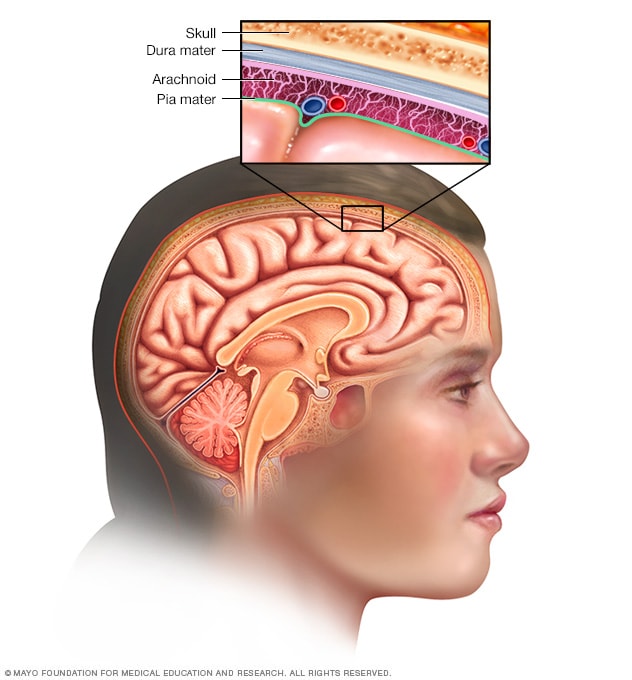
Taisho narrowly avoided becoming another premature death when he contracted meningitis as a newborn. Meningitis refers to swelling of the meninges, which are layers of protective membrane that surroud the delicate brain and spinal cord. The outermost layer is the dura mater, a thick membrane that encases sinuses important for draining fluid from the brain. Next is the arachnoid mater, which separates the dura layer from the cerebrospinal fluid, the fluid surrounding the brain and spinal cord. Last is the pia layer, a delicate membrane that clings tightly to the surface of the brain and spinal cord like saran wrap. The pia mater provides blood supply to the nervous system. Inflammation in these layers puts pressure on the underlying brain and spinal cord, disrupting the normal function of the nervous system.
Brain on Fire
Meningitis can have a variety of causes. Most commonly, a viral or bacterial infection causes an immune response in these membranes, causing them to swell. However things like brain trauma or cancer can also trigger meningitis. Given that the meninges are so important for the protection and function of the nervous system, it will come as no surprise that inflammation of the dura, arachnoid, or pia mater can have devastating effects. The symptoms and prognosis can vary based on the cause of disease (viral, bacterial, fungal, aseptic, etc.) and primary location (brain versus spinal cord), but the hallmarks are flu-like symptoms followed by fever, headache, nausea, impaired vision, dizziness, and stiff neck. In infants like Taisho, the symptoms are different. Early signs of meningitis in babies include seizures, irregular breathing, vomiting and reduced feeding. These are likely the warning signs that alarmed Taisho’s family shortly after his birth.

Meningitis can also lead to long-term issues. According to the United Kingdom’s National Health Service, between 33 and 50 percent of people who have had bacterial meningitis will go on to have lasting symptoms. These might include loss of hearing or vision, impaired coordination, and cognitive changes such as decreased memory or attention span.
Long-Term Relationship
Long-term consequences of meningitis are of particular concern when the patient’s brain is still developing, like Taisho’s was when he became ill. The details are a little fuzzy on the time of disease onset, but it’s likely that Taisho had neonatal meningitis, meaning he contracted it within the first 28 days of life. It’s been hard to rigorously study the developmental impacts of neonatal meningitis because of the few number of cases, but a 2003 paper was able to look at 111 children from the UK who survived neonatal bacterial meningitis (note: we don’t know that bacteria caused Taisho’s meningitis, but most neonatal meningitis research is done with bacterial cases because the root cause is easier to verify). All of the children were evaluated when they were 9 or 10 years old, eliminating confounding variables that could emerge from participants being at different stages of development. The researchers performed systematic evaluations of the children’s sensory, motor, and cognitive abilities. Compared to children born in the same hospital at the same time, kids who had meningitis as newborns had a lower average IQ, worse performance on a motor assessment , and increased likelihood of seizures, hearing loss, or a build up of cerebrospinal fluid. Keep in mind that these are the outcomes for children who had the benefit of modern medicine, not the resources available to Taisho in Japan in the late 19th century!
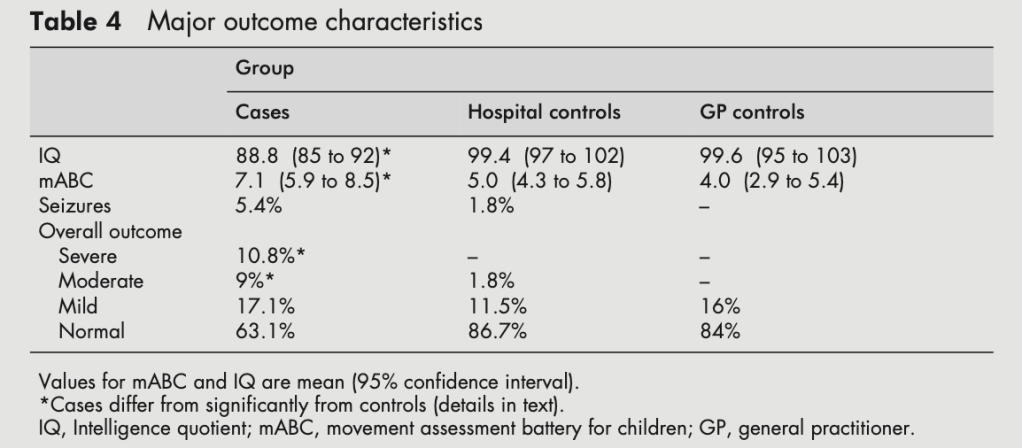
A 2011 review by researchers out of Johns Hopkins (not biased, swear!) sought to synthesize all available studies of neonatal bacterial meningitis patients that followed up with participants 5 years or more after infection. The results mirrored that of the 2003 study, finding that 78.3 percent of the children analyzed had intellectual or behavioral problems when evaluated 5-20 years after disease. This is consistent with what Stefanie told us about Taisho last week: that he had trouble in school due to poor attention and misbehavior.
Risky Business
I think it’s intuitive why meningitis perinatally can be so damaging, but what makes some neonates susceptible to meningeal inflammation? Infections of any kind are more dangerous for newborns because their immune system is still developing. Antibodies, those things you’ve been hearing about non-stop for the past year, are key players in immunity against a variety of pathogens. But babies don’t start cranking out their own antibodies until several months after birth. In the meantime, they rely on antibodies from their mother that they received in utero or through breast milk. As good as mom’s supply is, infants are more likely to have a more limited antibody repertoire that leaves them susceptible to infections.

There is research suggesting that there are additional factors that predispose infants to meningitis. One study found that neonates with meningitis were more likely to be born prematurely and at a low weight. In addition, maternal vaginal infections and oxygen shortage during birth were also linked to neonatal meningitis. This also made me think of Taisho. Stefanie mentioned last week that Taisho’s birth was extremely difficult, so much so that his mom was never welcomed in Meiji’s bed again. Those are all of the details we have, but it made me wonder if Taisho lacked oxygen during the long and arduous process, or if the trauma of the delivery triggered inflammation in his meninges.
Man of Mystery
The little information we have about Taisho’s childhood, that he was a bad student with poor health, aligns with modern observations of children who survived neonatal meningitis. We are largely lacking studies that track outcomes for these infants once they’ve reached adulthood, but it’s likely that the sensory, motor, cognitive, and behavioral effects of neonatal meningitis persist. The nervous system is delicate, particularly in early life. Meningitis not only puts physical pressure on the brain and spinal cord, but also damages the tissues that they rely on for support and protection. This causes major disruptions to the developmental processes that normally occur in newborns, altering the trajectory of nervous system organization and functioning for life. Neonatal meningitis creates deficits that would disrupt any life, so it is easy to imagine that Taisho was ill-equipped to deal with the demands that came with his position as emperor. But did meningitis leave Taisho truly “deranged” as he has so often been vaguely described? Stefanie will investigate next week to get to the bottom of why he was unfit for the throne: did the reason lay in his brain or in his subject’s heads?
References
Chandran, A., Herbert, H., Misurski, D., & Santosham, M. (2011). Long-term Sequelae of Childhood Bacterial Meningitis. Pediatric Infectious Disease Journal,30(1), 3-6. doi:10.1097/inf.0b013e3181ef25f7
Khaleesi, N., & Afsharkhas, L. (2014). Neonatal Meningitis: Risk Factors, Causes, and Neurologic Complications. Iranian Journal of Child Neurology,8(4), 46-50.
Meningitis and Encephalitis Fact Sheet. (n.d.). Retrieved from https://www.ninds.nih.gov/Disorders/Patient-Caregiver-Education/Fact-Sheets/Meningitis-and-Encephalitis-Fact-Sheet
Meningitis Complications. (n.d.). Retrieved from https://www.nhs.uk/conditions/meningitis/complications/
O’Neill, A. (2019, October 16). Japan: Child mortality rate 1865-2020. Retrieved from https://www.statista.com/statistics/1041855/japan-all-time-child-mortality-rate/
Stevens, J. P., Eames, M., Kent, A., Holket, S., Holt, D., & Harvey, D. (2003). Long term outcome of neonatal meningitis. Archives of Disease in Childhood – Fetal and Neonatal Edition,88(3), F179-F184. doi:10.1136/fn.88.3.f179
The Meninges. (n.d.). Retrieved from https://teachmeanatomy.info/neuroanatomy/structures/meninges/
Don’t Forget to Remember Me

The Players

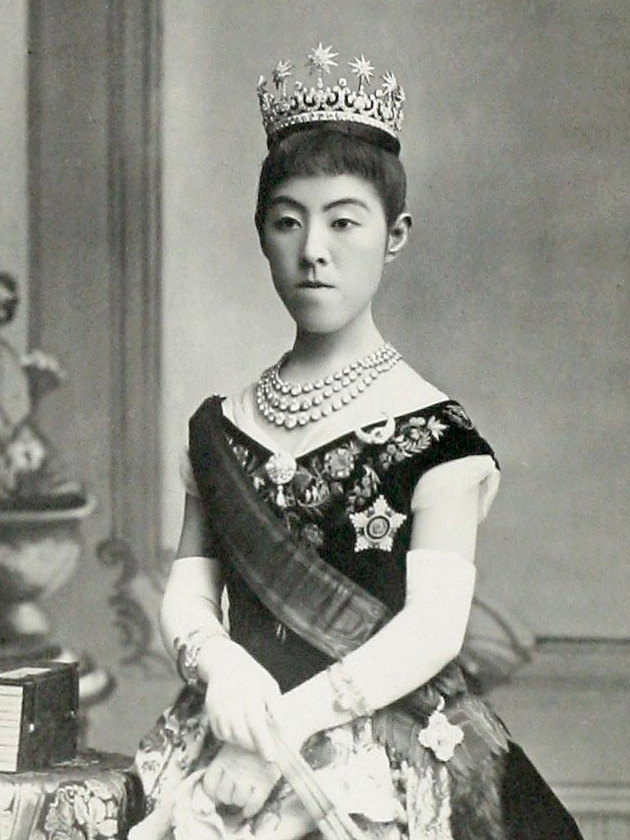


*Note to reader: If you notice discrepancies in the ages of our Players in comparison to when they were born/died, this is due to a practice in Japan of counting a child as 1 year old at the time of birth (as opposed to starting the clock at 0 like we would in the U.S.). This is how ages of members of the Japanese royal family during this period were often calculated and recorded in documentation, so I will do the same here.
*Second note to reader: Some of the following should include accents, which are included in the photos above but not in the main text (due to the limitations of this website)
You may have heard of the Meiji Restoration or of Emperor Hirohito, but I am willing to bet you have never heard the names Taisho or Yoshihito. And neither had I before embarking on this journey. What fascinated me about Japan’s Emperor Taisho (born Yoshihito) when I first began to research him was actually the lack of information I could find. Every other monarch we have covered has sections of libraries dedicated to them, but in all of my research I could not find one single book solely written about Taisho. He is only mentioned in biographies of his grandfather or son, which I found to be odd since there is an entire period of time in Japan referred to as “Taisho democracy”. The literature that does exist on the topic differs widely on what, if anything, was wrong with Taisho when he stepped aside from public life at the age of 42. His short rule, only 14 years, has been deemed insignificant by historians and by his own country, but this week ULTC is here to shed some light on the forgotten bridge between the Meiji and Hirohito Empires. Between these three men, Japan was ushered (and sometimes forced) into the modern world. As a result, the 14 years of Taisho’s reign cannot be overlooked.
Yoshihito’s father, Emperor Meiji, ascended to the throne in 1867 at the young age of 15. It was not unusual for Japanese emperors at that time to begin their reign so young, but Meiji’s experience as emperor would be anything but normal. In 1868, revolution broke out in Japan and the military was pushed out of the government where they had held influence and control for two centuries. This time in Japanese history “came to be identified with the subsequent era of major political, economic, and social change—the Meiji period —that brought about the modernization and Westernization of the country” (Britannica). It was also the beginning of the Japanese peoples’ intense distrust of their Western neighbors, who were seen as encroaching on their land and way of life.

I Will Survive, Keep on Survivin’
This was the world that the future Emperor Taisho was born into. Before he was the Emperor, Taisho was born Crown Prince Yoshihito on August 31, 1879. His father, as I mentioned, was the current Emperor Meiji, and his birth mother was the “gon no tenji” Yanagihara Naruko. The term means, for lack of a better word, concubine, and Meiji kept many of these women throughout his adult life. However, these women held more of a role than just being around for the emperor’s pleasure and were actually ladies-in-waiting to Meiji’s legal wife, Empress Shoken.
Yoshihito’s birth was traumatizing for his poor mother. Yanagihara survived the ordeal, but “it was so difficult and accompanied by such hysteria and screams of anguish that she was never again permitted to share the emperor’s bed (251, Keene)”. And the worry did not end there – when Yoshihito was only three weeks old, he contracted cerebral meningitis. Next week, Riley will walk you through meningitis in more detail, but essentially it is an infection that causes inflammation around the brain and spinal cord. I once had a friend in college who had it and I found him hallucinating in a bathtub with a raging fever, so imagine how scary it was for a baby to contract this infection in the 19th century.
Yoshihito’s prospects looked grim for a time; in fact, his father did not even meet him until December. By that time, the baby had turned a corner for the better and the country could finally celebrate the birth of a male heir! But wait…wasn’t Yoshihito a bastard if he wasn’t the son of the emperor’s legal wife? As we have seen over and over throughout our series, the birth of a legitimate heir could make or break dynasties. Henry VIII would have happily made his bastard son Henry FitzRoy his rightful heir if English law had allowed, possibly saving many young women’s lives in the process. However, the Japanese allowed for different rules and customs. Empress Shoken was unable to conceive her own children and so legally adopted Yoshihito, which made him legitimate in the eyes of the law. We have actually seen this before in our adventures and it is not completely unprecedented. In Caligula’s Rome, emperors commonly adopted boys who were then recognized legally as their sons, with all of the rights of a legitimate heir.
There’s No Place Like (Great-Grandpa’s) Home
For the first years of his young life, Yoshihito lived in the home of his great-grandfather Nakayama Tadayasu. Tadayasu was very fond of his great-grandson, but by the time Yoshihito was seven, he had moved back into the royal palace with his parents. Because of the close bond with his great-grandfather, Yoshihito was allowed to have sleepovers at Nakayama’s house. One night in 1885 during a visit, the price developed a severe fever and convulsions. In fact he was so sick, Yoshihito remained at the house for a month as he recovered his strength to be able to move back in with his parents. Keene suggests that this bout “was psychosomatic, induced by his reluctance to leave the nostalgic warmth of the Nakayama house for the solemnity of the palace” (Keene). In other words, something about his mental state triggered the physical symptoms – perhaps the fact that he was happier living with his great-grandfather?

Whatever the reason behind this episode, it further cemented the royal family’s concern that Yoshihito may not live to see adulthood. And that fear was justified – in all, Emperor Meiji fathered 15 children and only four survived. Yoshihito was the sole boy who survived infancy and “inevitably the court suspected that hundreds of years of imperial inbreeding had resulted in a genetic defect of some sort” (Bix). Since Yoshihito was all they had, he would continue to be raised as the country’s future ruler, with some adjustments made along the way. One of these adjustments was Yoshihito’s schooling. Unfortunately for the prince, who was scheduled to begin school with his peers by this time, he was not able to join the other noble children of his age because of his unpredictable health. Instead he was given private tutors and, perhaps not surprisingly for a seven year old boy, Yoshihito was difficult to control. His attention span was short and his behavior towards his tutors was less than polite. For a young prince, this was not unheard of (cough George Jr. cough), but it was believed that Yoshihito’s attitude was exacerbated by his delicate medical history. Because of the mysteriousness of his symptoms, “those around him, fearing that scolding might bring on convulsions, had permitted him to have his way in everything”(Keene, 407). So, he was a spoiled brat.
Inevitably this brat was deemed strong enough to enter the real world and in 1887, Prince Yoshihito finally began attending public school with kids his age. This was not only significant for Yoshihito personally, having spent the beginning of his life in relative lockdown in various homes, but for the crown in general. This was the first time that an heir had attended public school (shout out to my fellow public school kids!). Also of significance was the fact that Emperor Meiji was determined that his son’s education include history and customs of the West. Neither had been done before, and it was all a reflection of Meiji’s belief that “the old methods of education, based on the antiquated usages of the palace, were no longer viable”(Keene). The emperor was adamant that his only son be as prepared as possible to take the throne in a modern and changing world.
Marriage Story
By the time Yoshihito was a young man, his love of the West, influenced by his non-traditional upbringing, had only grown more intense. In fact, he was often known to speak French (something that the more traditional elders in Japan did not care for). Despite the fact that Yoshihito never managed to excel in school, or in the military positions he was appointed to, he was by all accounts a pretty happy young man who enjoyed traveling Japan and wasn’t interested in the rigidities and traditions of court life. But that didn’t mean he was not subject to its rules. After all, he was the heir and that meant he needed a wife to continue the family line. For a time, royal doctors could not decide if Yoshihito was in good enough health to begin a family – he was often too thin or recovering from various undocumented illness. Then in early 1900, at the age of 21, Yoshihito was informed that he was engaged to be married. (Side note: can someone please inform me that I am engaged to be married?) The lucky woman was Sadako, the future Empress Teimei, daughter of a nobleman. The choice of the future empress was critical and much debated, as there was understandably fear that any possible health issues she had would be exacerbated by the prince’s poor health, compromising their future children. It turns out Sadako was the woman for the job and in April 1901 Yoshihito’s first child was born – a son, who would eventually take the name Hirohito. To the relief of the nation, Hirohito appeared strong and healthy, unlike his father before him. Three more sons would follow for Yoshihito and Sadako.
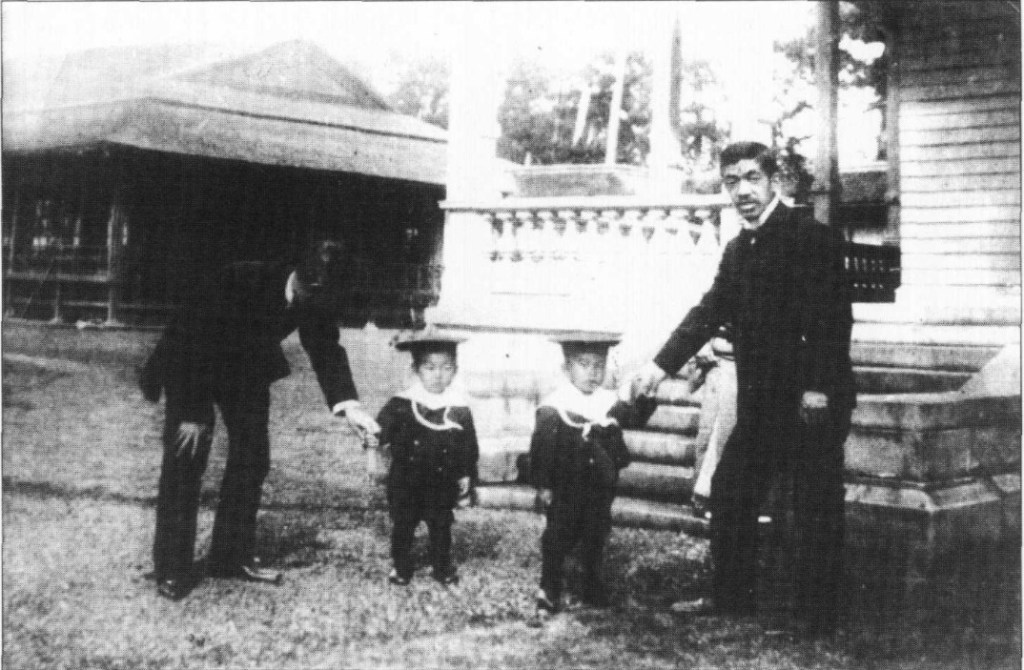
How To Lose A Guy In 9 Years
On July 30, 1912, at the age of 60, Yoshihito’s father Emperor Meiji passed away. It was Yoshihito’s time to shine. He took the name Taisho, but the new emperor’s reign would be brief compared to that of his father’s – a mere blip in Japan’s history. Only 9 years after Taisho was crowned Emperor, his son Hirohito was named as regent. As we have seen from our posts on monarchs such as George III and Juana of Castile, a regent was named to rule in the place of the king or queen (or emperor) in the event that they were unable to – for a multitude of possible reasons. From what we know of Taisho and his health struggles, it may not surprise us to hear that he was unable to continue carrying out his duties. But was that really the case? What exactly was wrong with Emperor Taisho and where did he go when he stepped down? Stay tuned, because not is all what it seems…

References
Bix, Herbert P. Hirohito and the Making of Modern Japan. HarperCollins, 2000.
Keene, Donald. Emperor of Japan Meiji and His World. Columbia University Press, 2002.
“Meiji Restoration.” Encyclopædia Britannica, Encyclopædia Britannica, Inc., http://www.britannica.com/event/Meiji-Restoration.
Takeshi, Hara. “Emperor Taishô–Image vs. Reality.” Japan Quarterly, vol. 48, no. 2, Apr. 2001, p. 56. EBSCOhost, search.ebscohost.com/login.aspx?direct=true&AuthType=ip,shib&db=f5h&AN=7696724&site=ehost-live&scope=site.
 Uneasy Lies the Crown