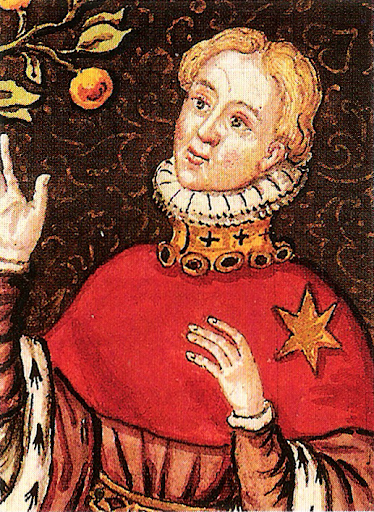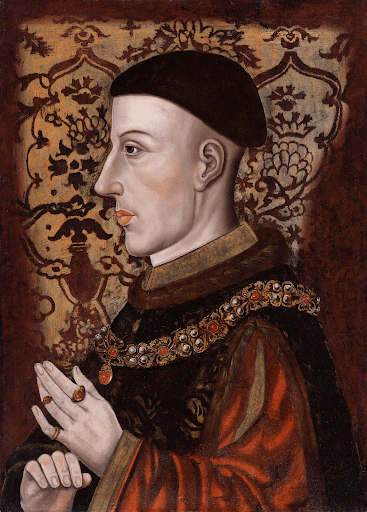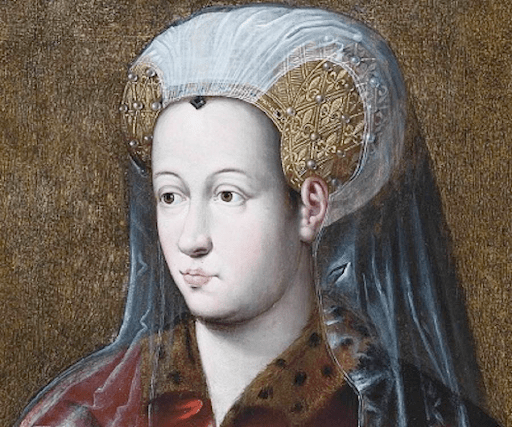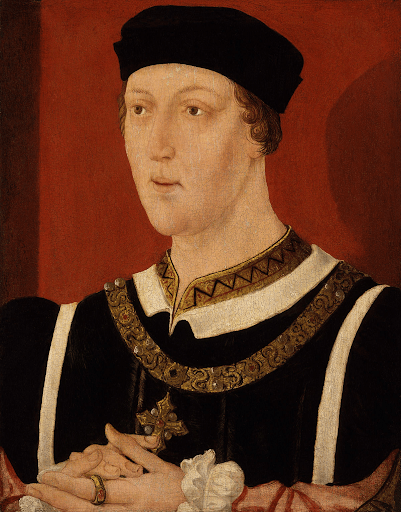
Charles VI: Mo’ Land, Mo’ Problems

The Players


Mo’ Land, Mo’ Problems

Now that we have Riley’s armchair diagnosis that King Charles VI suffered from schizophrenia, it is time to turn our attention to the repercussions inside France and beyond. In a time when everything from a country’s economy to its religion revolved around the royal family, stability depended on the monarch’s ability to maintain peace and rule with a steady hand. As we saw, King Charles VI began his reign with the best of intentions, but biology had other plans.

If today’s motto is time = money, then history’s motto is land = power. World history is composed of endless wars aiming to claim, maintain, or regain land. England and France were two of the great medieval powers and they were no exception to this narrative. Their longest stretch of fighting lasted 116 years, and centered on territory that both kingdoms claimed as their own (see map below), as well as who had the rightful claim to the French throne. Let me assure you that if women were running the world at this time, they would not have let this go on for a century. 


Got Enemies, Got a Lotta Enemies

In one corner, weighing in at 441 years old (at the time of Charles VI’s birth) it’s the Kingdom of England!
In the opposite corner, weighing in at 525 years old (give or take some years depending on when you start the clock), it’s the Kingdom of France!

Let’s get ready to rumbleeeeeee
!

The so-called Hundred Years War began a good 30 years before King Charles VI was born. This war with England was one his father Charles V had spent his reign fighting, and when Charles VI came of age he and the Marmousets set out in the hopes of brokering some kind of peace with England’s current ruler, King Richard II. Although things were never perfect between France and England during those years, it was as close to peace as the two countries had been in quite some time.

Unfortunately for those who were fans of peace, King Richard II was kicked off the throne of England and died in prison in 1400, and the new King of England was Henry IV (that succession issue is a whole other story. Look it up sometime, it’s called the War of the Roses. Not to be confused with the latest “The Bachelor” finale featuring Barb vs. Madison). Henry IV wasn’t a big fan of his predecessor Richard II’s attempts to broker peace with the French. Meanwhile, Charles VI’s episodes of psychosis were becoming more frequent, and his brother, Brother Louis, was doing a lot of bossing around at this time as a result. Brother Louis also wasn’t keen on a truce with England. He threw his support (essentially France’s support) behind Scotland and Wales, who at this time were not yet united with England as the Kingdom of Great Britain and so shared France’s hatred for their powerful neighbor. Needless to say, this did nothing to thaw England and France’s icy relationship. 

A timeline of which party was in control of the government, and in effect, of Charles VI.

France was also focused on rising tensions among its own nobles. Remember that in 1407, Brother Louis was assassinated and two sides coalesced- the Burgundians and the Armagnacs. Civil war exploded and now France had two enemies to worry about – itself and England. 

This map shows how land constantly changed hands throughout the Hundred Years War. The Map Archive.

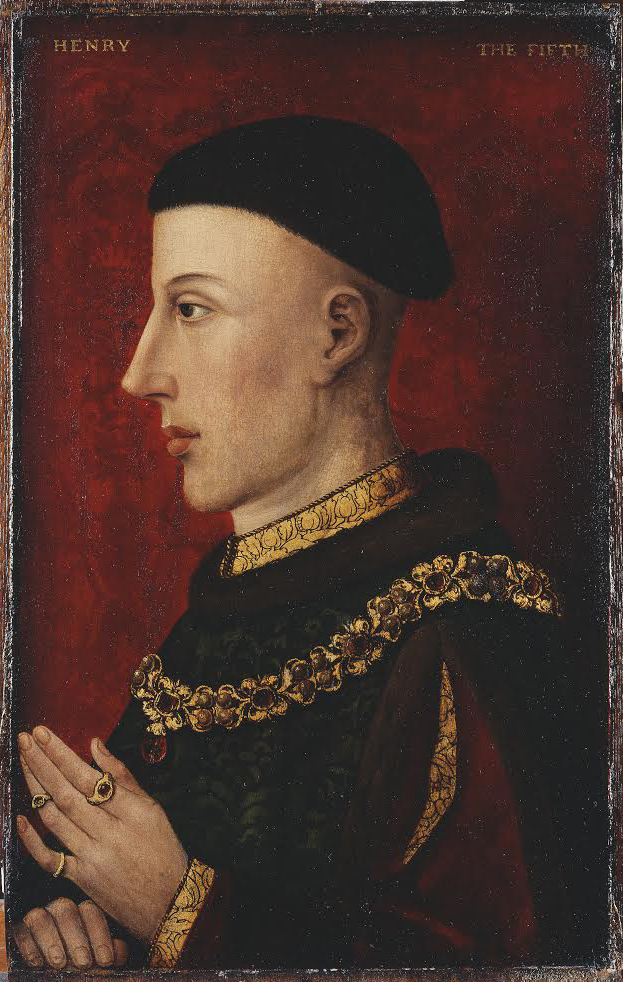
An important note – there are centuries of history behind the conflicts between France and England, and there would be centuries more. But I am just going to give you the bare bones of the situation so that we can see how Charles VI’s weaknesses jeopardized stability at home, and as a result, France’s position when it came to defeating England on the battleground. One of the most famous historical examples of this is the Battle of Agincourt. In 1413, Henry IV died and his son, Henry V, succeeded to the throne. What Henry V found was a France “torn apart by civil strife, headed by a mad king…[and] his for the taking (Norwich).” And so he set out with an aggressive agenda, and France and England met on the battlefield in 1415 at Agincourt. 

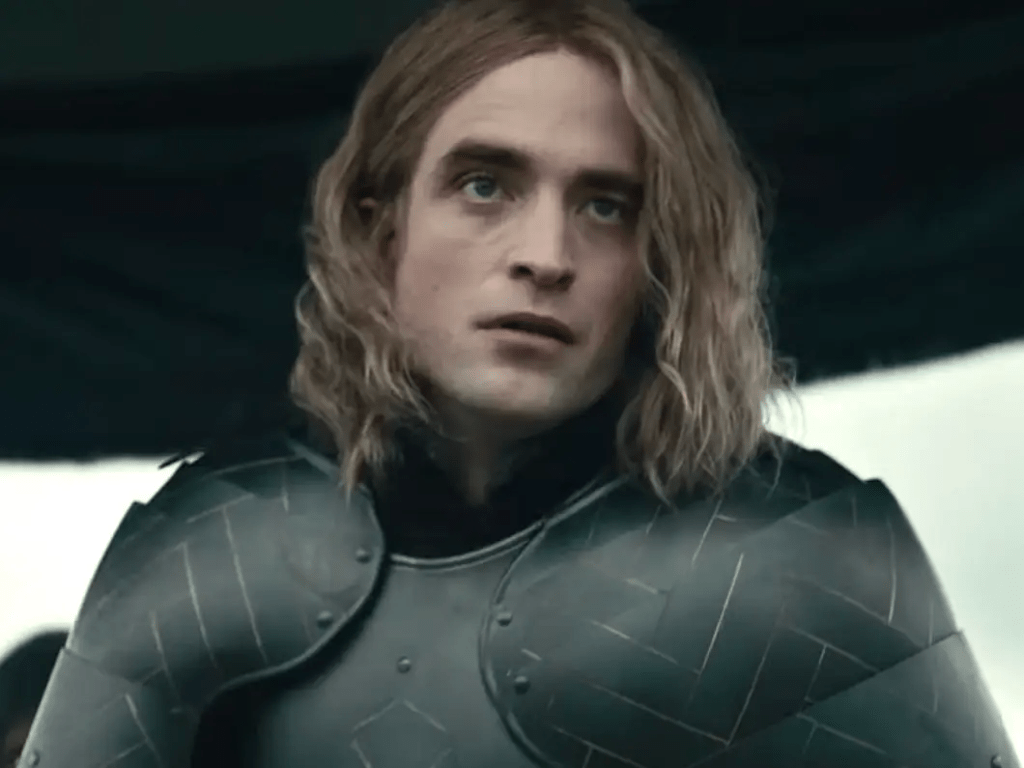
If you’ve ever seen “The King” on Netflix, starring one of my loves Timothee Chalamet as Henry V and Robert Pattinson as Charles VI’s son Louis for reasons I cannot understand, then you saw in some blend of truth and fiction how the Battle of Agincourt played out. Spoiler alert – England won against all odds. The English army had been depleted by disease and previous battles and were on their way back to England. When England’s army of about 6,000 men ran into 20,000 Frenchmen, it certainly was not an even fight. But what the English lacked in numbers they made up for in strategy and absolutely decimated their enemy. It was a massive defeat for the French, who lost 6,000 men that day. The English only lost 400 and they were able to return home in triumph. Seriously, it is a testament to how preoccupied France was with their own troubles at home with how badly they lost this battle. It was a devastating blow to France and they lost the upper hand in the war. Morale was shredded as France continued to fight amongst themselves. 

Timothee Chalamet as Henry V.
Robert Pattinson as Son Louis. Louis was not actually at the Battle of Agincourt.

99 Problems but a Brit Ain’t One

Five years later the French still hadn’t fully recovered, and King Charles VI was even less capable of ruling his kingdom. John the Fearless had just been assassinated and his son Philip the Good was now the new Duke of Burgundy. The Burgundians favored an alliance of sorts with England and so Philip the Good and Charles VI’s wife, Isabeau, teamed up and signed The Treaty of Troyes with England in 1420. Under the terms of the treaty, Charles VI’s daughter Catherine of Valois was married to King Henry V and Henry was named as Charles VI’s successor. Chucky was kicked to the curb after his alleged involvement in the murder of Philip the Good’s father. I want to emphasize that Charles VI was most likely not in any mental capacity to decide anything of importance at this point. Philip and Isabeau spoke for him, so whatever Charles VI may have wanted at this time didn’t really matter. He wasn’t running the show. Who knows if he really would rather have had an English king on the throne of France, as opposed to his own son, Chucky.

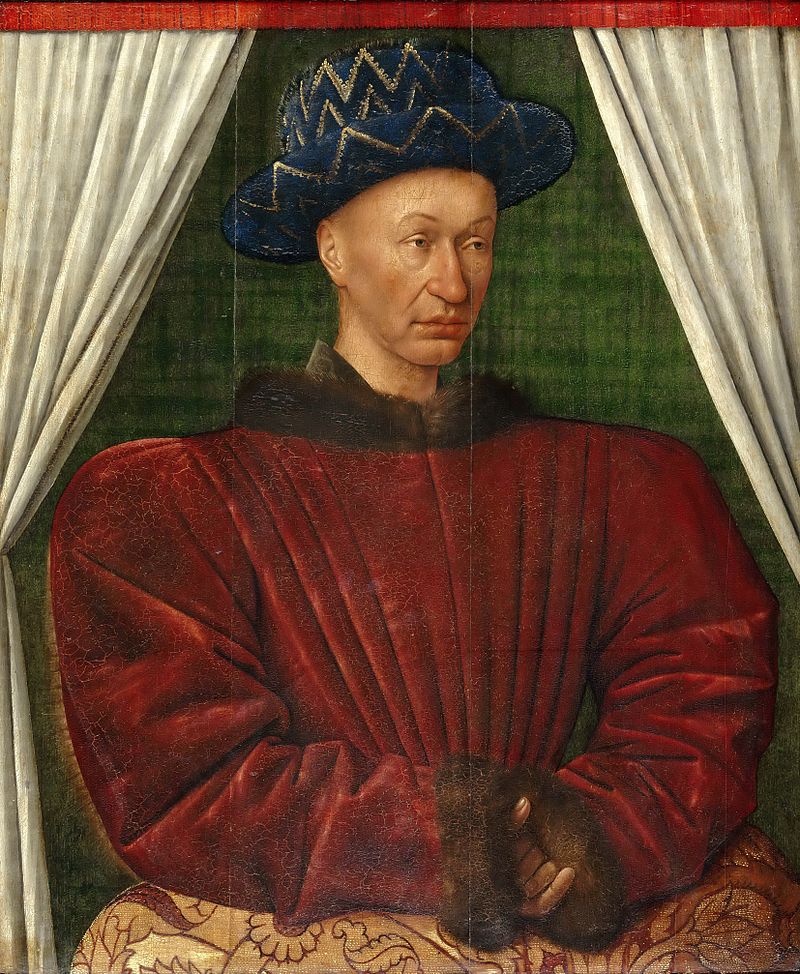
When Charles VI died in 1422 the legacy he left was that of a succession crisis. Obviously Chucky did not acknowledge the Treaty of Troyes and so instead he declared himself King Charles VII. But according to the treaty, the throne belonged to the new King of England, the infant Henry VI (and also Chucky’s nephew – Henry VI was the son of Chucky’s sister Catherine).

The rivalry between the Burgundians and the Armagnacs was amplified as they took sides in the debate of who should succeed Charles VI as king. The Burgundians had supported the treaty and the alliance with England, which makes sense because they were loyal to John the Fearless, who was assassinated apparently under Chucky’s orders. And so the Armagnacs naturally backed Chucky as King of France just to disagree with the rival Burgundians (not really that simple but who doesn’t love a little pettiness). This civil war that ignited as a result of Charles VI’s inability to maintain control during his periods of psychosis continued for the majority of Chucky’s reign. But Chucky was able to do what his father wasn’t. In 1435 he brought an end to the civil war and the violent legacy his father had left him with (but let’s be clear, Chucky certainly didn’t do anything to help it during his youth).

Even though things looked optimistic for King Charles VI’s rule in the early days, we unfortunately have no way of knowing what his legacy could have been had he not suffered from the debilitating effects of what was most likely schizophrenia. Would France have been spared the ravages of civil war if Charles VI had remained healthy and capable of ruling throughout his reign? Could the Hundred Years War have been more like the Sixty-Something Years War? The beginning of Charles’ reign certainly seemed promising. He appeared determined to rule with the wisdom of his father, and was open to working with England for some type of peace. 

Despite his rocky start, Chucky reigned for 40 years and earned the nicknames “The Well-Served” and “The Victorious”. He is probably best known for teaming up with resident bad-ass Saint Joan of Arc, who helped Chucky solidify his claim as the rightful king and fight against Burgundy and England (what did I tell you about women?). Despite the disaster that could have been for the French monarchy, France kept a French monarch on the throne until the dawn of the 19th century, and historians such as “Claude Gauvard suggest that it was the reign of Charles VI ‘which was the moment when the bureaucratic state was established in matters of justice and finance’, and one moreover capable of surviving long periods of royal incapacity (Potter).” 

I guess what I am saying is, it wasn’t all bad?


The following sources were referenced during the writing of this really, really complicated story:

Battle of Agincourt. (2010, July 21). Retrieved April 15, 2020, from https://www.history.com/this-day-in-history/battle-of-agincourt

Duby, G. (1991). France in the middle ages 987-1460. Oxford: Blackwell.

Horne, A. (2005). La Belle France: A Short History . New York, NY: Alfred A. Knopf.

Lanhers, Y. (2020, February 18). Charles VII. Retrieved April 15, 2020, from https://www.britannica.com/biography/Charles-VII-king-of-France

Man of Glass – The Strange Disorder of Charles VI of France: History Channel on Foxtel. (2018, March 2). Retrieved from https://www.historychannel.com.au/articles/man-of-glass-the-strange-disorder-of-charles-vi-of-france/

Martinez, J. (2019, October 18). Battle of Agincourt. Retrieved April 15, 2020, from https://www.britannica.com/event/Battle-of-Agincourt

Norwich, J. J. (2019). A history of France. New York: Atlantic Monthly Press.

Perroy, E. (1959). The Hundred Years War. Bloomington, IN: Indiana University Press.

Potter, D. (2006). France in the later Middle Ages. Oxford: Oxford University Press.

Sumption, J. (2009). Divided Houses. London: Faber and Faber.

The Editors of Encyclopaedia Britannica. (2019, December 2). Charles VI. Retrieved from https://www.britannica.com/biography/Charles-VI-king-of-France

The Editors of Encyclopaedia Britannica. (2020, March 5). Hundred Years’ War. Retrieved April 15, 2020, from https://www.britannica.com/event/Hundred-Years-War

Wagner, J. A. (2006). Encyclopedia of the Hundred Years War. Westport, CT: Greenwood Press.
Charles VI: Dark Side of the Prune

Lingo


Armchair Diagnosis

I will start out with a disclaimer: I am not a clinician. Not a psychologist, or a psychiatrist, or a licensed clinical social worker. I diagnosed an actor for my clinical psych final in undergrad and have watched far too many crime shows centered on forensic psychology, but otherwise have no qualifications. However, I am dedicating my life to understanding the brain and what happens to it during disease. I hope that in the spirit of looking at the past with new eyes you will tolerate some reckless speculation on my part, which will largely be based on diagnoses that historians and doctors have already proposed for the monarchs we will discuss in the months ahead.

Now to the man of the hour – Charles VI. There have been several theories of what caused his initial and subsequent breakdowns, but none seem as convincing to me as schizophrenia. To justify this, we will begin by looking at the fifth edition of the Diagnostic and Statistical Manual of Mental Disorders (DSM-5). The first edition of the DSM was published in 1952 with the purpose of creating a reliable system to diagnose mental illness. The hope was that no matter what doctor a patient went to, they would leave with the same diagnosis. The DSM is flawed to be sure, but as far as the tools we have to codify and reliably diagnose mental illness, it’s the go-to for clinicians. Published in 2013, the DSM-5 breaks mental illnesses into different categories, and provides strict diagnostic criteria for each disorder.


Delusions and Disorganization

In the case of schizophrenia, we can distinguish between positive and negative symptoms. Positive symptoms are present during the “active” periods of disease and are probably what your mom was thinking of when she warned you against smoking pot in high school: delusions, hallucinations, speech that doesn’t make sense, and disorganized thoughts and actions. Negative symptoms crop up outside of those psychotic episodes and are things like lack of emotion, decreased speech, social withdrawal, and lack of interest or pleasure in normal activities (no you don’t have schizophrenia, you’re just in coronavirus quarantine). According to the DSM-5, for someone to be diagnosed with schizophrenia they would need to show a minimum of two symptoms for at least a month. One of these symptoms has to be a hallmark symptom of delusion, hallucination, or disordered speech. As you might guess would happen if you were suddenly hallucinating or consumed with paranoia, there also has to be evidence that the symptoms interfere with your job, relationships, or ability to care for yourself.

Positive symptoms mean the person is experiencing something they normally wouldn’t, while negative symptoms mean they aren’t experiencing something that they normally would. From verywellmind.com

That brings us back to Charles. There were times when he thought he was made of glass (I’ll talk more about this in this month’s mini blog!), believed he was St. George, and was convinced he was being persecuted. Delusions – check. He sometimes “babbled nonsense.” Disordered speech – check. His fits of insanity were followed by periods where he just laid in bed, unable to do anything else, which is consistent with negative symptoms. While the duration of his first episode is unclear, historians report that as time went on Charles experienced more frequent and lengthy relapses. Modern studies of patients who have stopped taking their medications have found a similar pattern. They report that with each successive relapse a person experiences, they are less capable of recovering to their previous level of functioning. And I don’t think I have to convince you that Charles’ symptoms interfered with his ability to work. Handing the throne over to your rival country definitely won’t earn you an employee of the month certificate.

A couple of our readers guessed that Charles had bipolar disorder, and that’s a pretty good guess! In fact, these two disorders are often confused because of how “schizophrenic” and “bipolar” are used colloquially. Like schizophrenia, bipolar disorder, specifically bipolar I which is associated with impaired functioning, manifests in two distinct states. Bipolar patients experience periods of mania followed by depression. Some bipolar patients experience delusions or hallucinations, but in general these manic episodes are distinct from psychotic episodes in schizophrenia, and are characterized by increases in activity and talkativeness, decreased sleep, and an inflated ego. Bipolar periods of depression are also distinct from negative symptoms of schizophrenia, because they don’t necessitate the absence of activity. The historical sources describe Charles as being more erratic than manic, and the hallmark symptoms of delusions and disordered speech make schizophrenia a more plausible explanation to me.

I do want to take a moment to talk about the violence associated with Charles’ first psychotic episode (see Stefanie’s blog from last week). Mental illness is unpredictable, and thus those afflicted with it are often perceived as unpredictable and dangerous. While there is some relationship between schizophrenia and violence, especially during periods of positive symptoms, it is important to note that overall violence is not more common in those suffering from mental illness than the rest of the population. Therefore, we can’t use the fact that Charles killed several of his knights that day in the woods out of context to point to the fact that he may have been schizophrenic, or suggest that all schizophrenic people would kill their knights…if people still had knights, that is.

One of the less classical symptoms Charles had that I find interesting was his intermittent inability to recognize the faces of his family members. In 2016, a study by researchers at Harvard built off of many experiments reporting deficits in facial perception in schizophrenic patients. They recorded patients’ subjective performance on two different tasks. In the first, participants reported their level of everyday difficulty recognizing faces, which was a proxy for their application of facial information to social settings. In the other task, patients were evaluated on their performance on a task requiring them to pick out the face that matched a target image, indicating how well they are able to process visual information about faces.  Unsurprisingly based on the previous research, the researchers found that individuals with schizophrenia scored worse on both measures compared to healthy controls. However, there was another important difference between the two groups. In controls, performance in one test tended to track with performance on the other. Essentially, their ability to process sensory facial information and apply that information to everyday life were related, as you might expect. But in schizophrenic patients, these two abilities seemed to be unrelated, meaning that the ability to actually perceive faces and then the social implications of that perception are distinct processes in this patient population. Basically, this suggests that regions of the brain that perform different functions related to facial recognition (in this case sensory perception and social application of this information) are not communicating with one another.


The overactive gardener

This brings us to the modern theory of the neurobiological basis of schizophrenia: a disease of altered neural connections. It was known for a long time that people with schizophrenia had fewer synapses, the connections between their neurons, and altered patterns of communication between brain areas, but it wasn’t until recently that scientists were able to understand why. A landmark paper published in January 2016 (by my scientific crush Dr. Beth Stevens) found that genetic variations associated with schizophrenia affect an immune-related protein called complement component 4 (C4). C4 is part of something called the complement pathway, which is a network of proteins of the immune system that identify junk or dangerous materials in the body and coordinate their removal. During some periods of development, the complement cascade is also important for getting rid of certain synapses. Complement proteins tag synapses that aren’t very active, meaning the neurons they are connecting aren’t talking to each other, and then these will get gobbled up by cells in a process called pruning. Imagine a gardener taking a pair of clippers to an overgrown tree so that the healthy branches can flourish.

A diagram showing how synapses develop in the healthy brain. Note that early in development, the “branches” grow but then starting at about 4 years of age, they start getting pruned away. From embraceasd.com

Using a mouse test subject, the researchers in the Harvard paper found that C4 was able to trigger synapse elimination during a period of developmental pruning. Basically, this paper established a hypothesis (theory, not accepted dogma!)  that changes to C4 in schizophrenia cause the gardener to get carried away, pruning too many synapses and ultimately impairing the brain’s ability to communicate, which could explain the disorganized thought patterns that characterize disease.

In this figure, warm colors mean more loss of gray matter, the part of the brain that contains synapses. The dramatic loss of tissue in schizophrenic patients versus controls is striking! From Thompson et al (2001)

Your mom was right (kinda)

Okay, you might be thinking – I get it. It’s a genetic thing. Indeed, to some extent it is. Charles’ grandson Henry VI was also reported to experience periods of psychosis, suggesting that there was a genetic component. So why was Charles’ behavior normal until his early 20s if he always had this genetic defect? Well, that is actually the peak time of onset of schizophrenia in men, who are also more likely than women to develop the disease. This could be because brain regions that are affected in schizophrenia undergo a period of pruning in late adolescence and early adulthood, so C4 variations only manifest at this point. But it’s important to note that genetics cannot fully predict someone’s risk of having schizophrenia. Studies of affected families show that there is a complex inheritance pattern for schizophrenia, with close relatives often spared, and other disorders like bipolar disorder also present in the family tree. This indicates that genetics can predispose you to schizophrenia, but an environmental contribution is needed to develop the disease.

The risk factors that have been identified for schizophrenia raise more questions than they answer about how this disease develops. From verywellmind.com

Going back to the lectures you got from your mom about the dangers of drugs, it has been shown that drug use during adolescence and young adulthood increase your risk of developing schizophrenia, as do exposures to infections before or soon after birth. Trauma and stress are also risk factors. I can’t answer why Charles’ brain came undone at the exact moment when it did. Did his mother catch the flu when she was pregnant with him? Did the stress of his position in power prime him for madness when he was attacked by a stranger? Were there subtle warning signs that failed to make it into the historical records? The comprehensive picture of what happened in the brain of Charles VI  remains a secret of biology and nature. As exciting as the modern research is, there is still no complete picture of how schizophrenia develops or why.

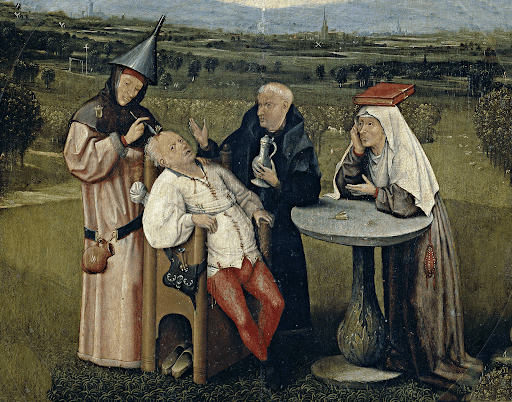
A painting depicting a popular medieval treatment for mental disorders called trephination, where a small part of the skull was removed. From inquiriesjournal.com

Today schizophrenia requires lifelong treatment with antipsychotic drugs, often, but unfortunately not always, accompanied by therapy. Negative symptoms are less rarely targeted by therapeutics, and people with schizophrenia are much likelier to die prematurely, mostly due to a tragically high suicide rate. While there is much to be done in the realm of understanding and treating schizophrenia today, there was dramatically less knowledge and understanding in France in the 14th and 15th centuries. Instead of getting medication and therapy, Charles VI was believed to be possessed, a common interpretation of the symptoms at the time. For centuries, schizophrenic patients were misunderstood, forced to endure “treatments” such as exorcism and blood-letting, made victims of charlatans and mystics who promised to heal them, and later abandoned to asylums where they were out of sight and out of mind. Things likely would have turned out differently for Charles and France had they known what we know now. Next week, we’ll talk about just that: how did the effects of Charles’ mental illness reverberate across Europe and throughout history?


References

For historical sources, see references from last week’s post, “Charles VI: Game of Thrones”

Causes: Schizophrenia. (n.d.). Retrieved March 31, 2020, from https://www.nhs.uk/conditions/schizophrenia/causes/

Chen, Y., & Ekstrom, T. (2016). Perception of faces in schizophrenia: Subjective (self-report) vs. objective (psychophysics) assessments. Journal of Psychiatric Research, 76, 136–142. doi: 10.1016/j.jpsychires.2016.02.012

Emsley, R., Chiliza, B., Asmal, L., & Harvey, B. H. (2013). The nature of relapse in schizophrenia. BMC Psychiatry, 13(1). doi: 10.1186/1471-244x-13-50

Hurley, K. (n.d.). What is Schizophrenia? DSM-5 Schizophrenia Definition & Symptoms. Retrieved March 31, 2020, from https://www.psycom.net/schizophrenia-dsm-5-definition/

Pompili, M., & Fiorillo, A. (2015, July 23). Aggression and Impulsivity in Schizophrenia. Retrieved March 31, 2020, from https://www.psychiatrictimes.com/schizophrenia/aggression-and-impulsivity-schizophrenia

Sekar, A., Bialas, A. R., Rivera, H. D., Davis, A., Hammond, T. R., Kamitaki, N., … Mccarroll, S. A. (2016). Schizophrenia risk from complex variation of complement component 4. Nature, 530(7589), 177–183. doi: 10.1038/nature16549

Truschel, J. (2019, November 25). Bipolar Definition and DSM-5 Diagnostic Criteria. Retrieved April 9 , 2020, from https://www.psycom.net/bipolar-definition-dsm-5/

What is Schizophrenia? (n.d.). Retrieved March 31, 2020, from https://www.psychiatry.org/patients-families/schizophrenia/what-is-schizophrenia

Charles VI: Game of Thrones

The Players

Any nicknames followed by “AKA” are not historically accurate, but trust me you will thank me later.

Also featured:

Marmousets – Councilors to King Charles V, and then King Charles VI

Armagnacs – Faction aligned with the House of Orleans

Burgundians – Faction aligned with the House of Burgundy


The Man

The story of how King Charles VI of France went from “The Beloved” to “The Mad” has many of the same elements that made “Game of Thrones” a hit: murder, family feuds, war, mad kings, and backstabbing. Fortunately for us, there’s no incest. If that’s why you are here, feel free to turn back now. Sorry to disappoint. 

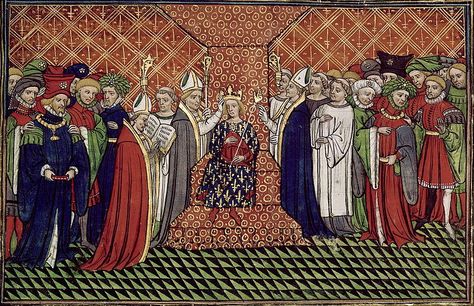
Charles was merely 11 years old— and heir to the throne—when his father, King Charles V, died in 1380. Even in the 14th century people knew it was foolish to let a child rule a country (note to America…). Thus a regency—a group of people appointed to serve in the King’s place—was created until young Charles VI was deemed old enough to rule alone. In addition to several members of the nobility, the regency included Charles’ three uncles – Philip “The Bold”, Duke of Burgundy; Louis, Duke of Anjou; and John, Duke of Berry. Let’s call them Uncle Phil, Uncle Louis, and Uncle John. One big happy family, pitching in to help make sure France was safe and prosperous by the time Charles VI took the throne…not. 

An image from the coronation of Charles VI when he was just 11 and under the control of his uncles. Image from commons.wikimedia.org

In 1384, Uncle Louis passed away. Uncle Phil and Uncle John saw their chance to rule the kingdom and make some extra profit. For the remaining years of Charles’ childhood, that’s exactly what they did. With the authority of the crown, Uncle Phil began buying up vast amounts of land and Uncle John became a collector of valuable objects. Nine years after his father passed, Charles finally took control of the crown at age 20, and it would take a lot of work to undo the problems his family had created.


The Myth

During the first years of his rule, Charles VI earned the title Charles the Beloved with a series of favorable policies. He reinstated the group of councilors—the Marmousets—that had served his popular father. The Marmousets “sought to reform royal government by making it “more rational and efficient” (Wagner). We stan a king who knows when to ask for help. And so, it appeared that Charles VI was poised to follow in the footsteps of Charles “The Wise” and leave a legacy his dad would be proud of. Until disaster struck.

There is some confusion among historians surrounding the exact events on the day in August 1392 when the course of Charles’ reign changed forever. The consensus seems to be that Charles was attacked by a stranger while riding through the forest with a number of his knights. At some point in the confusion and panic, Charles snapped and began to attack anyone within striking distance, supposedly shouting: “Forward against the traitors! They want to deliver me to the enemy!” (Norwich). Swords clashed, blood spilled and the sun beat down on a chaotic scene. By the time his entourage was able to restrain him, the King had killed a number of his own men, and had been reduced to a stupor in which he was unable to speak coherently or recognize anyone. What led to this fit of madness and extreme paranoia is something that we will explore later in this series, but what was immediately clear was that there was no way Charles could rule France in this condition. He was sent away to rest in an area of France with a pleasant climate (it’s amazing how many things doctors once believed could be cured by some good old fashioned Vitamin D). By September he seemed to have made a full recovery; however, within a year’s time, Charles VI experienced another episode. And so it continued for the remainder of his life, with the periods of coherence fewer and farther between. 

After his first psychotic episode in 1392, Charles VI experienced recurring periods of madness that left him incapacitated.
Image from brewminate.com

Charles VI’s inability to rule during these episodes left the monarchy vulnerable. Without the king’s influence, the Marmousets fell apart and the hounds were quick to descend. Some of the original cast of characters resurfaced, like Uncle Phil. While new players, like Charles’ brother Louis, Duke of Orleans, emerged. We will call him Brother Louis. (Also I lied about the incest – Brother Louis was married to his cousin. But honestly who wasn’t back then?) The rivalry between Uncle Phil and Brother Louis created a massive amount of tension and teams began to form. It got ugly. Any rules that you think would apply to quarreling family members did not exist. Remember, these were “Game of Thrones” rules. So, no rules. In 1404, Uncle Phil died and his son, known as John the Fearless, became the new Duke of Burgundy. Now the main contenders in this battle for power were cousins, and they were about to escalate the fight to a point of no return. 


The Legend…ary Fallout

Are you still with me?

As Potter points out, the French royal family “had always placed a greater premium on ties of blood than any other”. Apparently John the Fearless did not receive this memo. In a savage move he orchestrated the assassination of his cousin Louis in 1407. Louis, as in Brother Louis. King Charles VI’s brother.

 A loss of that magnitude would weigh heavily on even the healthiest of men, so imagine the toll that it took on someone already under immense emotional and psychological stress. Charles VI was distraught— he couldn’t make decisions, or think clearly. Sides formed once again. Those that sided with the new Duke of Orleans— Brother Louis’ son Charles, AKA Charlie —were dubbed Armagnacs (named after Bernard the Count of Armagnac, the Duke’s father-in-law who helped drive the movement). Those who aligned with the John the Fearless, Duke of Burgundy, were referred to as the Burgundians. 

The assassination of Brother Louis. Image from Wikipedia

Now is about the time that I start wishing medieval French parents used more than just the names Charles, Louis, John and Philip!!

Perhaps the biggest indicator of the state of Charles VI’s mental health was the fact that he allowed John the Fearless and the Burgundians to seize power and influence over the government after they murdered his brother. It’s not even like he picked sides. His fragile emotional and mental state caused him to basically lie down and let the Burgundians roll right over him. In fact, for the next decade, the king was at the mercy of the Armagnacs and the Burgundians as they fought to maintain control. 

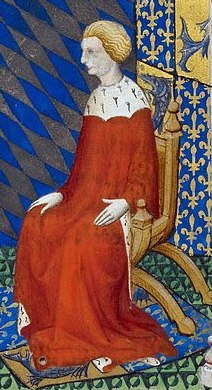
So what was Charles VI’s immediate family doing during all of this? The king’s son and heir to the throne, Louis, Duke of Guyenne, AKA Son Louis, is one of the rare characters in this story who tried to end the conflict that was tearing the country apart. In 1413, he created a third party that was loyal to the crown. Unfortunately, within two years Son Louis was dead of an unconfirmed illness. Next in line to the throne was John, Duke of Touraine, who was also dead by 1417 (again, it’s not clear what happened but one of the theories is that he was poisoned). Charles VI’s last remaining son who (shocker) was also named Charles, suddenly found himself as the heir. For our purposes we will refer to his son as Chucky. At this point in the hostilities, it’s hard to imagine that this 14-year-old boy could make things worse. But just as his father Charles VI was a pawn of warring factions, Chucky was a pawn of the Armagnacs, and susceptible to influence at his young age. In 1419, men that served Chucky assassinated John the Fearless, Duke of Burgundy. As the cherry on top, Chucky then declared himself regent (Wagner). 

Historians are rightly skeptical that Chucky just happened to come up with this idea to murder John the Fearless. What is more likely is that he was a puppet. Unfortunately for Pinnochio, the optics weren’t great and his dad was pissed. Like, imagine the angriest your father has ever been. With mine, it was that one time he found out I wanted to take a freshman to my senior prom. That was Charles VI. Charles VI disowned Chucky, his last remaining son and heir, and in 1420 signed a treaty that made perhaps the least acceptable man next in line: Henry V, King of England. 

In case you are confused about why Charles VI would name the king of England as heir to the French throne, you are not alone! This was a less-than-ideal solution to France’s issues— given that France and England had been at war since 1337 in what is now known as the Hundred Years’ War.  An underlying source of this conflict was England’s claim that the French throne actually belonged to them.

In addition to signing this treaty, Charles VI also had his daughter Catherine of Valois marry Henry, further bonding the two countries. At this point Charles VI was 52 years old (that is old for the Middle Ages), and with his deteriorating mental health no one expected him to outlive Henry, who was 20 years his junior. It seemed inevitable that an English king would ascend to the throne of France. 

Well, Charles VI shocked everyone and outlived Henry V by two months. Both men died in 1422. Now France had two choices for their next king – Charles VI’s backstabbing disinherited son Chucky, or Henry V’s infant son who was less than a year old. What could go wrong with choices like these?

Before I tell you how things turned out for France, Riley will take us on a tour inside Charles VI’s brain to investigate just what turned him from Beloved to Mad. Come back next Friday for her breakdown, and comment below or tweet us with any theories about just what was wrong with Charles VI.


The following sources were referenced during the writing of this really, really complicated story:

Duby, G. (1991). France in the middle ages 987-1460. Oxford: Blackwell.

Horne, A. (2005). La Belle France: A Short History . New York, NY: Alfred A. Knopf.

Man of Glass – The Strange Disorder of Charles VI of France: History Channel on Foxtel. (2018, March 2). Retrieved from https://www.historychannel.com.au/articles/man-of-glass-the-strange-disorder-of-charles-vi-of-france/

Norwich, J. J. (2019). A history of France. New York: Atlantic Monthly Press.

Perroy, E. (1959). The Hundred Years War. Bloomington, IN: Indiana University Press.

Potter, D. (2006). France in the later Middle Ages. Oxford: Oxford University Press.

Sumption, J. (2009). Divided Houses. London: Faber and Faber.

The Editors of Encyclopaedia Britannica. (2019, December 2). Charles VI. Retrieved from https://www.britannica.com/biography/Charles-VI-king-of-France

The Editors of Encyclopaedia Britannica. (2020, March 5). Hundred Years’ War. Retrieved April 15, 2020, from https://www.britannica.com/event/Hundred-Years-War

Wagner, J. A. (2006). Encyclopedia of the Hundred Years War. Westport, CT: Greenwood Press.

Coming April 3: Charles VI


Uneasy Lies the Crown is excited to announce our first series debuting Friday, April 3rd! Throughout the month, we will explore the life and times of Charles VI of France, a child king whose episodes of psychosis plunged France into decades of civil war.

Each month we will cover a new royal. On the first Friday, Stefanie will give you the historical background. A week later, Riley will break down what might have been happening in their brain. The third Friday will be a synthesis of what we discovered, and an analysis of the historical consequences of their mental illness. Then make sure to check back on the last Friday to read our free-for-all post – you never know what it might be!

Make sure to subscribe so you never miss a post, and we’ll see you back here April 3rd!