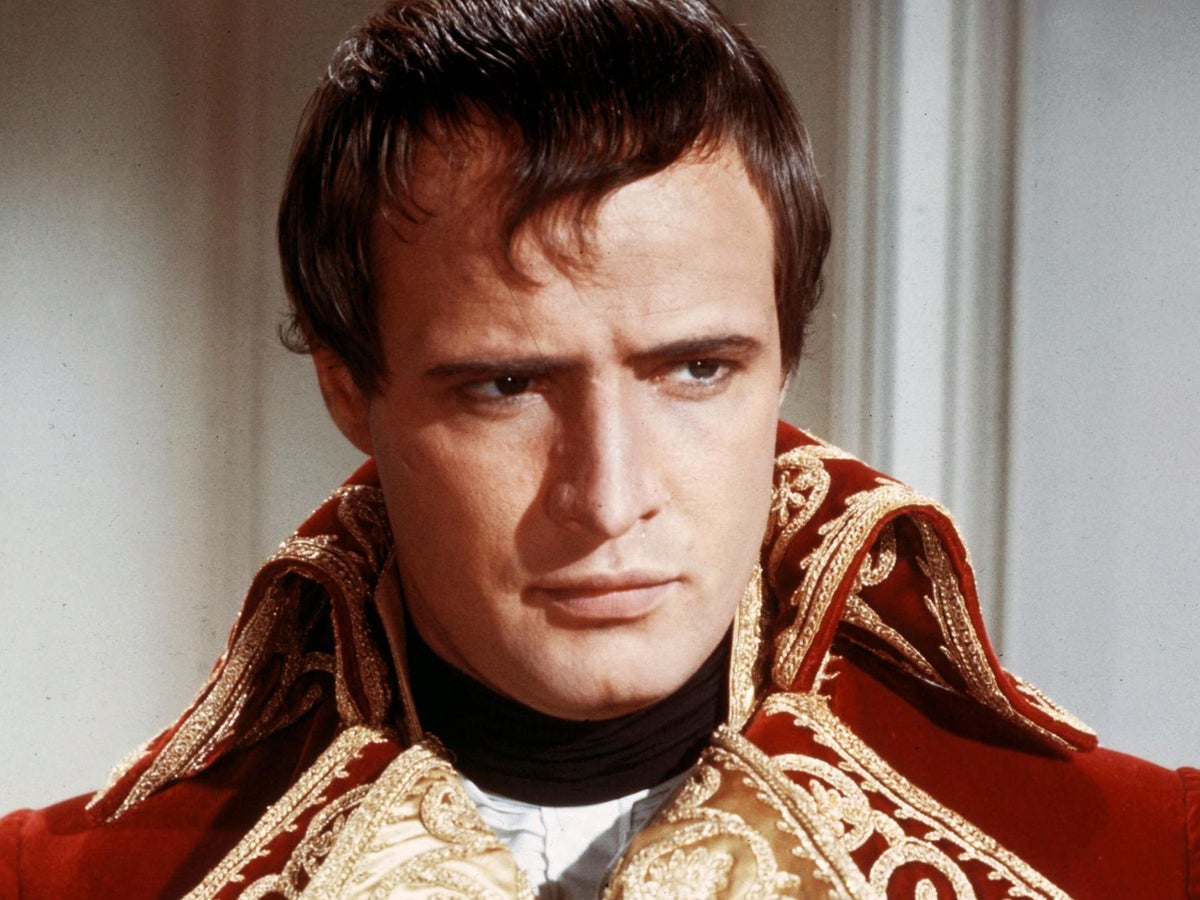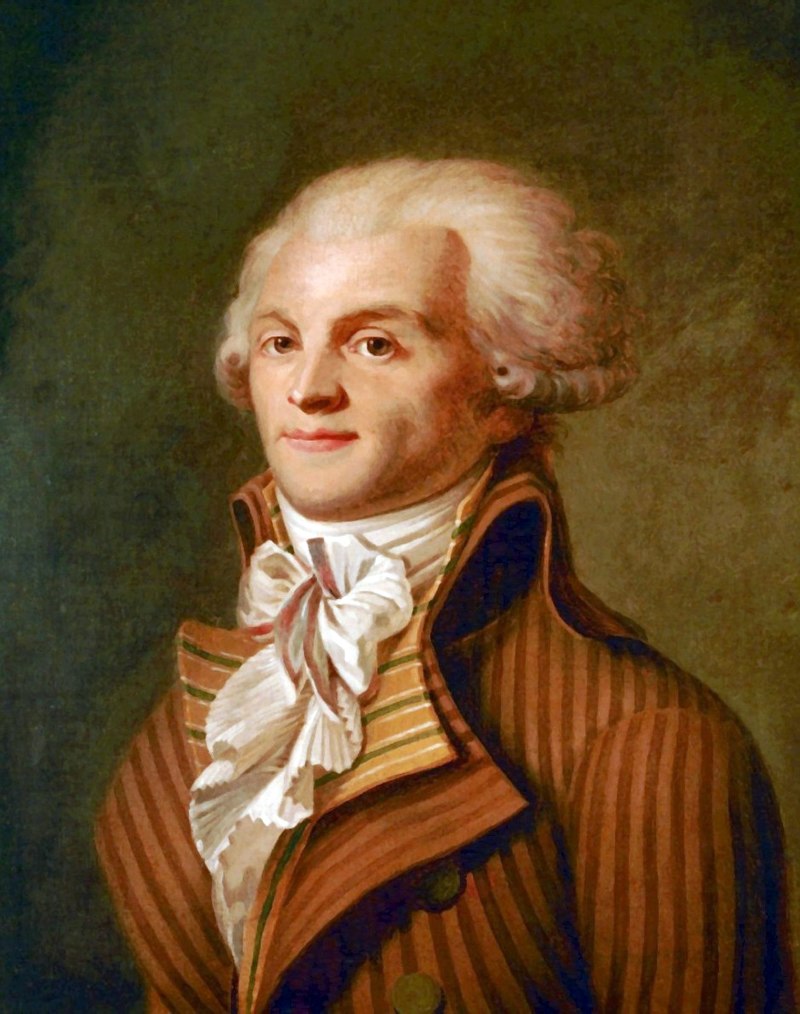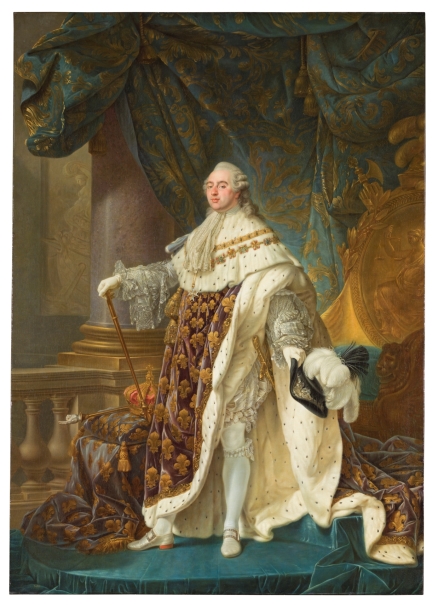
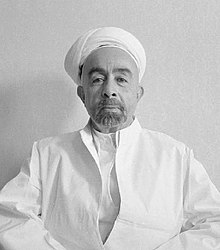
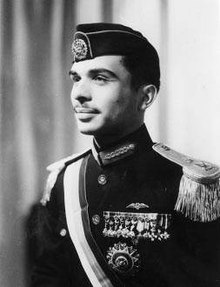
Promises, Promises


It might surprise readers of this blog to know that I did not in fact major in European history or take any classes on the British monarchy or formally study anything to do with what we have discussed so far on ULTC. Now doesn’t that instill confidence to keep reading?! In reality I was actually a Foreign Affairs/History major with a concentration in the Middle East. So, this month we are going back to my educational roots! But don’t quiz me because college was a longer time ago than I would care to admit…

It Runs In The Family

The history of the Middle East is arguably the most complex of anything we have covered to date – just the last century alone has marked significant shifts in its geographical landscape and stoked tensions thousands of years in the making. It is hard to remember a day in my lifetime when a country in the Middle East wasn’t mentioned on the front page of the news. And to best understand the impact of this month’s subject, King Talal of Jordan, it is imperative that we take a step back and understand the history of his family – the Hashemites. 

Hussein bin Ali’s sons – King Ali of the Hijaz, King Abdullah of Jordan, King Faysal of Iraq. Wikipedia.

The Hashemite family is (and I use present tense because there are still many members of the family alive today) originally from the Hijaz (the Western part of Saudi Arabia) and claims to be descended from the prophet Muhammad. Their name is taken “from Hashem, the great-grandfather of the prophet” (Shlaim). So yes, we are taking this time machine wayyy back. But our story really starts in the early 20th century, on the eve of World War I when the Ottoman Empire ruled the majority of what we now call the Middle East. The United Kingdom and its allies were eager to see this empire’s demise and the leader of the Hashemite family, Hussein bin Ali, saw an opportunity to increase his family’s influence by emerging as a leader in the Arab fight for independence against the Ottomans. The British viewed this as a chance to defeat the Ottomans and install allies in the Middle East and so the two sides became allies of sorts in 1916. As in most alliances, promises were made and promises were broken, something that would be a point of contention following the collapse of the Ottoman Empire as a result of World War I. The problem is that alliances and decisions were made by people who had no business making them, and these decisions continue to have dire consequences for this region and those that call it home today.

A timeline of the Ottoman Empire’s dominance, and eventual collapse, in North Africa and the Middle East. quora.com

Three’s A Crowd

In the wise words of one of the most iconic Housewives, Dorinda Medley, “Say it, forget it. Write it, regret it.” This is something that would have behooved the leaders of the western world to remember as they conspired to create territories in the Middle East in the beginning of the 20th century that were firmly under their control. Beginning in 1915, during World War I, the Hashemite leader Hussein exchanged a number of letters with Sir Henry McMahon, a British diplomat who was living in Egypt. The letters discussed the alliance between Arabs and the British against the Ottoman Empire, where McMahon effectively promised the creation of an independent Arab state if they revolted against the Ottoman Empire – a state that Hussein assumed he would reign over as the leader in the fight for independence. What these letters did not do was specify exactly what land this Arab nation or nations would include. To make matters worse, at the same time these letters were exchanging hands, the British and French were having secret talks of their own on how they would divide the Middle Eastern land they were soon to inherit. The Sykes-Picot Agreement of 1916 “led to the division of Turkish-held Syria, Iraq, Lebanon, and Palestine into various French-and British-administered areas” (Britannica). Finally, to tie a bow on this cluster, in 1917, British foreign secretary Arthur Balfour issued a letter that declared British support for a Jewish home in Palestine. 

Wiser words have never been said.

So let’s recap – in the span of two years, land that Hussein planned to use to create an independent Arab nation was promised to 1. Hussein and his family, 2. The British and the French, and 3. The Jewish nation. You don’t need to understand the complicated and deep rooted history of those involved to understand the gigantic issues these declarations and agreements created. From the wreckage of this mess, Hussein was eventually granted the title of King of the Hijaz by the British, or what today would be western Saudi Arabia. But the Hashemites were not satisfied – in their eyes, their people were owed and entitled to much more. Hussein’s sons Faisal and Abdullah had been heavily involved in the Arab bid for independence and as members of the influential Hashemite family, they had their sights set on nations of their own. In 1921, Winston Churchill granted Faisal the Kingdom of Iraq and in 1923, Churchill bestowed the kingdom of Transjordan on Abdullah. The catch was that both kingdoms were still in reality run by the British – they had the funds and the military, and now they had rulers who were loyal to the British crown.

And That’s The (British) Tea

The stage is now set for us to turn our attention to the man of the hour. That man, Talal, was born on February 26, 1909 to Abdullah, King of Transjordan. As Abdullah’s oldest son, he was also heir to the throne. Prince Talal spent his childhood years at a military school in England and when he graduated, he returned to Jordan and served in the Jordanian Army (which was actually run by the British). The Arab people’s dependence on the British was something that Talal could never reconcile, so it was perhaps not surprising that the Jordanian heir did not have the warm and fuzzies for the leaders of the country where he had spent his formative years. Talal eventually left the Army and in 1934 he married his cousin Sharifa Zain bint Jamil. Together they had four children, including their oldest Hussein (great-grandson of Hussein bin Ali from the beginning of our story) who will feature prominently in this series. 

Talal’s father Abdullah was granted the kingdom of Transjordan, which eventually became the independent country of Jordan in 1946. Wikipedia.

In July 1951, young Hussein was with Abdullah at a state ceremony where he witnessed at close range the assassination of his grandfather by a Palestinian man. Abdullah’s sudden death was a point of concern for multiple reasons. The first was the fact that Abdullah had been a loyal ally to the British, whereas his son and heir, Talal, was notoriously anti-British. The second reason for concern was perhaps more pressing – when the prince received news of his father’s murder, he was in Switzerland and he wasn’t on a glamorous vacation. Talal had been sent to Switzerland to receive medical treatment for what was reported to be schizophrenia. So now the king was dead and his heir was out of the country and medically unable to fulfill his duties. You know what that means….it’s regency time!! 

What Time Is It?? It’s Regency Time!

It wouldn’t be Uneasy Lies the Crown without a classic regency debacle, and Prince Talal was no exception. And to add on to the drama, there was a question of who was to succeed Talal if he was unable to competently rule. The issue lay in the Jordanian Constitution:

“The “The Jordanian constitution of December 7, 1946, in its English version, unambiguously designated Talal, the first-born son of the founder of the dynasty, as successor. But an error in the Arabic translation made it possible to argue that if Talal did not succeed to the throne, his half-brother Naif would be next in line of succession” (Shlaim) 

So what was essentially a typo opened the door for debate of the future of the throne, and because Talal’s son Hussein was underage, it also created a path for his half-brother Naif to be named regent by the Jordanian government. However, it was the briefest of stints, as his regency only lasted for two months and a half-hearted attempt to take the crown permanently ended in Naif’s departure from Jordan. The Jordanians and British calling the shots in the government made the decision to bring Talal back from Switzerland and crown him king, but not because they were big Talal fans. The end game was to get his son Hussein on the throne, something that became quite evident by the fact that Talal was King of Jordan for just one year. He was crowned in July of 1951 and “abdicated” in August of 1952. I use quotes there because it is unclear how much say Talal had in the decision. Judging by the treatment he received following the abdication, it doesn’t seem like much. He was swiftly sent to live out the remainder of his life alone in Turkey, where he died in 1972 at the age of 63.

King Talal during the briefest of reigns. Wikipedia.

What exactly was wrong with Talal is something that is up for debate and that we will explore next. Unfortunately, much like my experience with researching Emperor Taishō of Japan, there is a frustrating lack of biographical information available on Talal. There may be several reasons for this, one being the fact that Talal was king for only one year. Another is the theory that Talal’s illness was made up or exaggerated so that he could be easily passed over in favor of his son, who was much more British-friendly. Was Talal actually suffering from a debilitating mental illness that warranted specialized treatment and rendered him unable to rule, or was he the victim of a political game that he couldn’t win?

Resources

“Balfour Declaration.” Encyclopædia Britannica, Encyclopædia Britannica, Inc., https://www.britannica.com/event/Balfour-Declaration.

“Hussein-McMahon Correspondence.” Encyclopædia Britannica, Encyclopædia Britannica, Inc., https://www.britannica.com/topic/Husayn-McMahon-correspondence.

Shlaim, Avi. Lion of Jordan: The Life of King Hussein in War and Peace. Vintage Books, 2009.

Simon, Reeva S. “The Hashemite ‘Conspiracy’: Hashemite Unity Attempts, 1921–1958.” International Journal of Middle East Studies, vol. 5, no. 3, 1974, pp. 314–327., https://doi.org/10.1017/s0020743800034966.

“Sykes-Picot Agreement.” Encyclopædia Britannica, Encyclopædia Britannica, Inc., https://www.britannica.com/event/Sykes-Picot-Agreement.

References

Aileen Ribeiro | Published in History Today Volume 27 Issue 6 June 1977. “The King of Denmark’s Masquerade.” History Today, https://www.historytoday.com/archive/king-denmark%E2%80%99s-masquerade.

Caroline Mathilde, Queen. “The Queen of Denmark’s Account of the Late Revolution in Denmark [Electronic Resource] : Written While Her Majesty Was a Prisoner in the Castle of Cronenburgh; and Now First Published from the Original Manuscript, Sent to a Noble Earl.” In SearchWorks Catalog, http://searchworks.stanford.edu/view/8034055.

“Frederick VI.” Encyclopædia Britannica, Encyclopædia Britannica, Inc., https://www.britannica.com/biography/Frederick-VI.

MUNCK, THOMAS. “Absolute Monarchy in Later Eighteenth-Century Denmark: Centralized Reform, Public Expectations, and the Copenhagen Press.” The Historical Journal, vol. 41, no. 1, 1998, pp. 201–224., https://doi.org/10.1017/s0018246x9700770x.

REDDAWAY, W. F. “King Christian VII.” The English Historical Review, XXXI, no. CXXI, 1916, pp. 59–84., https://doi.org/10.1093/ehr/xxxi.cxxi.59.

S.M. Toyne | Published in History Today Volume 1 Issue 1 January 1951. “Dr. Struensee: Dictator of Denmark.” History Today, https://www.historytoday.com/archive/dr-struensee-dictator-denmark.

Schioldann, Johan. “‘Struensée’s Memoir on the Situation of the King’ (1772): Christian VII of Denmark.” History of Psychiatry, vol. 24, no. 2, 2013, pp. 227–247., https://doi.org/10.1177/0957154×13476199.

Skeezy Lies the Crown: Hapsburg Podcast

This month on the podcast, we expand on one of our most popular mini blogs to unravel the biology underlying a staple on this show: incest. Strategic marriages between related individuals were common power moves for royal families, but as the story of the Hapsburgs shows, playing with genetics is a dangerous game.

Plus: The return of Mr. Lynch. An excess of Formula 1 Talk. Jen Shah’s trial was postponed. Is Jay Leno a Hapsburg?

Thanks for joining us and remember to subscribe and leave a review on your podcast platform of choice!

Making a Murderer: Prince Albert Victor Uneasy Lies the Crown

The notorious Jack the Ripper murders in 19th century London have generated plenty of high-profile suspects, but none more salacious than Prince Albert Victor, the heir to the British throne. True crime meets ULTC in this episode exploring the theory that syphilis turned the prince into a killer. Plus: Why Riley is leaving true crime in 2024. British tabloids never stop. He's a 10 but he likes Through the Looking Glass.
  1. Making a Murderer: Prince Albert Victor
  2. Chief Among Us: Opechancanough
  3. Chemobrain: Duchess Catherine
  4. Forget Me Not: Taisho
  5. Scandalnavia: Christian of Denmark

Napoleon Complexity

Confounding Variables

As Stefanie told you last week, Napoleon likely died from stomach cancer, the same disease that took his father’s life. But despite an abundance of evidence from the autopsy, skeptics have retained their doubts over the centuries. Just last year, on the 200th anniversary of Napoleon’s death, a group of pathologists published a paper trying to quell suspicions that there was foul play involved in his passing; foul play that could have explained his mental illness.

More on the alternative hypothesis for his odd behavior in a moment. First, why is there so much confusion over the cause of death when the autopsy report described ulcers, tumors, and “ground coffee-like” substances in Napoleon’s gut? It’s probably because there’s not just one autopsy report; there are three. The autopsy was conducted by Dr. Francesco Antommarchi, a fellow Corsican who was in charge of Napoleon’s medical care while he was in exile. But it seems Antommarchi’s expertise lay more in anatomy than patient care, and after some blunders, Napoleon lost trust in him completely and refused to be seen by him. Even so, Antommarchi led the autopsy in a room with 16 other people. He published the original report in 1821. Another doctor who observed the autopsy took his own notes that were circulated after he sent them to a friend in 1823. And then Antommarchi confused everyone by publishing an account of the autopsy that conflicted his 1821 report in his memoir in 1825. And these are just the reports that have some credibility. In 2001, the Foundation Napoleon reported that there was extensive evidence that Napoleon had died of tuberculosis that had gone undiagnosed by Antommarchi, but I struggled to find other sources to confirm this (most of the primary sources are in French). 

Dr. Francesco Antommarchi was kind of a disaster. How hard is it to get good help these days? Hektoen International

And then there was a 1962 article in Nature that found high levels of arsenic in a sample of Napoleon’s hair and concluded he had been killed by chronic arsenic poisoning. Although arsenic poisoning doesn’t tend to cause behavioral changes, it can have widespread effects on neurotransmission, causing changes in memory and cognition. Translation: it could have affected Napoleon’s brain. We at ULTC like a good poisoning plot as much as the next gal, but a 1982 paper also published in Nature showed using a separate hair sample with more modern techniques did not reveal any evidence of elevated arsenic. 

As an aside, you might be wondering why there were multiple hair samples of Napoleon’s floating around over 100 years after his death. It turns out that Antommarchi harvested his organs and other “relics” during the autopsy – including his penis. According to one of Napoleon’s valets, Antommarchi cut it off and it was eventually given to an Italian priest. In 1927, it showed up at an art museum in New York and was then bought by a famous urologist (I can’t even begin) in 1977. Testing has shown it is in fact a penis but it’s unclear if it’s Napoleon’s. What is clear is that Antommarchi was a little whacky (I’m beginning to wonder if these royals ever had a doctor who was competent and above board.) Together with the discrepancies between autopsies and more modern evidence contradicting the poisoning theory, I think it’s safe to say that alternative medical explanations for Napoleon’s behavior are red herrings.

Freudian Slip

I know you’re dying to find out the diagnosis, but before I get to the neuroscience, let’s take a detour to the field of psychoanalysis. Stefanie mentioned last week that Napoleon’s self-important airs gave rise to the idea of a Napoleon complex, a pattern of aggressive and superior behavior meant to overcompensate for physical or social limitations (usually height). “Complex” is a term popularized by psychologists like Jung and Freud, and the American Psychological Association (APA) describes it as, “a group or system of related ideas or impulses that have a common emotional tone and exert a strong but usually unconscious influence on the individual’s attitudes and behavior”. In Napoleon’s case, psychoanalysts theorize that his obsession with control and power stemmed from his insecurities surrounding his modest upbringing and fears that he was impotent (or his short stature, despite the fact that he was actually around normal height).

This graphic tee, a staple for girls in primary school in the mid-aughts, would have been perfect for Napoleon. Walmart

Having a complex does not necessarily mean that you have a mental illness. But it does illustrate something important about this week’s subject. In the past, we have discussed concepts like mood, cognition, and perception; well-defined aspects of a person’s inner life. But in the case of Napoleon, the theory is not that he suffered from a deregulated mood or garbled thought process. The idea is that Napoleon’s entire personality was pathological.

One Size Fits None

Personality is an ambiguous concept. If you think back to our discussion on the brain versus the mind, personality belongs solidly in the latter category. You can’t see personality on an MRI or point to it on a model of a brain. There is not one area or neurological process that gives rise to it. According to the APA, personality includes, “individual differences in characteristic patterns of thinking, feeling and behaving”. In other words, personality is what makes you you. And the unique nature of personality makes personality disorders particularly difficult to identify. There are some things we know are not normal, like hearing voices that aren’t there. But there is no one “normal” for personality.

Forgive the extended quotation, but this excerpt from a review by Tryer et al sums this dilemma up beautifully:


The term personality disorder has often been used in a pejorative sense as a diagnosis of exclusion; a label applied to people who were regarded as difficult to help and probably untreatable. Attention to personality disorder in practice has therefore oscillated between attempts to dismiss it altogether as a non-diagnosis, or instead, to regard it as a specialist subject in psychiatry that could be parked outside the scope of mental illnesses that general and other medical practitioners would be expected to identify and treat. Part of the difficulty is that nobody doubts the existence of personality, but what constitutes its disordered form is difficult to specify. Moreover for several reasons, the diagnosis has developed an even more grossly pejorative reputation in the eyes of the public and the profession; it has now become more a term of abuse than a diagnosis.

But personality disorders do exist and are diagnosed: it’s estimated that 9% of adults in the US have been diagnosed with a personality disorder. The diagnostic criteria relies heavily on evidence that an individual’s patterns of thinking and behavior impair their ability to succeed in their environment, which patients themselves are often unaware of. Across iterations of the DSM, personality disorder is described as abnormal patterns beginning in adolescence and persisting, that impair a person’s ability to make or maintain relationships. Personality disorders are often comorbid with other mental illnesses, especially other personality disorders: there are 10 different kinds of personality disorders that the DSM groups into three “clusters” A, B, and C. (The DSM-V proposed a new method of classification and diagnosis but this has not yet been put into practice). According to Very Well Mind, “Cluster A is defined as odd or eccentric behavior which has been estimated to affect 7.2% of adults in Western nations; cluster C personality disorders consist of fearful and anxious behaviors, affecting 6.7% of adults; cluster B personality disorders are characterized by dramatic, overly emotional, or unpredictable thinking or behaviors and reportedly affect 5.5% of adults.” Cluster A includes things like paranoid and schizotypal personality disorders; cluster B includes narcissistic, borderline, and antisocial personality disorders; and cluster C includes avoidant and dependent personality disorders. Any guesses as to which one Napoleon is speculated to have suffered from?

Personality disorders are clustered into 3 categories. Very Well Health

You’re So Vain, You Probably Think this Blog is About You

That’s right, Napoleon is often held up as an example of narcissistic personality disorder (NPD). Again, I want to reiterate Tyrer’s point that personality disorders are associated with stigma and these labels can be weaponized. Clinical narcissism is not the same as being self-absorbed or egotistical. People with NPD, as all people with personality disorders, have pathological patterns of behavior that impair their relationships. Specifically, NPD is characterized by an inflated sense of self. NPD patterns support this favorable self-perception: patients seek attention, exaggerate their success and status, have unrealistic expectations for what they should receive in relationships, are hypersensitive to criticism, fixate on their achievements, believe others are jealous of them, and are jealous of anyone they view as a competitor. People with NPD also find it difficult to empathize with other people and often manipulate others.

While we’re here, we might as well bust some myths!

With that description in mind, I think it makes sense that medical historians and armchair psychologists have posthumously diagnosed Napoleon with NPD. Stefanie told us how he set up shop in the king’s old palace and fashioned himself as royalty despite having only the title of Consul. He was overly confident in his military prowess, sending 500,000 men into Russia to have most of them die. The French writer Madame de Staël noted that he lacked the ability to relate to people and mostly used them for personal gain. And even when Napoleon was exiled to the small island of Elba, he acted as if he were still emperor of the European continent and talked about his 18 marines and small boats as if they were an imposing military. All of these are consistent with the hallmarks of NPD: exaggerated sense of self and primacy of self over others.

Insular Thinking

Unfortunately, because personality does not have strong neural correlates, neuroscientific studies of NPD are lacking. More clinical research has been done on psychopathy, known clinically as antisocial personality disorder (APD). APD is also a cluster B personality disorder, and like NPD, a central feature is lack of empathy. APD is a bit more extreme, in that patients do not feel remorse and are incapable of forming genuine relationships – NPD patients can do both, it’s just harder for them than the average person. The classic hypothesis about the neural basis of APD was that these individuals do not experience fear. This was supported by research that found the amygdala, a key brain region involved in the fear response, showed decreased activation in response to stimuli that normally elicit fear. However, other studies have shown that APD patients actually have increased amygdala activity to certain kinds of emotionally salient stimuli, making this hypothesis unlikely. 

The existing literature on NPD patients suggests that a number of cognitive processes, like emotional regulation, are affected. I will focus on just two examples here. First, NPD patients may have altered decision making processes that are directed toward protecting their self esteem. One study found that college students who reported signs of narcissism on a survey had reduced activity compared to their peers in a variety of brain regions when they were given positive feedback. One of these regions is the ventromedial prefrontal cortex, which is involved in decision making. The researchers hypothesized that because these students did not have as strong of a response to compliments, they continue to seek affirmation, attention, and success. Essentially, their brains are not recognizing positive feedback and integrating it into their decision making. In addition, people with NPD have been shown to prefer immediate rewards over larger rewards in the long-term, suggesting a fixation on reward that alters their decision making processes. 

Lastly, there is strong evidence that a region of the brain called the insula may be involved in NPD. The insula is a mysterious part of the brain, hidden between the temporal and parietal lobes – to see it on a human brain, you have to physically pull those lobes apart. The insula is involved with a number of different processes such as sensorimotor processing, speech, and attention. Interestingly, it is also linked to decision-making and empathy. People with damaged insulas show impaired decision making in gambling tasks, and patients who had part of their insula removed in surgery showed indifference to the value of potential losses when gambling. The anterior insula activates when people observe others in pain and in interpreting facial expressions of fear, happiness, and disgust. In one study, people who had part of their insula removed as a treatment for epilepsy had difficulty interpreting facial expressions. Not only are these the cognitive domains that are impaired in NPD, but studies of NPD patients have observed decreased insular activation. In addition, a study published last year found that people who had higher scores on an index measuring narcissism had increased volume in several brain regions including the insula.

The hidden insula is likely central to NPD pathophysiology. The Human Memory

Me, An Empath, Sensing You’re a Narcissist

Now that Napoleon has given us a lens into the complicated world of personality disorders, I hope you have a fresh perspective on what that diagnosis means. It’s easy to hear “narcissist” and assume someone is just a big jerk, but pathological narcissism is more nuanced. The neuroscientific evidence is still emerging, but it’s clear that the brains of people with NPD don’t work the same. Their need for attention, obsession with success, and overzealous protection of their self esteem have biological roots. Luckily, most people suffering from NPD don’t try to take over entire continents, but they too can hurt others and themselves in their attempt to elevate their status. NPD patients struggle with empathy, but that doesn’t mean that they aren’t worthy of others extending empathy to them. 


References

American Psychological Association. (n.d.). Apa Dictionary of Psychology. American Psychological Association. Retrieved March 16, 2022, from https://dictionary.apa.org/complex 

American Psychological Association. (n.d.). Personality. American Psychological Association. Retrieved March 16, 2022, from https://www.apa.org/topics/personality 

Kristalyn Salters-Pedneault, P. D. (2020, August 28). Understanding cluster B personality disorders in the DSM-5. Verywell Mind. Retrieved March 16, 2022, from https://www.verywellmind.com/the-cluster-b-personality-disorders-425429 

Lewin, P. K., Hancock, R. G., & Voynovich, P. (1982). Napoleon Bonaparte—no evidence of chronic arsenic poisoning. Nature, 299(5884), 627–628. https://doi.org/10.1038/299627a0 

Lugli, A., Carneiro, F., Dawson, H., Fléjou, J.-F., Kirsch, R., van der Post, R. S., Vieth, M., & Svrcek, M. (2021). The gastric disease of Napoleon Bonaparte: Brief report for the bicentenary of Napoleon’s death on St. Helena in 1821. Virchows Archiv, 479(5), 1055–1060. https://doi.org/10.1007/s00428-021-03061-1 

Nenadić, I., Lorenz, C., & Gaser, C. (2021). Narcissistic personality traits and prefrontal brain structure. Scientific Reports, 11(1). https://doi.org/10.1038/s41598-021-94920-z 

Ribon, A. (2001). Napoleon’s death: New findings from his autopsy. napoleon.org. Retrieved March 16, 2022, from https://www.napoleon.org/en/history-of-the-two-empires/articles/napoleons-death-new-findings-from-his-autopsy/ 

Ronningstam, E., & Baskin-Sommers, A. R. (2013). Fear and decision-making in narcissistic personality disorder-A link between psychoanalysis and Neuroscience. Personality Disorders, 15(2), 191–201. https://doi.org/10.31887/dcns.2013.15.2/eronningstam 

Tharoor, I. (2021, December 1). The strange journey of Napoleon’s penis. The Washington Post. Retrieved March 16, 2022, from https://www.washingtonpost.com/news/worldviews/wp/2015/06/19/the-strange-journey-of-napoleons-penis/ 

Tyrer, P., Reed, G. M., & Crawford, M. J. (2015). Classification, assessment, prevalence, and effect of personality disorder. The Lancet, 385(9969), 717–726. https://doi.org/10.1016/s0140-6736(14)61995-4 

Uddin, L. Q., Nomi, J. S., Hébert-Seropian, B., Ghaziri, J., & Boucher, O. (2017). Structure and function of the human insula. Journal of Clinical Neurophysiology, 34(4), 300–306. https://doi.org/10.1097/wnp.0000000000000377 

Coming Up Short


When last we left our boy, he had been named one of three Consuls overseeing French affairs post-monarchy. In reality though, there was only one man calling the shots. That man was Napoleon. His sights were set sky high and the best way to achieve his goals was to continue what had made him successful in the first place – military victory. And more importantly, bringing peace to a country that had experienced 10+ years of turmoil at home and abroad. In February of 1801, France and Austria signed a peace treaty and the following year France and Great Britain did the same (spoiler alert, they were back at war a year later). These achievements bolstered Napoleon’s reputation and he took advantage of his newfound popularity in the most humble of ways – by holding a vote that would make him “consul for life”. Unsurprisingly, the vote passed with overwhelming support and there was no going back for Bonaparte. He was on a mission.

The S0n King

Napoleon may have been popular at home at this point, but he was certainly not loved by France’s enemies. In the spring of 1804, an assassination attempt (widely believed to be orchestrated by Great Britain) against Bonaparte failed to kill its mark, hence why they were back at war a year after making peace. Like any good failed assassination attempt, sympathy and support swelled for Napoleon and he once again aimed to take advantage of it. This time, his hype-men encouraged Bonaparte to make his biggest and boldest move yet – declare himself Emperor of France. And furthermore, it would be a hereditary empire, meaning that it would be handed down through Napoleon’s children. If this is sounding like just a new version of a king, then you would be correct. All of that blood had been shed to rid France of its monarchy and it appeared that Napoleon had brought it right back with a new name (worst rebrand since Facebook and Meta). He even went so far as to stage a coronation ceremony, complete with the current Pope, as well as granting his family members classic noble titles. In 1805, he was made King of Italy after he conquered it, so there was no question at that point that Napoleon had reached the pinnacle of his goal – total and absolute power.

Just an intimate coronation ceremony, nothing to see here. https://en.wikipedia.org/

The problem was, it was hard to continue a hereditary empire if the ruler had no sons (Henry VIII knows what I’m talking about). Napoleon and Josephine’s marriage had continued to break down, and in 1806 Napoleon fathered a bastard son with his mistress. But illegitimate kids don’t solve the problem (again, @HenryVIII). So whether it was for this reason, or because Napoleon had fallen in love with another woman, or saw the opportunity for a new strategic marriage, or all 3, Bonaparte divorced Josephine and married Marie Louise, Duchess of Parma and the daughter of the Emperor of Austria. It was an important marriage because Austria and France had been fluctuating between allies and enemies for years. It was also important because in 1811, Marie Louise gave birth to her new husband’s coveted male heir. It seemed as if everything was coming up roses for Napoleon…but every rose has its thorn. Just like every dark has its dawn… Ok sorry, I hate me too. 

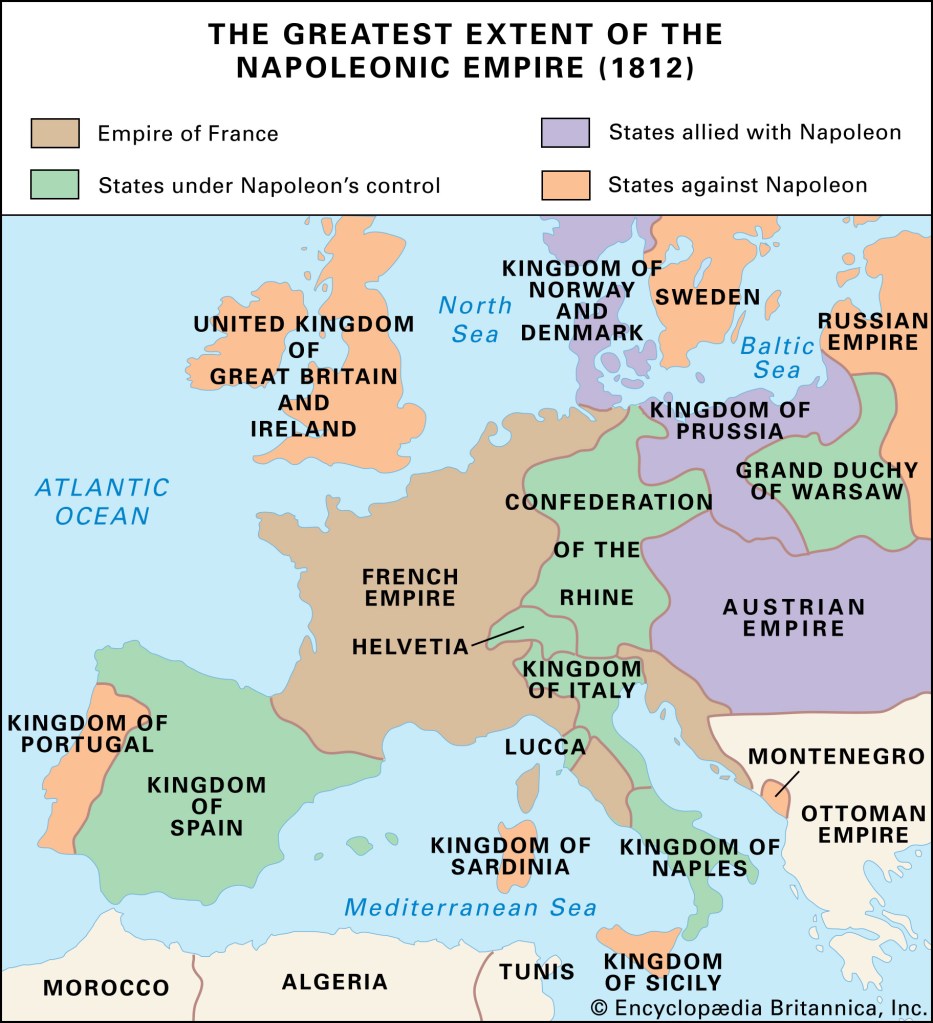
You have to give it up for the man, he put in work. https://www.britannica.com/

Castaway

None of Napoleon’s recent acts – the establishment of the French Empire, his coronation, a legitimate son – mattered if he didn’t have an Empire to run. And France’s enemies were dead set on raining on Napoleon’s expansion parade. For the first two decades of the 19th century, Great Britain and a number of other European countries traded victories and losses with Napoleon’s armies. As a result of France’s victories, Napoleon’s Empire continued to grow. The turning point for Bonaparte came in June 1812 when it became clear just how large Napoleon’s ego had grown – he marched an army of 500,000 men into the giant-ass country of Russia, losing 300,000 men in a matter of six months. As you can imagine, when what was left of the army returned home, the welcome was less than enthusiastic. Support for France’s Emperor had dwindled drastically and a subsequent defeat in Germany made things even worse. His reputation would never recover from this devastating series of events.

As the tides of opinion were changing, a man named Charles-Maurice de Talleyrand, a government minister, took the opportunity to gather a group of men in favor of replacing Napoleon with a relative of the deposed King Louis XVI. So in other words, back to square one! Obviously Napoleon was not a fan of this plan, but at some point, it was clear he did not have the support he needed to remain Emperor. In April of 1814, Emperor Napoleon Bonaparte abdicated the throne and the crown was offered to Louis XVI’s brother, the new King Louis XVII of France. Napoleon was sent to the island of Elba off the coast of Italy and was made its ruler, perhaps as a sort of consolation prize for having lost an entire European empire. He was 45 at the time and sentenced to live out the rest of his life on Elba. But Napoleon had other plans.

Napoleon on Elba looking at his sweet new kingdom. https://time.com/3714089/napoleon-exile-history/

After a whopping 9 months in exile, Bonaparte decided that his services were needed back in France. Though most people had wanted Napoleon gone, they hadn’t wanted a restoration of the monarch, so he was able to gather enough supporters to run Louis XVII out of town and reinstate himself as Emperor. What a comeback story! Or was it? Emperor Napoleon 2.0 lasted a mere 100 days, ending, once again, in a military defeat. This time at the Battle of Waterloo against the British in 1815. He was exiled for a second time, but he wouldn’t have the titles and freedom on Saint Helena, a tiny British island off the west coast of Africa, that he did on Elba. He died there in 1821 at the age of 51, most likely from stomach cancer, the same disease that had taken his father. 

Rosé Colored Glasses

So now we have come to the question I am sure everyone has been thinking – sure, Napoleon was a brilliant military leader who took a hard fall from the pinnacle of power, but why include him in Uneasy Lies the Crown? To achieve what Napoleon was able to achieve at such a young age, having come from essentially nothing, he had to have been built differently. Bonaparte’s contemporaries described him as socially awkward and so obsessed with work that he barely slept more than a couple of hours a day. One popular French writer at the time, Madame de Staël, who was exiled several times by Napoleon because of her negative takes, expressed that “he was a ruthless tyrant who regarded individuals as pawns on a chessboard which he controlled” and “no emotion of the heart could act upon him.” In other words, he lacked a major thing called empathy. He also lacked something called humility, increasingly coming to believe that he was God’s gift to Earth (and even perhaps that he was a god himself). The consequences of his inflated ego were seen in the massive failure of the invasion of Russia. The French Minister of Justice and future Prime Minister Louis-Mathieu Molé said that “on encountering an obstacle, Napoleon would look no further than surmounting it, seeing in the process a test for his will, and thinking only of the present, not the future” (Zamoyski). Perhaps that is how he ended up sacrificing 300,000 of his men for nothing. Most people would have been knocked down a peg or two after being sent to the small Island of Elba, but Napoleon didn’t even miss a beat before turning it into his new kingdom. In letters from his brief stay, “he referred to his 18 marines as ‘My Guard’ and to his small boats as ‘the Navy ” (TIME). His sense of superiority was astounding and draws chilling parallels to a modern day leader willing to bomb maternity wards to capture a sovereign nation he has no right to – yes Putin I am looking at you.

The narrative of Napoleon Bonaparte has greatly fluctuated over the centuries, and as with most things, the more years that pass the more we tend to romanticize the man. Immediately following his removal from the throne, the new monarchy attempted to wipe Napoleon from the hearts and minds of every French citizen. While he was alive he was still a threat – as evidenced by his escape from Elba. After he died, however, a burst of published works and public theatrical performances began to build Napoleon’s legend. He was often portrayed as a caring and empathetic figure, and while he did seem to take a special interest in those less fortunate than him, his contemporaries certainly did not describe him as such. Historian Clare Siviter writes that “historians now recognize that Napoleon played a key role in the development of his own mythology by associating himself with the victories of the army, the rulers of the ancient world and, somewhat paradoxically, former French kings.” Whatever influence he had in the creation of his own reputation, the fact remains that Napoleon’s impact can still be seen throughout the world today. Traces of his Napoleonic Codes are reflected in current European laws, militaries and academia can point to Napoleon for the “origins of their discipline” (Washington Post). Last year on the 200th anniversary of his death, French President Emmanuel Macron laid flowers on Napoleon’s tomb. Hell, we even created a term for short men with big egos – Napoleon complex. And next week Riley will dive into Bonaparte’s influence on how we approach and distinguish between those with strong personalities and something much more pathological. 

Resources

“French Revolution.” Encyclopædia Britannica, Encyclopædia Britannica, Inc., https://www.britannica.com/event/French-Revolution.

History.com Editors. “Napoleon Bonaparte.” History.com, A&E Television Networks, 9 Nov. 2009, https://www.history.com/topics/france/napoleon.

“Joséphine.” Encyclopædia Britannica, Encyclopædia Britannica, Inc., https://www.britannica.com/biography/Josephine.

Latson, Jennifer. “Napoleon in Exile on Elba: He Probably Should Have Stayed Put.” Time, Time, 26 Feb. 2015, https://time.com/3714089/napoleon-exile-history/.

“Napoleon I.” Encyclopædia Britannica, Encyclopædia Britannica, Inc., https://www.britannica.com/biography/Napoleon-I.

National Geographic Society. “Napoleon Invades Russia.” National Geographic Society, 25 Oct. 2013, https://www.nationalgeographic.org/thisday/jun24/napoleon-invades-russia/.

Siviter, Clare. Tragedy and Nation in the Age of Napoleon. Liverpool University Press, 2020.

Tharoor, Ishaan. “Analysis | We’re Still Living in the Age of Napoleon.” The Washington Post, WP Company, 7 May 2021, https://www.washingtonpost.com/world/2021/05/07/napoleon-legacy-france/.

woman, Ought not every. “Madame De Staël.” Europeana, https://www.europeana.eu/et/exhibitions/pioneers/madame-de-stael.

Zamoyski, Adam. Napoleon: A Life. Basic Books, 2018.

References

Aileen Ribeiro | Published in History Today Volume 27 Issue 6 June 1977. “The King of Denmark’s Masquerade.” History Today, https://www.historytoday.com/archive/king-denmark%E2%80%99s-masquerade.

Caroline Mathilde, Queen. “The Queen of Denmark’s Account of the Late Revolution in Denmark [Electronic Resource] : Written While Her Majesty Was a Prisoner in the Castle of Cronenburgh; and Now First Published from the Original Manuscript, Sent to a Noble Earl.” In SearchWorks Catalog, http://searchworks.stanford.edu/view/8034055.

“Frederick VI.” Encyclopædia Britannica, Encyclopædia Britannica, Inc., https://www.britannica.com/biography/Frederick-VI.

MUNCK, THOMAS. “Absolute Monarchy in Later Eighteenth-Century Denmark: Centralized Reform, Public Expectations, and the Copenhagen Press.” The Historical Journal, vol. 41, no. 1, 1998, pp. 201–224., https://doi.org/10.1017/s0018246x9700770x.

REDDAWAY, W. F. “King Christian VII.” The English Historical Review, XXXI, no. CXXI, 1916, pp. 59–84., https://doi.org/10.1093/ehr/xxxi.cxxi.59.

S.M. Toyne | Published in History Today Volume 1 Issue 1 January 1951. “Dr. Struensee: Dictator of Denmark.” History Today, https://www.historytoday.com/archive/dr-struensee-dictator-denmark.

Schioldann, Johan. “‘Struensée’s Memoir on the Situation of the King’ (1772): Christian VII of Denmark.” History of Psychiatry, vol. 24, no. 2, 2013, pp. 227–247., https://doi.org/10.1177/0957154×13476199.

The Big Short


Guess who’s back, back again…ULTC is back, tell your friends! We have returned, fellow readers, after a short hiatus to celebrate our own royal wedding. Congratulations to our Queen Riley on her recent nuptials – now no more celebrating, get back to work!

This month the spotlight is on a short, narcissistic man who showed great promise in his life and career and lost it all in the end – and no, I am not talking about my ex-boyfriend (whatever he may think, he is not the king of anything). This month we are headed to France to scrutinize one of the most famous men in history – Napoleon Bonaparte. BUT WAIT! Napoleon was a general, why are we writing about him on Uneasy Lies the CROWN?? This is true, Napoleon is historically known for his prolific military achievements, but part of these achievements included ruling as Emperor of France for over a decade! He even claimed the title King of Italy at one point. Bonaparte’s path to power was drastically different from the monarchs we have studied here in the past; unfortunately for him, the ending was just as grim. 

Napoleon’s Complex

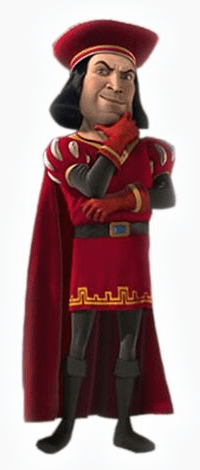
Let me get this out of the way first: when most of us conjure up an image of Napoleon we think of Lord Farquaad from Shrek. While it was not that dramatic, I will admit that Bonaparte was certainly not rushing to include his height in his Hinge profile. He stood at 5’6”, and three centuries ago the average human height was much shorter than it is today. And actually, according to the episode of “Love is Blind” that I just watched, the average male height today is 5’7” (though I cannot vouch for the accuracy of a show where people are getting engaged after 3 days while we are supposed to pretend they aren’t shallow). 

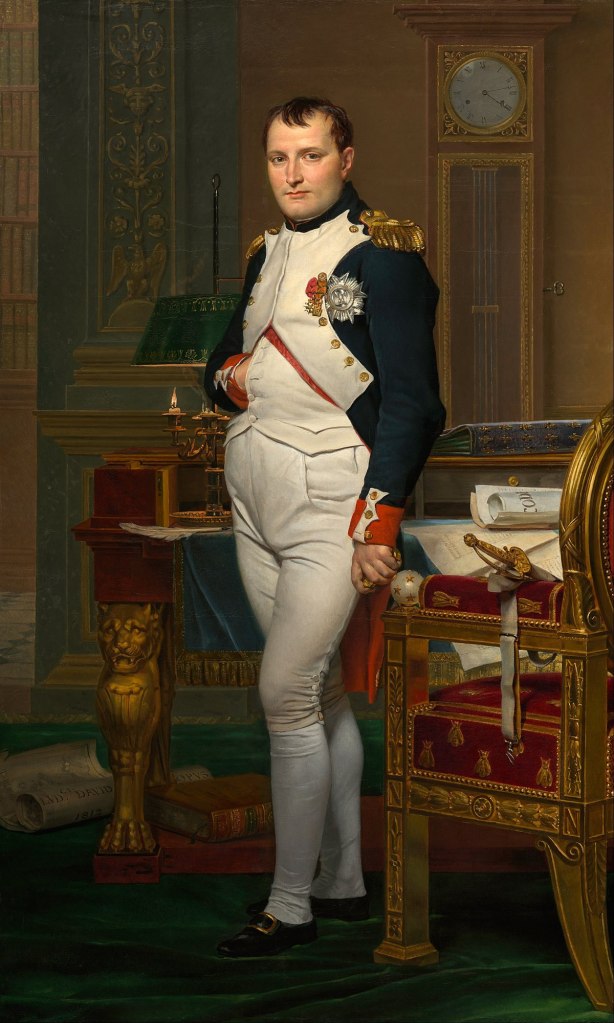
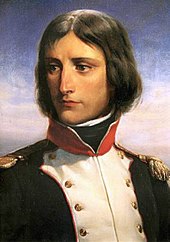
This man needs no introduction.

History knows the preeminent French general as Napoleon Bonaparte, but at birth, his friends and family knew him as Napoleone Buonaparte (I will refer to him using the commonly used version of the spelling for the sake of consistency). Napoleon’s roots were surprisingly Italian, not French, and he was born on the island of Corsica on August 15th, 1769. For those of you into astrology, that makes him a Leo, and according to Allure Magazine, Leos “love to bask in the spotlight and celebrate themselves” and are “astrological divas”. Who said astrology isn’t real science…sounds pretty damn accurate to me! But anyways, Corsica at the time was controlled by Genoa, a republic of Italy, and Napoleon grew up speaking Corsican as his native language and was actually notoriously bad at French. Corsica was sold to France the year that Napoleon was born, but of course, it took several generations for Corsicans to identify as French. So how did Napoleon eventually become the greatest French military leader of all time? 

When Napoleon was very young, his father sent him to military school in France. The Bonapartes had a large family and modest financial means, so Napoleon’s father basically had to campaign to get his son a scholarship to a military school in France. For those without social status, the military was one way to climb the ladder and earn a respectable income to support your family. Napoleon was nine years old when he was enrolled into a strict military academy in Brienne. He didn’t know anyone, didn’t speak the language well, and “was by all accounts a puny child, showing signs of a delicate constitution” (Zamoyski). In other words, he wasn’t getting voted homecoming king by his fellow classmates who described him over the years as “uncommunicative, fond of solitude, capricious, arrogant, extremely self-centered [and having] a good deal of ambition” (Zamoyski). He remained at military school until he was 16 years old, at which time he was made a second lieutenant. That same year, in 1785, Napoleon’s father died. From that point on, although he was not the eldest son, Napoleon took on the role of head of his family. He assumed the role without any discussion or agreement with the rest of his family, a theme that would follow him throughout his life. This meant that his path to success was even more imperative, as he now had a large family to support. Certainly no one expected that this small and antisocial teenager would one day become a household name.

Napoleon in his 20s. When he was young he earned the nickname “Little Crop Head” because of his hairstyle. Ooh la la. en.wikipedia.org.

War! What Is It Good For??…Napoleon!

The good news for Napoleon was that there was no shortage of opportunities to prove his merit and climb the military ranks. Two years after Napoleon left school, revolution began in France and would last for over a decade, bringing bloodshed, instability, and uncertainty to the region and beyond. I know I’ve said this before, but I mean this now more than ever after attempting to absorb a 700 page biography on Napoleon – the French Revolution was a complicated and confusing Son-of-a-B. Riley disagrees and thinks that she learned all she needed to know by watching “Les Mis”. So allow me to lay out the spark notes version of events for the rest of us uncultured swine:

  • The Estates General meets in 1789 to discuss grievances of the French people. They then declare themselves the National Constituent Assembly (this was a legislative body made up of men from each of the French classes – nobility, clergy and commoners) 
  • Revolutionary Frenchmen storm the Bastille, a prison and armory, on July 14, 1789
  • France declares war against Austria on April 20, 1792. Bonaparte wins important battles that catapult him to the top ranks of the military. 
  • The National Convention abolishes the French monarchy on September 21, 1792
  • King Louis XVI is put to death on January 21, 1793 and his wife Marie-Antionette is killed in October of the same year.
  • Maximilien Robespierre takes control of the National Convention (now the acting government in France) 
  • Opposition to Robespierre’s government breaks out in September 1793, resulting in the Reign of Terror until July 1794 when Robespierre is arrested and executed
    • Napoleon was seen as an ally of Robespierre and was arrested and imprisoned for several months
  • Supporters of the dead king march against the Convention in October of 1795 and are defeated by General Bonaparte. Bonaparte is named commander of the Army of the Interior as a result
  • Napoleon is given command of the Army of Italy in March 1796
  • Napoleon wins many important victories for France over the next few years 
  • Napoleon teams up with French politicians to overthrow the French government in November 1799 and create the Consulate
  • The French Revolution is considered over. Napoleon is “voted” one of three Consulates that rule France (it was really more of a symbolic vote as it was clear that Napoleon was in charge). He is 30 years old. 
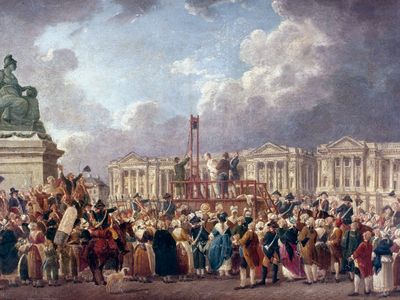
The Reign of Terror was pretty much as bad as it sounds. People were regularly executed in public set-ups like the one depicted above. https://www.britannica.com/.

He Dreamed A Dream

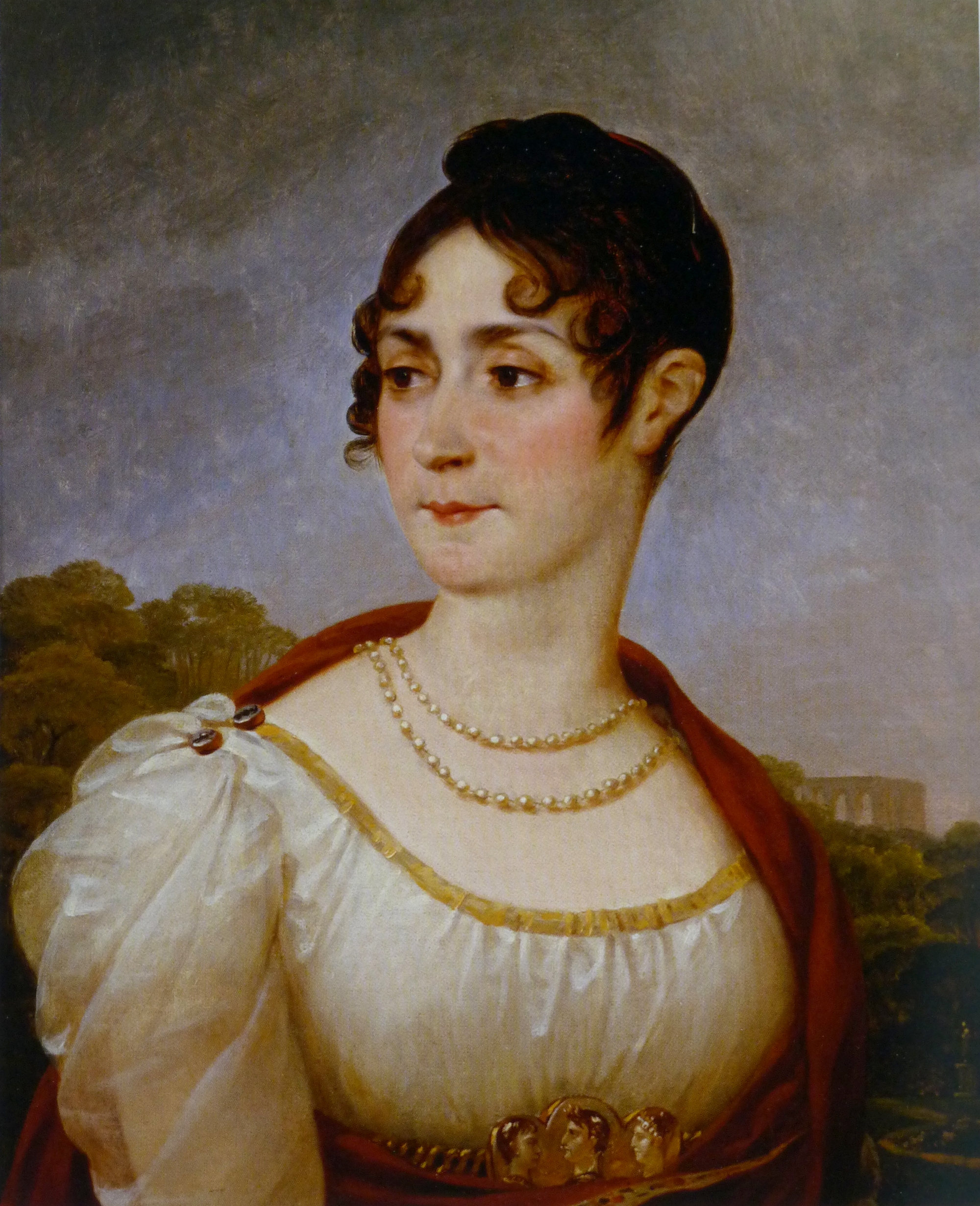
In the two decades since a small and awkward Napoleon Bonaparte had been dropped off at military school, he had managed to climb that coveted ladder all the way to the top. It really makes me stop and contemplate how little I have achieved in life up to this point…Not only had Napoleon won military glory and helped to bring peace to a bleeding France, but he had scored a wife during this time, too. In March of 1796 Bonaparte married a widow named Joséphine who already had two children. This woman had been through it – her husband had been executed during the Reign of Terror and she had been temporarily imprisoned herself. Much like her new husband, Joséphine had grand ambitions for her position in society. Napoleon may not have been the love of her life (there wasn’t much evidence that she married him for love as she was known to participate in extramarital activities), but the couple proved to be a successful match for achieving their lofty ambitions. 

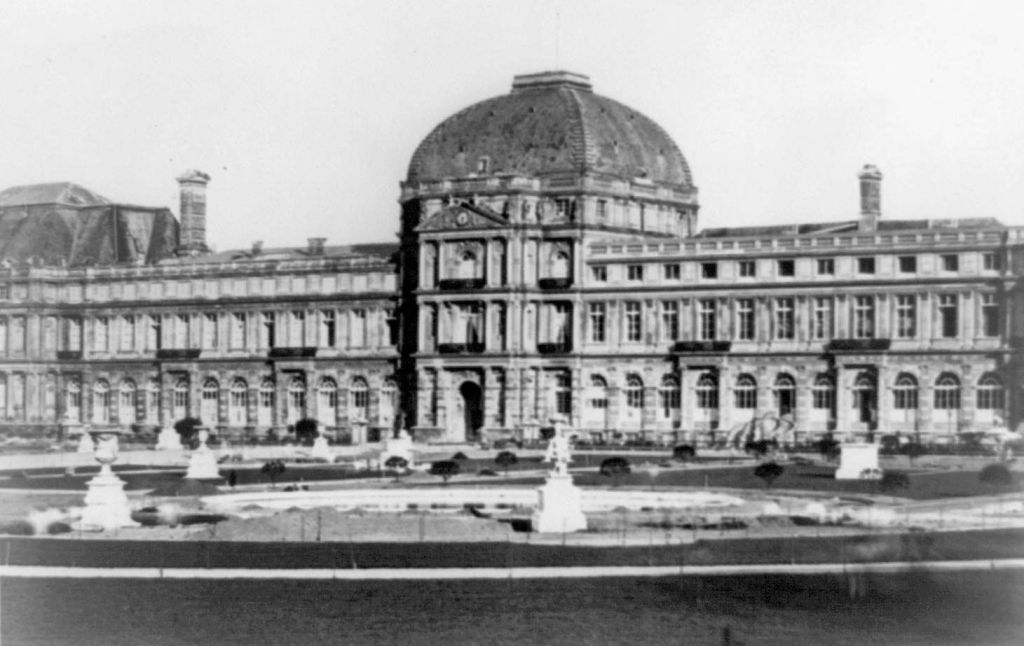
And Napoleon’s ambitions were limitless. Although the new executive governing body, the Consulate, was made up of three men – Bonaparte, Emmanuel-Joseph Sieyès and Pierre-Roger Ducos – Napoleon was granted the title of First Consul. Basically, the First Consul held all of the real power and the other two Consuls existed as Napoleon’s sidekicks. It was the perfect setup because he had no intention of sharing anything. He was “the most enlightened of the enlightened despots” (Britannica), a brilliant man with astounding ambition that no one around him could deny. The French monarchy may have been abolished, but the new governing body had no intentions of handing the reins over to the French people. And Napoleon sure as hell didn’t plan on taking any steps backward. In fact, in the ultimate show of power, he and his wife moved into King Louis XVI’s former palace, the Tuileries. 

Napoleon’s modest new digs. https://www.britannica.com/.

Even though he was living like a king, Napoleon was still very much rough around the edges. Having spent his entire life in the military, he was definitely most comfortable around his soldiers. Amongst the society folk, “he was tactless and had, according to one of his ministers, all the grace of a badly-brought-up subaltern” (Zamoyski). Oooh, 18th century burn right there! His insecurities were glaring as he used every means to control the narrative around him circulating in France and beyond. Napoleon and Josephine ran their household with the same traditions and grandeur of their late monarch, and Napoleon influenced the press to hype his achievements both in the government and on the battlefield. He was determined to appear every inch the revolutionary hero that his name conjured up. First Consul Bonaparte seemed to have it all, but as we will see, everything is never quite enough.

Napoleon Bonaparte was socially awkward, ambitious and controlling, but those traits don’t automatically make him a candidate for a diagnosis in the DSM. Next week I am bringing you Part II of this historical classic as we set the stage for Riley to EXPLAIN HERSELF for choosing this month’s topic. See you then!

Resources

“French Revolution.” Encyclopædia Britannica, Encyclopædia Britannica, Inc., https://www.britannica.com/event/French-Revolution.

History.com Editors. “Napoleon Bonaparte.” History.com, A&E Television Networks, 9 Nov. 2009, https://www.history.com/topics/france/napoleon.

“Joséphine.” Encyclopædia Britannica, Encyclopædia Britannica, Inc., https://www.britannica.com/biography/Josephine.

“Napoleon I.” Encyclopædia Britannica, Encyclopædia Britannica, Inc., https://www.britannica.com/biography/Napoleon-I.

Zamoyski, Adam. Napoleon: A Life. Basic Books, 2018.

References

Aileen Ribeiro | Published in History Today Volume 27 Issue 6 June 1977. “The King of Denmark’s Masquerade.” History Today, https://www.historytoday.com/archive/king-denmark%E2%80%99s-masquerade.

Caroline Mathilde, Queen. “The Queen of Denmark’s Account of the Late Revolution in Denmark [Electronic Resource] : Written While Her Majesty Was a Prisoner in the Castle of Cronenburgh; and Now First Published from the Original Manuscript, Sent to a Noble Earl.” In SearchWorks Catalog, http://searchworks.stanford.edu/view/8034055.

“Frederick VI.” Encyclopædia Britannica, Encyclopædia Britannica, Inc., https://www.britannica.com/biography/Frederick-VI.

MUNCK, THOMAS. “Absolute Monarchy in Later Eighteenth-Century Denmark: Centralized Reform, Public Expectations, and the Copenhagen Press.” The Historical Journal, vol. 41, no. 1, 1998, pp. 201–224., https://doi.org/10.1017/s0018246x9700770x.

REDDAWAY, W. F. “King Christian VII.” The English Historical Review, XXXI, no. CXXI, 1916, pp. 59–84., https://doi.org/10.1093/ehr/xxxi.cxxi.59.

S.M. Toyne | Published in History Today Volume 1 Issue 1 January 1951. “Dr. Struensee: Dictator of Denmark.” History Today, https://www.historytoday.com/archive/dr-struensee-dictator-denmark.

Schioldann, Johan. “‘Struensée’s Memoir on the Situation of the King’ (1772): Christian VII of Denmark.” History of Psychiatry, vol. 24, no. 2, 2013, pp. 227–247., https://doi.org/10.1177/0957154×13476199.
Nothing Like a Mad Woman: Juana of Castile Podcast

We’re finally back after Riley’s wedding and excited to bring you the story of Juana of Castile. On the precipice of reigning over a united Spain, she was instead locked up by a series of men for her supposed “madness”. Her tragic tale leads us through the history of research into depression, the neurobiological effects of social isolation, and the misconceptions about the impact of mental illness on one’s ability to lead.

Plus: Stefanie sings again. We misgender Fox. Disney needs to answer for “Confessions of a Teenage Drama Queen”. You all won’t let the Richard discourse die. And how crazy do men like their women, really?

Thanks for joining us and remember to subscribe and leave a review on your podcast platform of choice!


Let’s Get Biblical: Nebuchadnezzar Podcast

We are so grateful to all of our readers and listeners for making 2021 the best year for Uneasy Lies the Crown yet. To thank you, we are dropping a holiday special podcast episode covering a royal we’ve never discussed on the blog. Nebuchadnezzar might be the world’s first mentally ill king, and his madness sounds like something our of Greek mythology. What makes a person think they’ve turned into an animal and why is it still happening at a high rate in Babylon? Neuroscience might have the answers.

Plus: We know Stefanie’s audio sucks. Riley’s fiancé doesn’t listen. Is left brain/right brain a myth? And most importantly, is Toto Wolff hot?

Thanks for joining us and remember to subscribe and leave a review on your podcast platform of choice!

Making a Murderer: Prince Albert Victor Uneasy Lies the Crown

The notorious Jack the Ripper murders in 19th century London have generated plenty of high-profile suspects, but none more salacious than Prince Albert Victor, the heir to the British throne. True crime meets ULTC in this episode exploring the theory that syphilis turned the prince into a killer. Plus: Why Riley is leaving true crime in 2024. British tabloids never stop. He's a 10 but he likes Through the Looking Glass.
  1. Making a Murderer: Prince Albert Victor
  2. Chief Among Us: Opechancanough
  3. Chemobrain: Duchess Catherine
  4. Forget Me Not: Taisho
  5. Scandalnavia: Christian of Denmark

A Dark and Stormy Night: Ludwig of Bavaria Podcast

We hope your stomachs are full from Thanksgiving leftovers and your shopping carts are full of Black Friday deals. Now kick back and enjoy the tragic tale of Germany’s fairytale King. A prominent neuroscientist diagnosed Ludwig of Bavaria with schizophrenia, but the truth might be much more sinister.

Plus: A terrible Adele impersonation. Riley lost her phone in the worst place imaginable. Stefanie quite literally spills the tea. What if this was an episode of Dateline?

Thanks for joining us and remember to subscribe and leave a review on your podcast platform of choice!

Making a Murderer: Prince Albert Victor Uneasy Lies the Crown

The notorious Jack the Ripper murders in 19th century London have generated plenty of high-profile suspects, but none more salacious than Prince Albert Victor, the heir to the British throne. True crime meets ULTC in this episode exploring the theory that syphilis turned the prince into a killer. Plus: Why Riley is leaving true crime in 2024. British tabloids never stop. He's a 10 but he likes Through the Looking Glass.
  1. Making a Murderer: Prince Albert Victor
  2. Chief Among Us: Opechancanough
  3. Chemobrain: Duchess Catherine
  4. Forget Me Not: Taisho
  5. Scandalnavia: Christian of Denmark

She Was A Lot: Alexandra Romanov Podcast

Our most popular blog series gets the audio treatment for this month’s podcast. Riley redeems her failed high school paper on how Alexandra Romanov’s mental illness contributed to the end of the Russian empire as the sisters discuss complicated legacies, hypochondria, and the neurobiology of phantom pregnancy.

Plus: Our brother does not want you to support him. Riley was sad when she learned Joe Jonas had premarital sex. We dare a man to deal with period cramps. Is the IB program anti-God, anti-America, and anti-family?

Thanks for joining us and remember to subscribe and leave a review on your podcast platform of choice!

Making a Murderer: Prince Albert Victor Uneasy Lies the Crown

The notorious Jack the Ripper murders in 19th century London have generated plenty of high-profile suspects, but none more salacious than Prince Albert Victor, the heir to the British throne. True crime meets ULTC in this episode exploring the theory that syphilis turned the prince into a killer. Plus: Why Riley is leaving true crime in 2024. British tabloids never stop. He's a 10 but he likes Through the Looking Glass.
  1. Making a Murderer: Prince Albert Victor
  2. Chief Among Us: Opechancanough
  3. Chemobrain: Duchess Catherine
  4. Forget Me Not: Taisho
  5. Scandalnavia: Christian of Denmark

Coup, There It Is!


Dancing King

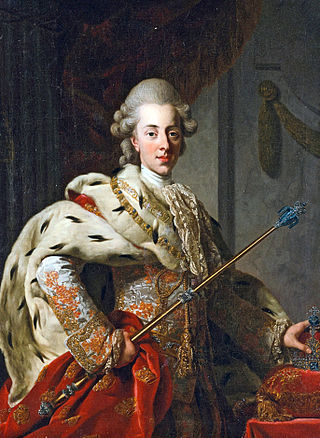
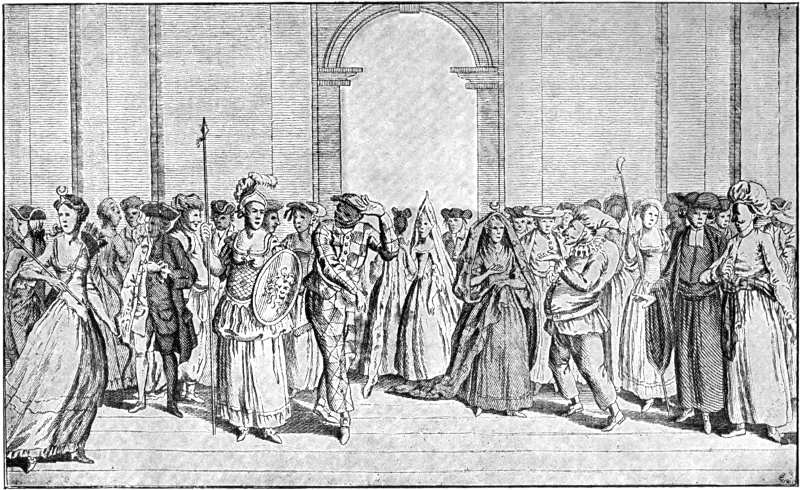
If we are to believe Christian’s contemporaries, the king began to show concerning behavior at a very young age and quite early in his reign. However, this information was shared on a need-to-know basis, and restricted to the higher echelons of the aristocracy, and not as much among the “regulars”. Those close to Christian could see the writing on the wall, and set up some international trips for him in an attempt to boost his public image. Perhaps the most famous of these trips was to England in 1768. He was a hit with the Brits, not least because he held a magnificent masquerade ball. Big deal, didn’t royalty throw parties all the time? Unfortunately George III did not like parties, did not throw them and did not attend them. In fact, masquerades had been discouraged since 1755, after Lisbon, Portugal was rocked by the devastating earthquake that almost killed Princess Maria and her family. History, it’s all connected! The party and the trip were a success for Christian, and was temporarily even enough to distract from his deteriorating marriage to Caroline Matilda. 

It had been over a decade since George’s court had been able to enjoy a masquerade, so you best believe they showed up and showed out. Project Gutenberg.

As Christian’s health and behavior deteriorated, his wife and doctor had to work harder and harder to hide his condition from his peers. The issue was complicated and delicate. First, it was illegal to talk about the king’s health, particularly ill health, which is one reason why many of the letters that were exchanged during Christian’s reign did not mention anything negative about his behavior. Such a letter would have merited severe punishment. Secondly, we again must take into consideration the societal norms and beliefs at the time. As Reddaway notes, “insanity, in the opinion of the age, was closely akin to crime”. Who would dare challenge the absolute ruler by accusing him of such a great shame? And lastly, because of the nature of the Denmark-Norway monarchy, in that it was an absolute monarchy unlike many of its contemporaries, it was extremely difficult to establish a regency. Not only was the burden of proof extremely high in order to name a regent, but someone also had to take the initiative to come out and accuse the king of being incapable of carrying out his sovereign duties. This was even more difficult because Christian was reported to have consistent periods of lucidity, where he engaged in intelligent discussions with his peers, particularly concerning military strategy. As a result, even those who knew Christian’s true struggles had ample motives to continue the facade that Christian was just doing what boys do (you know, constantly destroying property, excessively drinking, incessantly masturbating. Just dudes being dudes). 

You Can’t Handle the Truth!

So, if you don’t approve of the current monarch and you can’t go the traditional route of getting a legal regency, what is the next best option? How about a good old fashioned coup! That is precisely what Christian’s step-mother and her allies decided to do in what became known as the Palace Revolution of 1772. The targets were those closest to Christian, and so presumably the ones pulling his strings – his wife Caroline Matilda and his doctor Struensee. These two also made easy targets because it was widely accepted that they were having an affair and that Struensee was the real father of Caroline Matilda’s second child. After being pulled from their beds in the middle of the night, Caroline Matilda and Struensee were jailed to await their trial. And as you can imagine, the “trial” was pretty much a sham. Neither were permitted to present any evidence in their defense or call any witnesses. Ironically, their best advocate ended up being Christian himself, who was called to give testimony that was supposed to confirm the theory that Struensee was manipulating him behind the scenes. Instead, “some two-thirds of the king’s answers favored the defense [and] his evidence tended to make it difficult to condemn Struensee in his name” (Reddaway). The fact that Christian was able to competently sit through the grueling questioning from the court, and did not speak ill of the man on trial for allegedly stealing his power, throws doubt on the theory that Christian was a clueless puppet being held under his doctor’s thumb. 

Caroline Matilda and Struensee were ripped from their beds in Christiansborg Palace, shown above. This is actually the third version of the palace, as the first two versions suffered damages from fire. Viator.com.

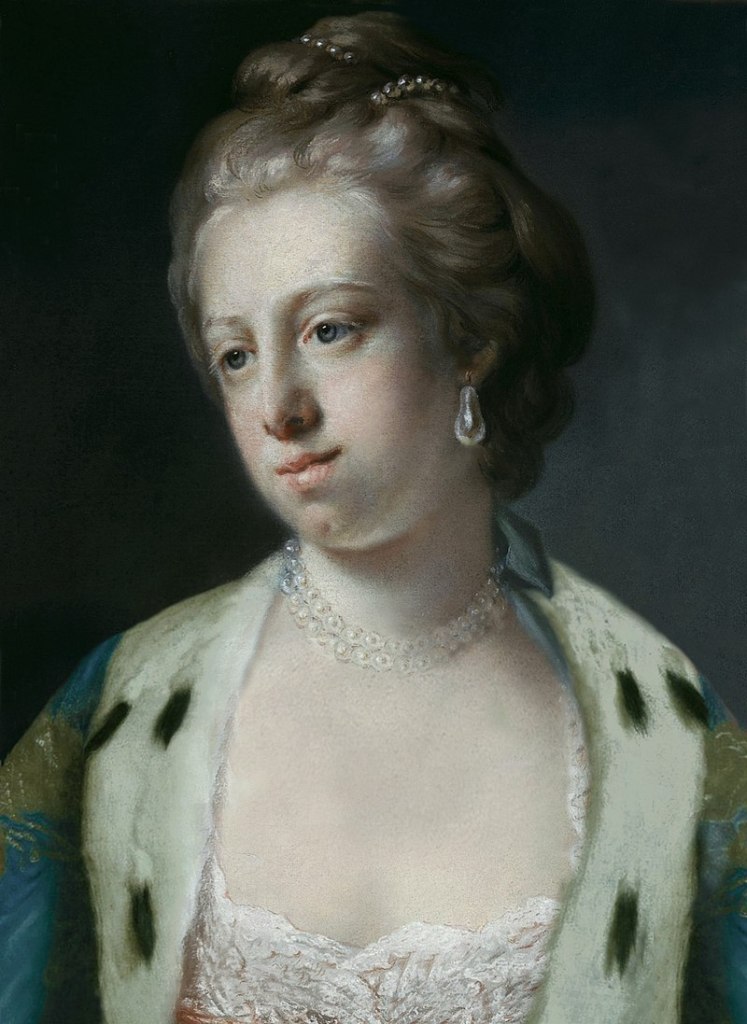
Struensee maintained until the moment of his death that Christian was constantly in control of his own faculties and royal duties throughout the doctor’s time at his side. Certainly no one was closer to the king in those days, but we have to remember that Struensee was on trial for his life. If he had admitted that he had been controlling the king behind the scenes, he would have guaranteed his own execution. But in reality, there was no chance the doctor was leaving prison alive. He was executed on April 28, 1772 alongside another supposed co-conspirator. Both were beheaded and drawn and quartered, the most shameful of executions. And we all know that there was no way the adulterous Queen Caroline Matilda was going to win any legal battles, no matter how much she protested the accusations against her. But in terms of her punishment, she at least fared better (at least it appeared so on the surface). Because of her royal status and prominent ancestry, her life was spared, but she was separated from her children and banished from the country. Three years later, at only 23, the former queen died from scarlet fever. Caroline Matilda and Struensees’ daughter Louise was left an orphan. 

Mommy Dearest

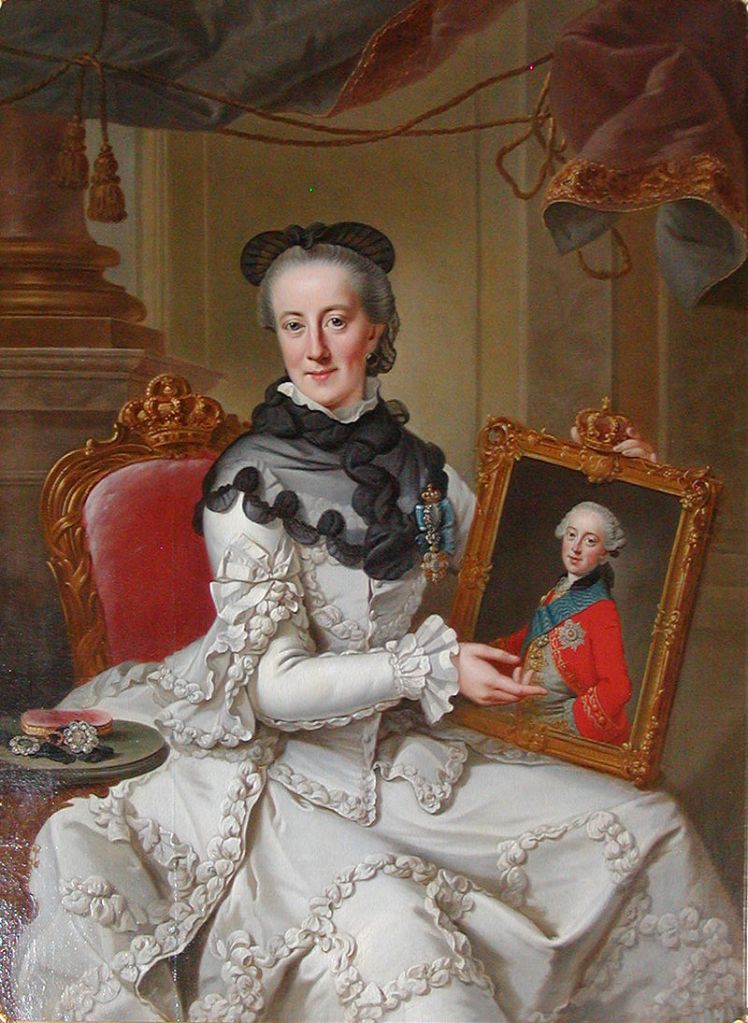
With Struensee and his queen-turned-lover removed from the equation, stepmom of the year Juliana Maria and her insufferable son Frederick pushed their way into power (I don’t actually know if he was insufferable but I can just imagine that he was). They managed to do what others before them had not been able to do, or perhaps did not have the balls to do, and a regency was established under Christian’s half-brother Frederick. Whether Juliana Maria was actually the mastermind behind the palace coup is debated by historians, but that’s at least how she was viewed by the people at large. And they weren’t mad about it. Struensee and his lover were certainly not popular people at the time of their arrests, so people saw Juliana Maria as a sort of hero figure for ridding the kingdom of dangerous influences. There was no major opposition when her son Frederick was made regent, probably because there weren’t really any laws in place for how to handle a regency and, again, people were grateful. However, Frederick was still young himself. At only 18 years old, it is not hard to imagine that Juliana Maria was really the one in the driver’s seat. She and a man named Ove Høegh-Guldberg, who filled the political power vacuum in the government as “de facto” prime minister, combined forces to guide Frederick as regent. And they would have gotten away with it if it weren’t for those meddling kids!! Well, one meddling kid – Christian VII’s 16-year-old son, the future Frederick VI (we will call him Freddie). Freddie had been raised by Juliana Maria but that had done nothing to strengthen their bond. By 1784, Freddie had had ENOUGH of his half-uncle and his step-grandmother and staged his own coup. For the next 24 years, Freddie used his powers as regent for good, “supporting reform measures to grant personal liberty and legal protection to the peasants and instituted several other social and economic reforms”(Britannica). He remained regent until his father, King Christian VII, died in 1808, when he formally inherited the throne as King Frederick VI. 

Juliana Maria literally posing with a picture of her beloved son. TBH, not much different than my mom with my brother. en.wikipedia.org.

Too Hot to Handle

That’s right, in case you may have forgotten (because I know I did), Christian was still alive during all of this nonsense. For 36 years after the Palace Revolution, Christian was essentially a king without a crown. Add to that the years he was allegedly controlled by Struensee (approximately 1769-1772) and we can make an argument that Christian VII was really only in power for all of three, maybe four, years of his 42 year reign. My attempts at learning what Christian was up to during those three and a half decades have been in vain – either he was a really boring dude (hard to imagine with his reputation up to that point) or he really was so obsolete as king that he wasn’t worth writing about. Many historians refer to Christian as suffering from dementia in his later years – the majority admit that the reality was probably a diagnosis more along the lines of what Riley laid out last week, but this does give us some clue of what Christian must have been like at the end. His death was a result of either a heart attack or a stroke, so he clearly was not in good health. 

Both Juliana Maria’s coup in 1772 and Freddie’s coup in 1784 were bloodless, and apart from some rearranging of key decision makers at the top, they really did not significantly disrupt the stability of the Twin Kingdoms. Hard to believe based on some of the stories we have covered here at ULTC, where either of these events would have plunged the kingdom into a devastating civil war. Part of the reason for this was due to the hundreds of years of political and religious stability that led up to Christian’s reign (for more on that I suggest reading Thomas Munck’s journal article: Absolute Monarchy in Later Eighteenth-Century Denmark: Centralized Reform, Public Expectations, and the Copenhagen Press) and part of it was that those who ruled in Christian’s place were fairly competent. Although very young when he ousted his step-grandmother, Munck notes that Prince Freddie’s “political instinct and sense of commitment helped to outweigh his inexperience”. It was also crucial to the survival of the monarchy that those in power allowed critical debates and discussions inspired by the ongoing Enlightenment movement across Europe. But unlike France and the Americas, the Danish were determined that any discussions remained exactly that – there was no room for violent rebellion. And clearly the people agreed, because relative peace lasted until the reign of Frederick VII in the 1850s, when a constitutional monarchy was finally established. 

Freddie died in 1839 without any male children, so the crown went to the male who was next in line – Christian VIII, the son of Christian VII’s lame half-brother Frederick. And remember Queen Matilda and Dr. Struensee’s daughter Louise? Despite her dramatic entry into the world, she married well and had a daughter of her own, Charlotte, who was Christian VIII’s second wife. Not bad for a girl who history has considered to be a bastard. (As a side note: I have tried to piece together just how closely related Christian VIII and Charlotte were given Louise’s questionable parentage, but it’s a family tree that I just don’t have the patience for). 

Me trying to untangle this family tree.

Christian VII of Denmark-Norway’s reign was long on paper, but very brief in practice. The revolving door of “regent” leaders acting in his stead would have been enough to bring down most monarchies, but somehow the Kingdom of Denmark-Norway persevered. We have certainly seen countries crumble under less. And while Christian was probably not the sex-crazed pervert that his contemporaries made him out to be, he was definitely not mentally capable of handling the duties of an absolute monarch. He was too busy handling something else…

We will be taking the next few months off for the holidays and for our own royal wedding in January (Queen Riley is getting married!) Check out the Uneasy Lies the Crown Podcast for content to fill the void in the meantime and we will see you back here in February!

References

Aileen Ribeiro | Published in History Today Volume 27 Issue 6 June 1977. “The King of Denmark’s Masquerade.” History Today, https://www.historytoday.com/archive/king-denmark%E2%80%99s-masquerade.

Caroline Mathilde, Queen. “The Queen of Denmark’s Account of the Late Revolution in Denmark [Electronic Resource] : Written While Her Majesty Was a Prisoner in the Castle of Cronenburgh; and Now First Published from the Original Manuscript, Sent to a Noble Earl.” In SearchWorks Catalog, http://searchworks.stanford.edu/view/8034055.

“Frederick VI.” Encyclopædia Britannica, Encyclopædia Britannica, Inc., https://www.britannica.com/biography/Frederick-VI.

MUNCK, THOMAS. “Absolute Monarchy in Later Eighteenth-Century Denmark: Centralized Reform, Public Expectations, and the Copenhagen Press.” The Historical Journal, vol. 41, no. 1, 1998, pp. 201–224., https://doi.org/10.1017/s0018246x9700770x.

REDDAWAY, W. F. “King Christian VII.” The English Historical Review, XXXI, no. CXXI, 1916, pp. 59–84., https://doi.org/10.1093/ehr/xxxi.cxxi.59.

S.M. Toyne | Published in History Today Volume 1 Issue 1 January 1951. “Dr. Struensee: Dictator of Denmark.” History Today, https://www.historytoday.com/archive/dr-struensee-dictator-denmark.

Schioldann, Johan. “‘Struensée’s Memoir on the Situation of the King’ (1772): Christian VII of Denmark.” History of Psychiatry, vol. 24, no. 2, 2013, pp. 227–247., https://doi.org/10.1177/0957154×13476199.