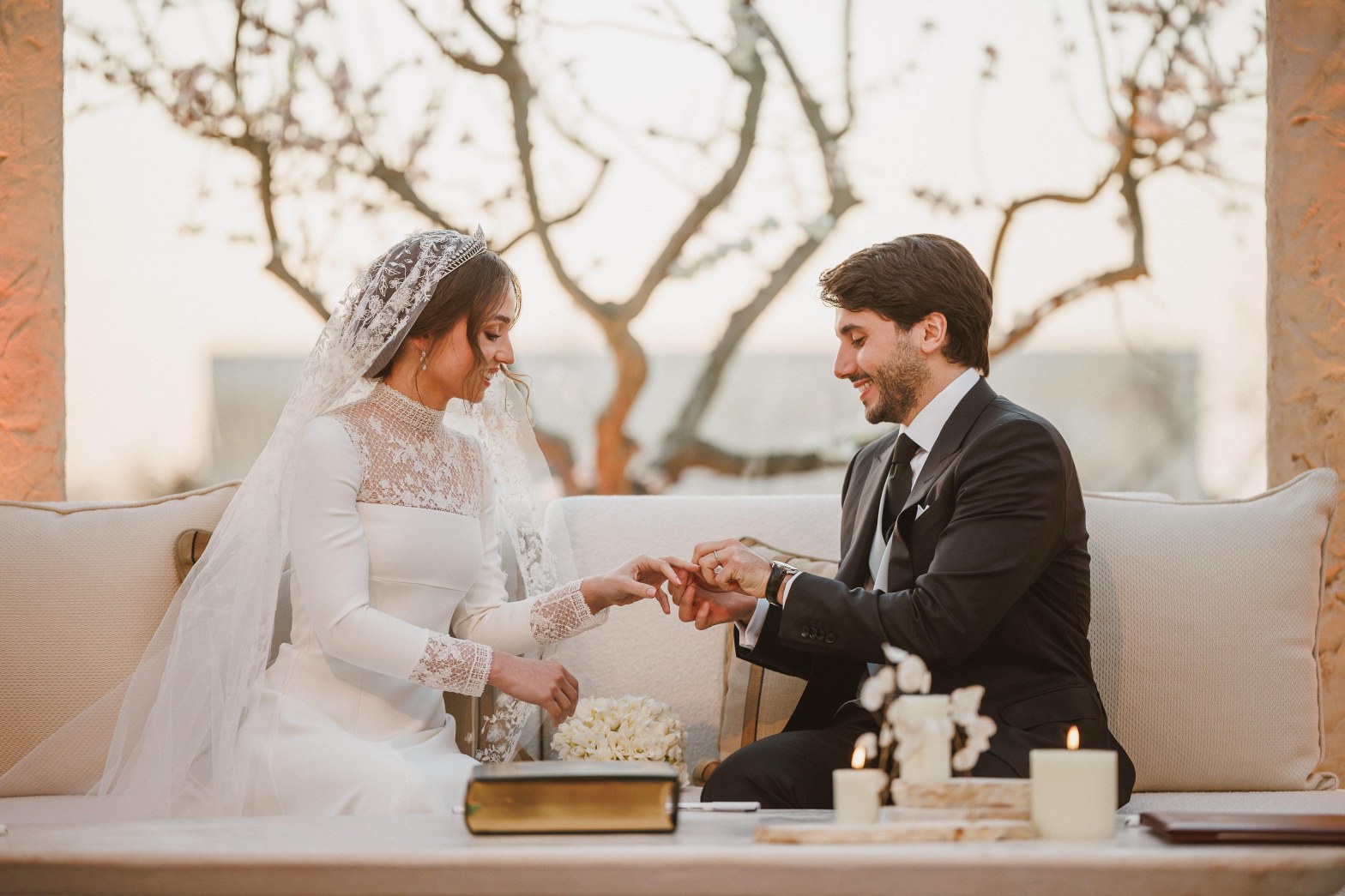
Jordan’s Princess Iman got married last month to international fanfare. Her royal wedding not only was a welcome break from the hot mess of the British royal family, but also inspired us to cover her great-grandfather, King Talal. We chat about the history of Jordan, his one year on the throne, and whether his mental illness was real or an invention of his political enemies. Our search for answers takes us from post-Word War Britain to 1950s Switzerland to the modern coronavirus pandemic.
Plus: Prince Harry is a Maxinista. Is Camilla here for the right reasons? Riley’s review of the song Stefanie’s high school boyfriend wrote about her. Why was Matt Lauer ALWAYS at Easter Island?
Thanks for joining us and remember to subscribe and leave a review on your podcast platform of choice!
This breakup song about Stefanie is still a banger. Where was the lie?
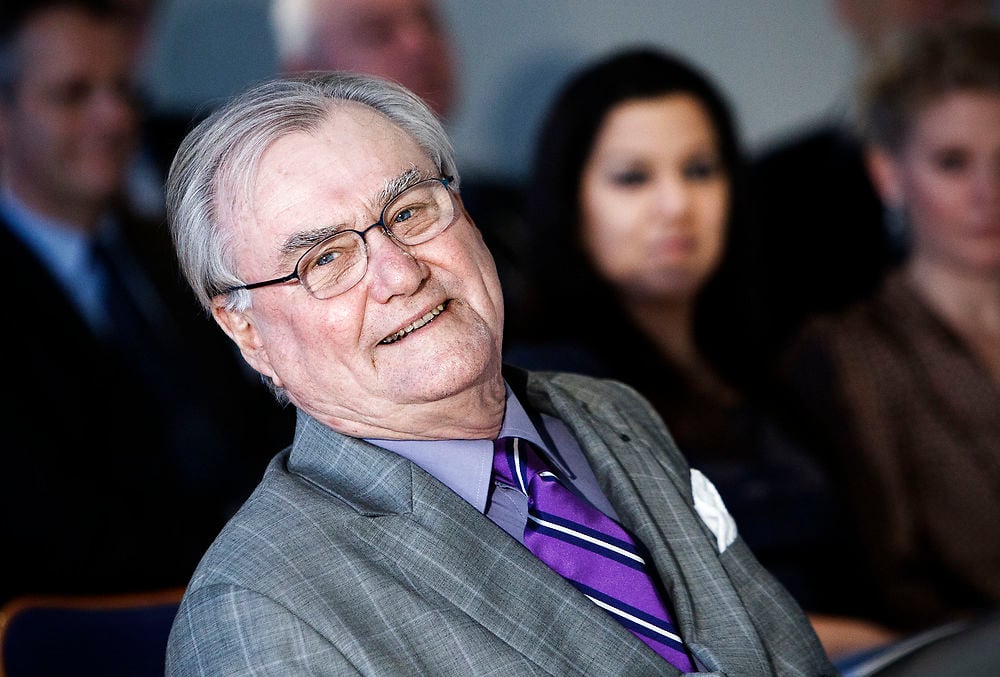
This month, we are allegedly covering Prince Henrik and the Danish royal family! If you make it through all of the Prince Harry content at the beginning, you can learn about the strained marriage between Denmark’s Queen Margrethe II and Prince Henrik and how the royal family tried to blame it on a dementia diagnosis. Then Riley gets in her bag to teach us about the neurobiology of Alzheimer’s disease and give us the scoop behind the newest FDA-approved drug and a recent scandal in the Alzheimer’s research world.
Plus: Stefanie talks about Spare while Riley vehemently shakes her head. Uneasy lie the follicles on Prince Harry’s crown. Why did Disney disrespect John Rolfe so hard? Google thinks Chris Hemsworth is a royal. We take you to Tau Town.
Thanks for joining us and remember to subscribe and leave a review on your podcast platform of choice!
We are so excited to bring you our last episode of the year on the last day of the year. We recorded in person to tell you the wildest and most obscure story we have ever covered: a Hapsburg who ended up ruling over Mexico in the middle of the Civil War! Was her belief she was being poisoned paranoia or something more? We investigate.
Plus: Revisiting the soup discourse. Our thoughts on “Harry & Meghan”. Riley gives us a taste of Les Mis. Leave inbreeding in 2022. Thank you for taking us global in 2022!
Thanks for joining us and remember to subscribe and leave a review on your podcast platform of choice!
We wrap up our unintentional mini-series related to Queen Elizabeth II (and bring you a Halloween treat!) with an episode dedicated to her cousins, Katherine and Nerissa Bowes-Lyon. An episode from the last season of The Crown brought them out of the shadows of history and into the spotlight, but the truth about their mysterious genetic condition remains hidden.
Plus: It’s soup season. The latest NFL concussion protocol controversy. What’s your favorite kind of soup? Stefanie’s royal encounter in Europe. EVEN MORE SOUP STUFF!
Thanks for joining us and remember to subscribe and leave a review on your podcast platform of choice!
Dropping into your feed with an emergency ULTC to celebrate the life and legacy of Queen Elizabeth II. We talk about how she modernized the monarchy and embraced modern medicine and how Riley almost met her in 2007.
Thanks for joining us and remember to subscribe and leave a review on your podcast platform of choice!
We are very excited to welcome Vanessa Grass to co-host this very special episode of ULTC! Vanessa is a science communicator who founded Neuroscience Theater, a multimedia project making prominent and emerging neuroscience research fun, entertaining, and accessible to a lay-person audience by examining the neuroscience behind mainstream movies and pop culture. With a lifelong passion for the arts, storytelling, and movies, Vanessa has also followed several academic pursuits, earning a Bachelor’s degree in Biology from the University of Rochester, a Master’s of Science in Data Science from the University of New Haven, and most recently, a Master’s of Science in Cognitive Neuroscience from the City University of New York, where she researched the effects of traumatic brain injury. She currently works as a freelance copywriter creative strategist in NYC, with a focus on medical, health, and wellness related content and storytelling.
Our fabulous guest and the brain behind Neuroscience Theater, Vanessa Grass!
After connecting on Twitter, we wanted to join forces with Vanessa to talk about the neuroscience behind the Oscar-winning film “The King’s Speech”. We discuss King George’s reign, Colin Firth’s performance, what you probably don’t know about the neurobiology of stuttering and why a king with a speech impediment was so groundbreaking.
Plus: It’s time for Prince William to get on TikTok. Are left handers serial killers? We do not need an “Avatar” sequel. Our first f bomb.
Thanks for joining us and remember to subscribe and leave a review on your podcast platform of choice!
If you would like to read more about George or the neuroscience of stuttering, check out some of our key sources for more information:
We’re back with an exciting episode to celebrate Riley’s 25th birthday! This month, we’re taking a look at the king whose story inspired the birth of ULTC: King Henry VIII. Stefanie gives us the rundown on the historical consequences of his lifelong pursuit of love and Riley tells us about the science of brain injury. Then, we hear two firsthand accounts of brain injury: one sustained from a car accident with a drunk driver and one sustained in the 2010 Haitian earthquake. We round out the episode considering how much our biology can excuse our behavior.
We also have a bittersweet announcement to make. Due to scheduling constraints (i.e. Riley finally has data and Stefanie finally has a boyfriend), we will be focusing on our podcast and no longer writing our monthly blog series. Thank you to all of our dedicated readers for your support, and continue to check back here for all things ULTC.
Plus: Riley forgot she got married. You can put anything on Broadway. Carolyn Keene is not a real person. Stefanie finds out Riley broke her Christmas ornament.
Thanks for joining us and remember to subscribe and leave a review on your podcast platform of choice!
This month on the podcast, we’re talking about George III. It’s well accepted that he “went mad” but exactly when and from what remains a mystery. What can modern science and Lin Manuel Miranda tell us?
Plus: Encanto is a good movie. Victoria Justice and Ariana Grande have a contentious relationship. Is Zac Efron’s face okay?
Thanks for joining us and remember to subscribe and leave a review on your podcast platform of choice!
The notorious Jack the Ripper murders in 19th century London have generated plenty of high-profile suspects, but none more salacious than Prince Albert Victor, the heir to the British throne. True crime meets ULTC in this episode exploring the theory that syphilis turned the prince into a killer.
Plus: Why Riley is leaving true crime in 2024. British tabloids never stop. He's a 10 but he likes Through the Looking Glass.
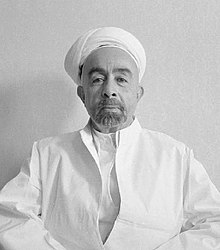
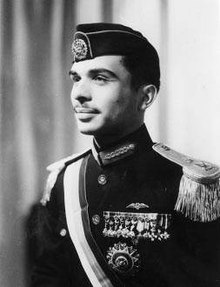
Talal bin Abdullah, King of Jordan from July 1951-August 1952Abdullah I bin Al-Hussein, King of Jordan from 1921-1951, Father of TalalHussein bin Ali Al-Hashimi, King of Hijaz from 1916-1924Naif bin Abdullah, Half-Brother of TalalZain al-Sharaf bint Jamil, Queen of Jordan and Wife of TalalHussein bin Talal, Son of Talal
When last we left off, Talal of Jordan was being forced to abdicate his throne in favor of his son Hussein. Talal’s enemies may have originally intended for him to be just a glorified placeholder until Hussein took power, but the brief king made sure his name would forever be remembered in Jordan’s history. In January of 1952, Talal signed off on the Constitution of the Hashemite Kingdom of Jordan. The Constitution, considered pretty liberal in the 50s, confirmed that Jordan was an independent Arab State, ruled by a hereditary monarchy and balanced by the Legislative, Executive and Judicial powers (although the Executive powers belonged to the king). It also laid out the “rights and duties of Jordanians”, including “freedom of opinion”, the “free exercise of all forms for worship and religious rites” and freedom of the press. (Arab Law Quarterly). Interestingly (but not surprisingly), the section on equal rights protected Jordanians from discrimination on the basis of “race, language or religion”, but not sex. The issue of gender equality is one that is still being addressed today, as Talal’s Constitution continues to be amended.
Like Father, Does Not Like Son
The government that Talal officially established in the 1952 Constitution was the same government that declared him unfit to rule in August of that same year. As I alluded to in the first post of this series, there were some who were suspicious of the circumstances of Talal’s abdication. In fact, “many Jordanians believed that there was nothing wrong with Talal and that the wily British fabricated the story about his madness in order to get him out of the way” (Shlaim), because he was notoriously anti-British.
Talal’s stance on the British was just one point of contention between Talal and his father Abdullah. Theirs was a difficult father-son relationship that was not unnoticed by their family, least of all Talal’s son and heir Hussein. In Hussein’s own writings, he expresses pity and an almost protective tone as he reflects on his father’s treatment:
The two men were separated by different lives and different ages, and their differences were exacerbated by opportunists. Worst of all, my grandfather never really realized until the end of his life how deeply afflicted my father was. He could not conceive that a man at times gentle and sensible, but at other times very ill, was not being just awkward or difficult. My grandfather was so healthy and tough he could not appreciate what illness was. We in the family knew. We watched our father with loving care, but my grandfather, who lived partly in the heroic past, saw him from the outside. (Shlaim)
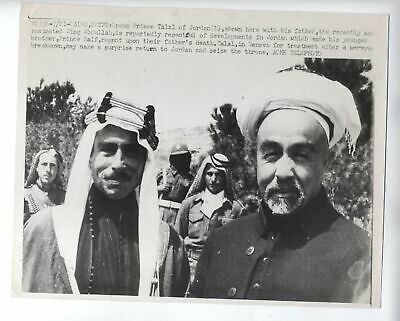
The print at the the top of the photo says: CAIRO, EGYPT: Crown Prince Talal of Jordan (L), shown here with his father, the recently assassinated King Abdullah, is reportedly resentful of developments in Jordan which made his younger brother, Prince Naif, regent upon their father’s death. Talal, in Geneva for treatment after a nervous breakdown, may make a surprise return to Jordan and seize the throne. ACME Telephoto viaebay.com.
Here we have compelling evidence that Talal did in fact suffer from some form of mental illness, as stated by his own son. Another of Talal’s sons, Hassan, believed his father was bipolar and not schizophrenic. Either way, Talal’s family seemed to agree that something plagued him. And, according to Hussein, the strain between Talal and his father Abdullah while he was alive was a source of stress that did not help Talal’s fragile mental state growing up.
Uneasy Lies the…Head!
Whether Talal’s abdication was politically motivated or truly a result of his illness, the reality was that Talal did not have any meaningful support from the Jordanian government or army to fight back even if he wanted to. His son Hussein was named king at the age of 17, but the regency that was put in place was short, as Hussein turned 18 in May of 1953 and was then officially able to assume the throne. It is hard to think of an example of a young monarch suddenly stepping into power under a political situation that was stable, predictable and secure. Usually because a regency occurs after the sudden death of the previous monarch, there is some uncertainty and worry about the path ahead, especially if the replacement was young. Hussein was no exception as he took control of a country in the middle of a veritable hotbed of shifting alliances and violent power grabs. In need of guidance, help came from an unlikely place – Hussein’s mother, Queen Zain (yass Queen…you know I had to do it). Zain was educated and respected and to the delight of the British, recognized the upsides to maintaining the alliance. She no doubt had a part in influencing Hussein to take the same stance.
Throughout his 46 year reign, Hussein’s alliance with the West continued to be a point of contention among Jordanians, particularly as the country’s demographic makeup shifted as a result of surrounding conflicts. But it was far from the only controversy during his rule. Hussein’s biggest challenge was navigating hostility between Jordan’s neighbor Israel and hundreds of thousands of Palestinians that were living in Jordan. The Palestine Liberation Organization (PLO) used Jordan as a home base for attacks against Israel, as both Israelis and Palestinians believed the land of Israel belonged to them (a conflict that continues today with no end in sight). Hussein eventually had to take action because “by September 1970 the PLO virtually controlled a state within a state” (Britannica) in Jordan. They were a threat not only to the stability of the country but to Hussein’s rule as well. In what is known as Black September, the Jordanian Army went to war against the PLO and forced them out of Jordan. However, the latter decades of Hussein’s rule focused on trying to mend relations between Israelis and Palestinians.
Pictured from left to right: Yasser Arafat (1st President of the Palestinian National Authority), King Hussein of Jordan, Bill Clinton, Benjamin Netanyahu (Prime Minister of Israel). Hussein helped negotiate the Wye River Memorandum between Israel and Palestine in 1998, the year before his death. http://www.britannica.com.
Hussein’s rule ended as it had begun – with a regency. But this time, it was his brother Hassan who was acting as regent for Hussein while the Jordanian king received treatment in the United States for Non-Hodgkin’s lymphoma. Unlike his father Talal, however, Hussein returned to Jordan and disbanded the regency. But it was short-lived, as Hussein fell ill and and died in February of 1999. His oldest son Abdullah II became King of Jordan and is currently on the throne today. In a wonderful coincidence (and yes it is a coincidence because I just recently became aware of this), King Hussein’s autobiography is titled Uneasy Lies the Head. And no wonder – between watching his father struggle with mental illness, witnessing his grandfather’s assassination, navigating decades of violent conflicts and fighting cancer, few were more aware of the thin thread that held his family on the throne than Hussein.
Sign Of the Times
Robins and Post claim that Talal’s blatant sickness worked in Jordan’s favor, as there was really no question among the Jordanian government that Talal was unfit to rule. The result was a smooth transition from Talal to his son Hussein, after what could have been a dicey situation following Abudullah’s assassination. Following the abdication, Talal was sent abroad for treatment, again little about which is known. Shlaim notes that he was sent to “a sanatorium in Turkey, where he stayed in less than splendid isolation until his death in 1972”. There are also some reports that he spent time in additional countries in Europe before ultimately settling in Turkey. Either way, as Riley wrote last week, the treatment that Talal received would have been questionable at best. And again, as we have witnessed far too often in this blog, we see the unfortunate pattern of someone suffering from mental illness being sent away and seemingly forgotten about. Out of sight and out of mind, even in the 20th century. It seems time does not heal all.
Shlaim, Avi. Lion of Jordan: The Life of King Hussein in War and Peace. Vintage Books, 2009.
Simon, Reeva S. “The Hashemite ‘Conspiracy’: Hashemite Unity Attempts, 1921–1958.” International Journal of Middle East Studies, vol. 5, no. 3, 1974, pp. 314–327., https://doi.org/10.1017/s0020743800034966.
Caroline Mathilde, Queen. “The Queen of Denmark’s Account of the Late Revolution in Denmark [Electronic Resource] : Written While Her Majesty Was a Prisoner in the Castle of Cronenburgh; and Now First Published from the Original Manuscript, Sent to a Noble Earl.” In SearchWorks Catalog, http://searchworks.stanford.edu/view/8034055.
MUNCK, THOMAS. “Absolute Monarchy in Later Eighteenth-Century Denmark: Centralized Reform, Public Expectations, and the Copenhagen Press.” The Historical Journal, vol. 41, no. 1, 1998, pp. 201–224., https://doi.org/10.1017/s0018246x9700770x.
Schioldann, Johan. “‘Struensée’s Memoir on the Situation of the King’ (1772): Christian VII of Denmark.” History of Psychiatry, vol. 24, no. 2, 2013, pp. 227–247., https://doi.org/10.1177/0957154×13476199.
As Stefanie introduced last week, Talal is one of our more elusive subjects, and sources about his mental illness are slim. This makes it hard for us to determine if his abdication was truly the result of psychiatric illness, or just a plot by political adversaries. All of the Jordanian sources I read indicate that Talal abdicated due to “health issues”, but it seems like his struggles with mental illness have long been an open secret. In an obituary in The New York Times, Talal was described as becoming “increasingly subject to attacks of schizophrenia in which he indulged in morbid suspicions of his family and officials and sometimes violently attacked them.” This account is supported by the book When Illness Strikes the Leader: The Dilemma of the Captive King, which claims Talal “showed signs of weakness and emotional instability” as a child, later leading to “withdrawal and fits of violence”.
If you’re a day one ULTC follower, you’ll remember that this is not the first subject we’ve covered who suffered from schizophrenia. In our very first series exactly two years ago (and accompanying podcast), we talked about Charles VI of France. So it’s fitting that on our second birthday, we are circling back to the same disease. If you want to take a deeper look at the diagnosis, biology, and treatment of schizophrenia, I highly recommend going back and reading that post or listening to that episode. But just so we’re all on the same page, here’s a quick refresher.
The hallmark symptoms of schizophrenia are delusions, hallucination, and paranoia. These are examples of “positive symptoms”, which also include disordered speech and thought. There are also “negative symptoms” like social withdrawal and depressed mood. The obituary and book I referenced earlier described Talal as experiencing both positive and negative symptoms – paranoia and social withdrawal. As we talked about in the Charles VI post, there is some association between positive symptoms and violence, but patients with schizophrenia are not inherently more violent, so keep that in mind if trying to generalize Talal’s symptoms to the larger patient population.
A quick refresher on common schizophrenia symptoms. Very Well Mind
Alpining for Change
Despite the caginess and paucity of details surrounding Talal’s mental health, the one detail that every source seems to note and agree on is that he was being treated in Switzerland at the time when his father was killed, subsequently making him king. I did a little digging to see if there was any significance to Talal going to Switzerland, and was surprised to learn that the country was actually a trailblazer in the treatment of schizophrenia.
While it isn’t known which facility Talal visited for treatment, we’ll focus on the most famous in Switzerland: Burgholzli Hospital (where psychoanalyst Carl Jung came to notoriety!). The facility was founded in Zurich in 1870 by Wilheim Griesenger, a groundbreaking psychiatrist who “strongly believed in the biological causation of mental illness” (Kallivayalli). In 1898, a doctor named Eugene Bleuler took over as Burgholzli’s director. In 1908, Bleuer was giving a talk in Berlin when he introduced the term “schizophrenia” to replace the diagnosis of “dementia-praecox” that the illness had previously been known as. Bleuler’s conceptualization of schizophrenia was revolutionary. According to Britannica, he believed “dementia praecox was not a single disease, was not invariably incurable, and did not always progress to full dementia…He described a group of diseases, the schizophrenias, the basic symptoms of which were a disordered train of mental associations and splitting or fragmentation of the personality.”
Burgholzli today. They just don’t make asylums like they used to. Wikipedia
Bleuler’s new description of schizophrenia changed the way clinicians thought about the disease by distinguishing it from dementia. But that did not immediately solve the issues surrounding patient care. Talal became king in 1951, the same year that the first schizophrenia drug, chlorpromazine, was synthesized. Chlorpromazine was the first of a group of drugs known as neuroleptics used to treat psychiatric disorders, which eventually shifted the focus of schizophrenia treatment from institutionalization in asylums to pharmacological management of symptoms.
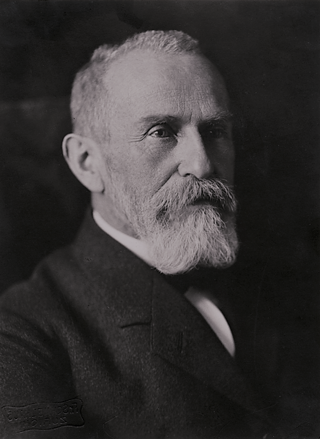
Eugene Bleuler, not a Confederate general. Psychology Today
However, the first case study of successful treatment with chlorpromazine was not published until 1952 by a group in France, so Talal was likely receiving more “traditional” treatments in Switzerland or the other countries he visited for treatment throughout his youth. Early treatments for schizophrenia were heartbreakingly brutal. If you were lucky, you got sedated with a lot of barbiturates. If your symptoms couldn’t be managed that way, you might face electroconvulsive shock therapy, insulin-induced coma, or a lobotomy. Burgholzli may have been on the cutting edge of mental health treatment, but whether Talal was seen there or another hospital in Switzerland, his experience as a schizophrenic patient in the early 1950s was likely a difficult one.
The Inflame Game
Given that I work in a neuroimmunology lab, you’ve probably noticed that I focus a lot on interactions between the immune system and the brain. In our original post on schizophrenia, we focused on one mechanism that might give rise to the altered brain connectivity in the disease: abnormal synaptic pruning. As a brief summary, the developing brain uses an immune system pathway called complement to tag connections between neurons for disposal. In the second wave of so-called pruning in adolescence, it is believed that there is excessive elimination of synapses in patients with schizophrenia. When I was deciding how to take us deeper in this blog, I was excited to see some recent research that strengthens the connections between immunity and schizophrenia.
When the COVID-19 vaccine first came on the scene, public health officials did their best to prioritize groups known to be at risk for severe disease: the elderly, immunocompromised, those with heart problems, low socioeconomic status groups, etc. But epidemiological research continued to search for more populations that might be predisposed to more severe disease. Multiple studies had shown that there was an increased rate of COVID-19 infections in people with mental illnesses. Some of this association is thought to be related to socioeconomic status and access to health care, which are affected by severe mental illness. In 2021, a group of doctors from New York published a paper going one step further to ask if specific psychiatric diagnoses were associated with worse outcomes after COVID-19 infection.
The researchers looked at over 7,000 patients with severe COVID-19 symptoms, up to 45 days after they tested positive. Their study cohort included 75 patients with a previous diagnosis of schizophrenia, 564 with mood disorders, and 360 with anxiety disorders. Factors like race, age, sex, and health conditions that could have affected patient outcomes were considered and controlled for in all of their analysis. Shockingly, they found that patients with schizophrenia were almost three times as likely to die or end up in hospice care from COVID-19 as controls, while patients with mood or anxiety disorders showed no increased risk.
Of course, every study is limited, and a single report of an increased risk from a three-month span in one region of the United States cannot necessarily be generalized to the entire world. But the interesting thing is, this is not an isolated report. A paper from the United Kingdom saw the same pattern of increased mortality in schizophrenia patients, but to a greater degree: patients were nearly five times as likely to die. And a meta-analysis of papers from seven different countries found people with severe psychiatric disease were twice as likely to die from COVID-19 as controls, and this pattern was driven mostly by patients with schizophrenia and bipolar disorder.
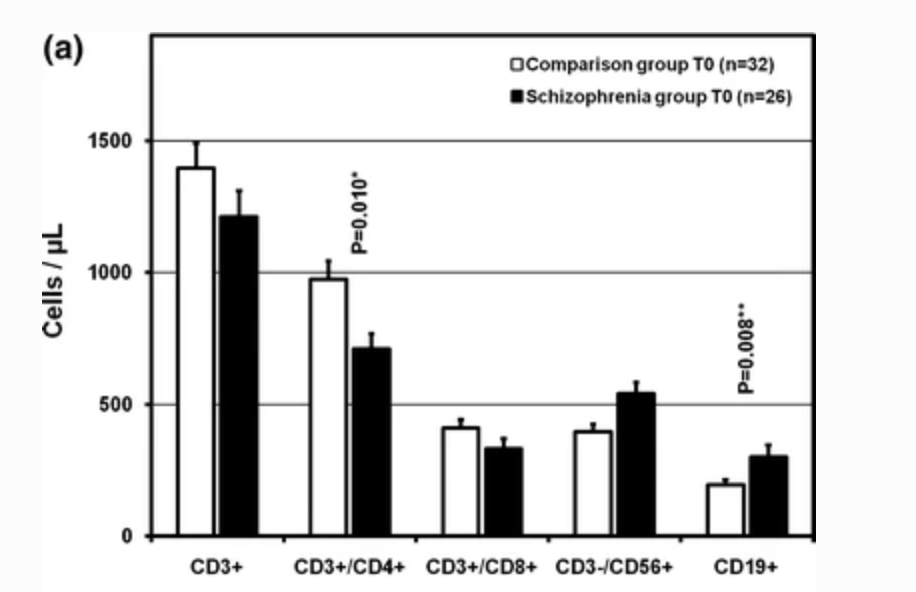
Not only is this leading to calls for people with psychiatric disease to be prioritized for future boosters, it is also leading scientists to wonder how schizophrenia is contributing to COVID-19 severity. The authors of the New York paper I mentioned have a couple of theories. One is that genetic risk factors associated with schizophrenia may influence immune system functioning. They also point out that previous research has shown that patients with schizophrenia have altered immune cell compositions, which might contribute to severe disease. The paper the authors were referencing looked at blood samples from patients with schizophrenia and saw that compared to healthy controls, they had more B cells (the antibody-producing cells of the immune cells), fewer immunosuppressive T cells, and a higher proportion of T cells that kill other cells. T cells and B cells are the workhorses of the immune system, and increased inflammatory subsets of these cells could contribute to poor outcomes after COVID infection.
This graph compares the amount of different types of immune cells in the blood of controls (white bars) or schizophrenic patients (black bars). Pay attention to the two columns with a P over them, meaning that they are statistically different. CD3+/CD8+ is a ratio of all T cells to killer T cells, and this is reduced in the participants with schizophrenia, suggesting a shift toward more inflammatory T cells. And CD19+ is measuring the antibody-producing B cells, which are more abundant in the patients than controls. Steiner et al, 2010
And while there’s an abundance of evidence that schizophrenia could be affecting COVID-19 progression, there’s also anecdotal evidence that COVID can cause psychiatric symptoms similar to those seen in schizophrenia. Several case studies have been published describing people with no history of mental illness experiencing hallucinations, delusions, and paranoia after testing positive for COVID-19. While these symptoms are fleeting and rare, they point to an effect of coronavirus on the brain. The mechanism by which COVID-induced psychosis occurs isn’t known, but a recent paper from Yale proposes one possible (and sensational) hypothesis. The study analyzed the cerebrospinal fluid (CSF), the liquid that bathes the brain and spinal cord, of six patients with COVID-19 who also experienced neurological symptoms. They found that there were antibodies in the CSF of sick patients that reacted both against the coronavirus and brain tissue, suggesting that COVID could provoke an autoimmune response against the nervous system. It’s a provocative and preliminary finding, but it’s not an entirely new concept. This is a theory of molecular mimicry, where infection can elicit an immune response to something in the body that looks similar to the pathogen, and is one of the hypotheses for the development of multiple sclerosis. The brain was long thought to be “immune-privileged” or protected from immune cells that could cause inflammation and harm, but as science advances, that seems less and less true.
To figure out if antibodies from COVID patients experiencing neurological symptoms could react against brain tissue, the scientists put these antibodies on sections of mouse brain. If the antibodies reacted against brain tissue, it would bind to the sections. Then they added a green fluorescent tag to label any human antibody that did bind to the tissue. The picture on the right shows COVID patient antibody has bound to much of the mouse brain, while antibodies from healthy controls don’t show much binding on the left. Song et al 2021
Talal Order
I took a long detour there, and you’re probably wondering what any of this has to do with Talal. Talal was diagnosed with schizophrenia in an era before pharmaceutical treatments were available, less than 50 years after the disease got its name. Even when medicines like chlorpromazine hit the market, doctors and scientists still did not know how these drugs were helping patients or what caused schizophrenia in the first place. And 50 years after Talal’s death, we are still grappling with the same questions.
My hope in sharing the research about the connections between COVID and schizophrenia is that you can appreciate that the neurobiology of mental illness is still an incomplete story. Researchers are actively trying to unravel the complex genetic and environmental factors that trigger schizophrenia and understand how the disease changes the brain. From Bleuler to the teams behind recent pandemic studies, doctors are adding to the narrative. Each discovery inches us closer to a complete understanding of the disease that afflicted Talal. And as with the best of things, the answers might come when and where we least expect them.
Fond, G., Nemani, K., Etchecopar-Etchart, D., Loundou, A., Goff, D. C., Lee, S. W., Lancon, C., Auquier, P., Baumstarck, K., Llorca, P.-M., Yon, D. K., & Boyer, L. (2021). Association between mental health disorders and mortality among patients with COVID-19 in 7 countries. JAMA Psychiatry, 78(11), 1208. https://doi.org/10.1001/jamapsychiatry.2021.2274
Hassan, L., Peek, N., Lovell, K., Carvalho, A. F., Solmi, M., Stubbs, B., & Firth, J. (2021). Disparities in covid-19 infection, hospitalisation and death in people with schizophrenia, bipolar disorder, and major depressive disorder: A cohort study of the UK Biobank. Molecular Psychiatry. https://doi.org/10.1038/s41380-021-01344-2
Nemani, K., Li, C., Olfson, M., Blessing, E. M., Razavian, N., Chen, J., Petkova, E., & Goff, D. C. (2021). Association of psychiatric disorders with mortality among patients with COVID-19. JAMA Psychiatry, 78(4), 380. https://doi.org/10.1001/jamapsychiatry.2020.4442
Post, J. M. (1995). The Mad King. In When illness strikes the leader: The dilemma of the captive king (pp. 36–38). essay, Yale Univ Press.
Song, E., Bartley, C. M., Chow, R. D., Ngo, T. T., Jiang, R., Zamecnik, C. R., Dandekar, R., Loudermilk, R. P., Dai, Y., Liu, F., Sunshine, S., Liu, J., Wu, W., Hawes, I. A., Alvarenga, B. D., Huynh, T., McAlpine, L., Rahman, N.-T., Geng, B., … Farhadian, S. F. (2021). Divergent and self-reactive immune responses in the CNS of COVID-19 patients with neurological symptoms. Cell Reports Medicine, 2(5), 100288. https://doi.org/10.1016/j.xcrm.2021.100288
Steiner, J., Jacobs, R., Panteli, B., Brauner, M., Schiltz, K., Bahn, S., Herberth, M., Westphal, S., Gos, T., Walter, M., Bernstein, H.-G., Myint, A. M., & Bogerts, B. (2010). Acute schizophrenia is accompanied by reduced T cell and increased B cell immunity. European Archives of Psychiatry and Clinical Neuroscience, 260(7), 509–518. https://doi.org/10.1007/s00406-010-0098-x






:max_bytes(150000):strip_icc()/schizophrenia-sign-symptoms-5095511_final-57a52853a10c4edcb4bd6a3b31f041ea.jpg)


 Uneasy Lies the Crown